

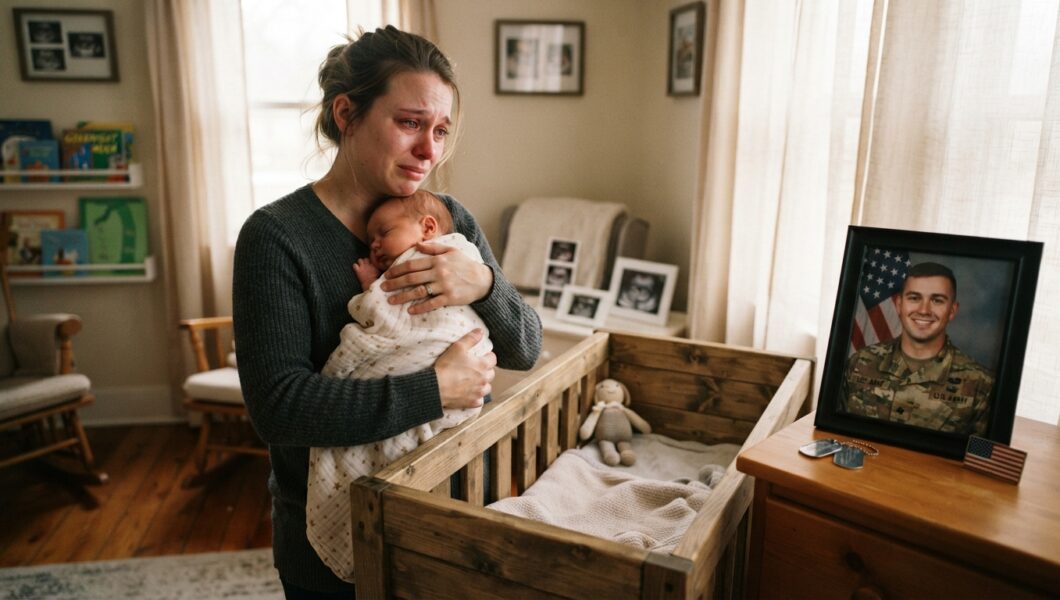
The house was quiet after the Marines left.
That was the part Emily remembered most clearly.
Not the words they had spoken. Not even the moment her legs gave out beneath her. It was the silence afterward. The kind of silence that makes a house feel unfamiliar, as though the walls themselves understand that someone is missing.
She sat on the edge of the couch with one hand resting over her pregnant belly and stared at the front door for a long time. She kept expecting Matthew to walk through it.
Her mind knew the truth, but her heart hadn’t caught up yet.
At 35 weeks pregnant, every movement from the baby had become something Emily noticed. A little kick. A roll. A stretch beneath her skin. Usually, those movements made her smile because they reminded her that she and Matthew were so close to becoming parents.
That morning, though, every movement hurt.
She whispered, “Your daddy loved you so much.”
Then she broke down again.
I arrived at her house as quickly as I could. I don’t remember much about the drive. I remember gripping the steering wheel too tightly and thinking about what I was going to say when I saw my daughter.
The truth was, I had no idea what to say.
There are no perfect words for a mother whose husband has just been taken from her. There is no sentence that can make a widow feel less alone when she is carrying her husband’s child.
So when I walked through that door, I didn’t try to say something profound.
I just sat beside her.
She leaned against me the way she used to when she was a little girl, and for several minutes neither of us said anything.
Then she finally whispered, “Mom, he was supposed to come home.”
I held her tighter.
“I know.”
“He promised.”
“I know.”
“He was supposed to meet her.”
I looked down at her belly.
“I know, sweetheart.”
That was all I could give her.
There was no way to explain why this had happened. No way to make sense of a 24-year-old man becoming a name on a list while his unborn daughter continued growing inside his grieving wife.
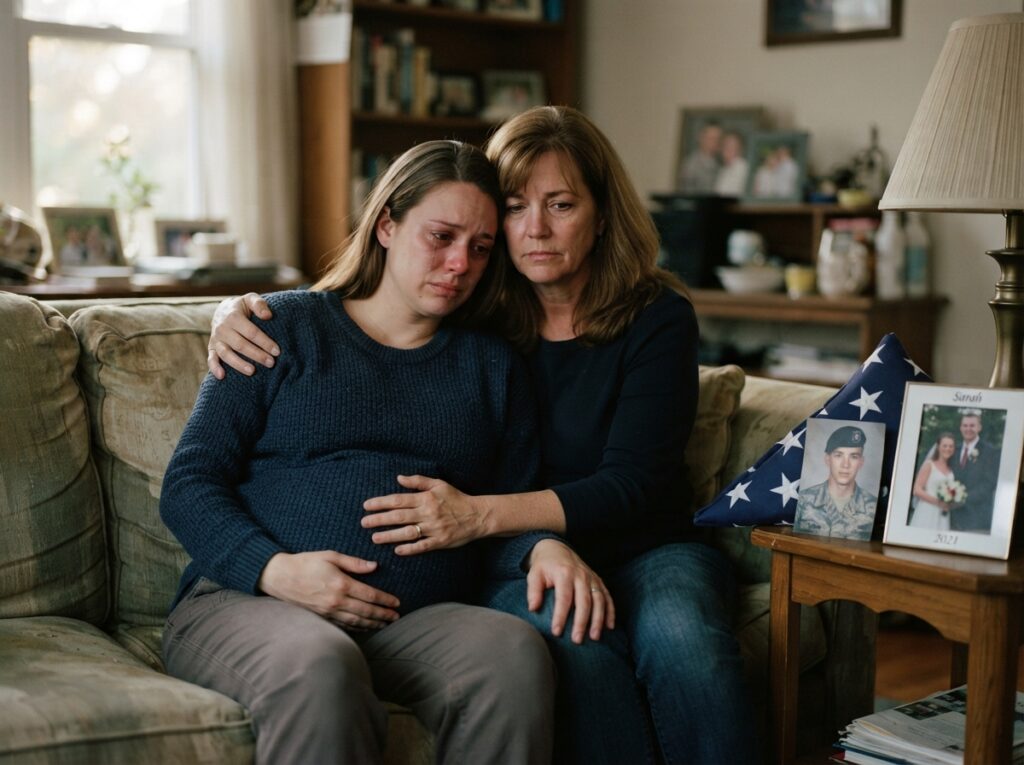
The next few days became a blur of phone calls, paperwork, visitors, condolences and decisions nobody should have to make at that stage of pregnancy.
People brought food.
They brought flowers.
They brought cards.
They told Emily how sorry they were.
And every time someone said, “He’s in a better place,” I could see something change in her expression.
She wasn’t ready for better places.
She wanted her husband.
She wanted the man who used to leave his boots by the door. She wanted the man who talked to her belly at night. She wanted the man who had spent an entire Saturday putting together a crib and then proudly called me to tell me he had only had to read the instructions twice.
She wanted the future they had planned.
One afternoon, Emily walked into the nursery for the first time since Matthew died.
I followed her but stayed near the doorway.
The room looked exactly as it had before.
The crib stood against the wall.
There were tiny clothes folded inside a dresser.
A stuffed rabbit sat on a shelf.
On the changing table was a package of diapers Matthew had bought during one of their last shopping trips.
Emily picked up one of the baby’s little onesies.
It was white, with tiny yellow stars across the front.
Matthew had chosen it.
She pressed it against her chest.
“He said she was going to look cute in this.”
I couldn’t answer.
She walked over to the crib and ran her fingers along the wooden rail.
“He built this.”
Then she noticed something tucked underneath the crib.
It was a small cardboard box.
Inside were photographs, receipts from baby purchases, a hospital information sheet and a folded piece of paper.
Emily opened it.
Matthew had written a list.
Not anything dramatic.
Just ordinary things.
Things he wanted to do with his daughter.
Teach her how to ride a bike.
Take her camping.
Show her how to fish.
Make pancakes on Saturday mornings.
Walk her to school.
Teach her to drive.
Dance with her at her wedding.
Emily read the list twice.
Then she sat down on the floor.
She cried harder than I had ever seen her cry.
But this time, something was different.
She wasn’t only crying because Matthew was gone.
She was crying because she could see, in his own handwriting, just how much he had already loved a child he had never held.
That piece of paper became one of the most important things Emily owned.
She kept it beside her bed.
And every night, before she went to sleep, she read it.
A week later, the baby decided she was ready.
It was just after midnight when Emily called me.
Her voice was different.
“Mom?”
“I’m here.”
“I think it’s happening.”
I was out of bed before she finished the sentence.
At the hospital, everything moved quickly.
Nurses checked her. Doctors came in. Monitors beeped. Family members waited anxiously in the hallway.
Emily was exhausted and frightened, but she kept one hand on her belly.
At one point she looked at me and said, “I wish he were here.”
“I know.”
“I don’t know how to do this without him.”
I took her hand.
“You don’t have to do the whole rest of your life tonight. Just get through this moment.”
So she did.
One moment at a time.
One breath at a time.
And then, after hours of labor, we heard it.
A cry.
Small.
Angry.
Alive.
Everyone in that room seemed to stop breathing for a second.
Emily started sobbing.
The nurse placed the baby against her chest.
She looked down at her daughter and immediately whispered Matthew’s name.
“Your daddy would have loved you.”
Then she kissed the baby’s forehead.
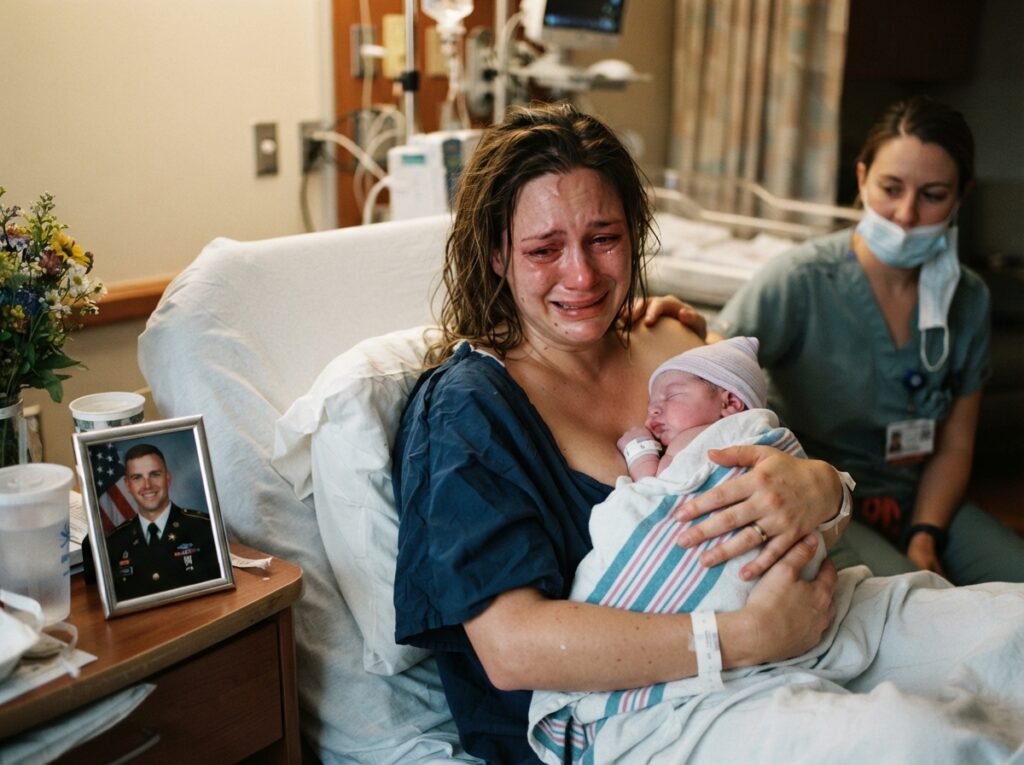
She named the baby Grace.
Matthew had once told Emily that if they had a daughter, he liked the name because it sounded strong without trying to be.
So Grace it was.
When I held her for the first time, I couldn’t stop staring at her tiny face.
She had dark hair.
Long fingers.
And when she opened her eyes, Emily laughed through her tears.
“Mom,” she whispered, “look at her.”
I looked.
“I see him.”
Emily nodded.
“Me too.”
Over the next few weeks, grief and new motherhood became tangled together.
There were moments when Emily felt almost normal.
Grace would make a funny face, and Emily would laugh.
Then she’d remember that Matthew wasn’t there to see it, and the laughter would disappear.
There were nights when Grace wouldn’t sleep.
Emily would walk around the nursery for hours, exhausted, whispering stories about her father.
“Your daddy loved coffee.”
“Your daddy hated folding laundry.”
“Your daddy always stole the blankets.”
“Your daddy was terrible at dancing.”
And sometimes she would tell Grace the things she wanted her to know most.
“Your daddy was brave.”
“He loved people.”
“He loved me.”
“And he loved you before he ever met you.”
I watched my daughter slowly learn something nobody should ever have to learn: grief and love can exist in the same room.
She didn’t stop missing Matthew.
She didn’t suddenly become okay.
But little by little, she learned how to carry the pain without letting it take every part of her.
Months passed.
Grace grew.
Her tiny newborn clothes became too small. Then she started smiling. Then she started reaching for things. Every milestone brought happiness and sadness at the same time.
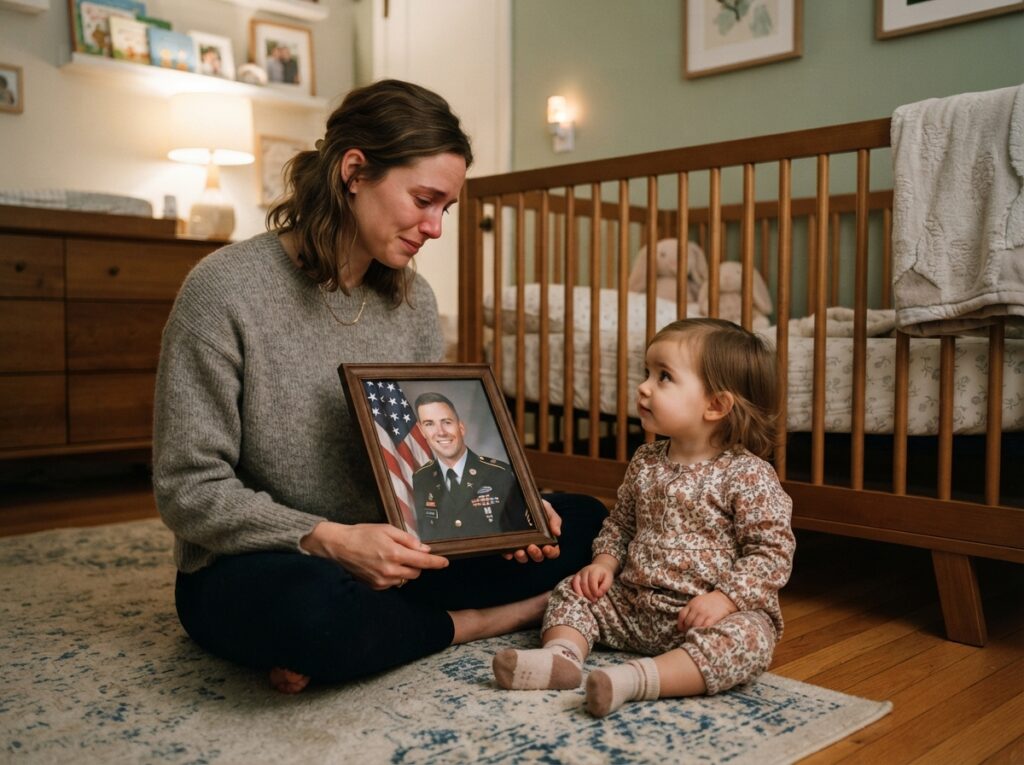
On Grace’s first birthday, Emily placed Matthew’s photograph beside the cake.
There was no big party.
Just family.
A few close friends.
A cake with a single candle.
Before blowing it out, Emily picked up Grace and held her close.
“Your daddy should be here,” she whispered.
Then she looked at the photograph.
“And I wish he was.”
For a moment, nobody spoke.
Then Emily smiled.
“Happy birthday, baby girl.”
Grace reached toward the candle.
Everyone laughed.
And somehow, in the middle of everything they had lost, the room felt warm again.
Not because the pain was gone.
Because life was still happening.
Years later, Grace would grow up knowing her father’s name.
She would know the stories.
She would see the photographs.
She would know that he had built her crib before she was born.
She would know that he had written down the things he dreamed of doing with her.
And she would know that even though he never got to hold her, he had already imagined a lifetime with her.
Emily kept that handwritten list.
The paper became worn at the edges from being handled so many times.
But she never threw it away.
Instead, she placed it in a memory box with Matthew’s wedding ring, photographs, letters and the hospital bracelet from the day Grace was born.
It wasn’t a box filled only with sadness.
It became a record of love.
A reminder that Matthew’s story didn’t end with the knock at the door.
It continued through the woman who loved him.
It continued through the daughter he never got to meet.
It continued through every story Emily told, every photograph she shared and every ordinary moment when Grace did something that reminded everyone of him.
And perhaps that is what surviving loss really means.
It doesn’t mean forgetting.
It doesn’t mean waking up one morning and discovering that the pain has disappeared.
Sometimes surviving means getting out of bed because your child needs breakfast.
Sometimes it means laughing for the first time without feeling guilty.
Sometimes it means looking at an empty chair and finally being able to remember the person who sat there without completely falling apart.
Emily still misses Matthew.
She probably always will.
But she also knows something she couldn’t understand on that terrible morning at 2:47 AM.
The knock changed her life.
It did not erase the love that came before it.
Matthew never got to finish the story he had planned for his family.
But the story didn’t end with him.
It lives in Grace’s smile.
It lives in Emily’s strength.
It lives in the little wooden crib he built with his own hands.
And it lives in a mother who promised her daughter that her father would never become just a name people remembered from a headline.
He would be remembered at birthdays.
At Christmas.
At bedtime.
At every first day of school.
At every milestone.
For the rest of their lives.
Because sometimes the greatest way to honor someone who was taken too soon isn’t to keep talking about how they died.
It’s to keep telling the world how deeply they lived, how fiercely they loved, and how much of them remains in the people they left behind.
And every night, when Emily kisses Grace goodnight, she tells her the same thing.
“Your daddy loved you before he ever saw your face.”
Then she turns off the light, closes the nursery door, and lets her daughter sleep.
For a few quiet moments, the house is still.
But this time, the silence doesn’t feel empty.
There is a child’s breathing in the next room.
There is a future waiting to be lived.
And there is a love that, despite everything, is still here.


No Comments