

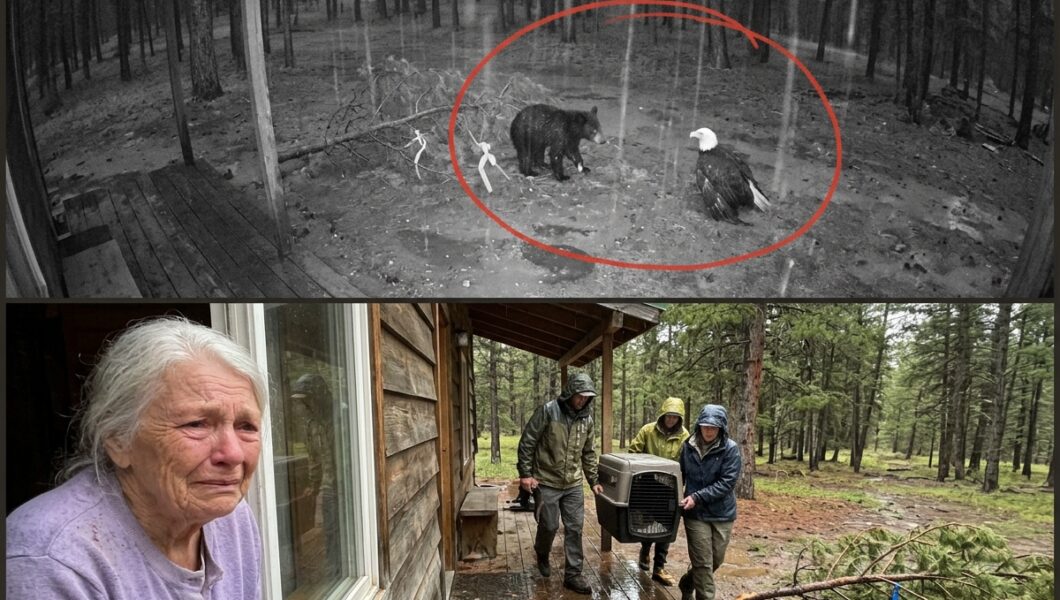
Margaret Wilson stood frozen beside her kitchen table.
Outside, headlights swept across the wet gravel driveway, illuminating the wooden porch where she and Henry had spent forty-six summers watching the Montana mountains.
Daniel Mercer moved toward the window.
“Mrs. Wilson, please stay back.”
Margaret gripped the photograph in her trembling hands.
The man standing beside the bridge in Henry’s old picture was her younger brother, Robert Ellis.
She had not spoken to Robert in nearly nine years.
And now, on the same afternoon she discovered that Henry had secretly built a wildlife crossing in memory of their daughter Emily, someone was driving toward her isolated cabin.
“Is that him?” she whispered.
Daniel studied the approaching vehicle.
“I can’t tell yet.”
The headlights stopped near the gate.
A gray pickup truck remained motionless for several seconds.
Then the driver’s door opened.
An elderly man stepped out, leaning heavily on a wooden walking stick.
Margaret recognized him immediately.
Robert.
Her seventy-two-year-old brother stood in the fading afternoon light, looking toward the cabin as though he was afraid to come any closer.
Daniel reached for his phone.
“Let me find out why he’s here before you speak with him.”
Margaret nodded.
She wasn’t frightened of her brother, but she was frightened of what the photograph might mean.
Robert had been close to Henry once.
After Emily died, he helped repair fences around the property, brought groceries during difficult winters, and spent countless afternoons working beside Henry in the forest.
Then something changed.
Nine years earlier, Robert and Henry had argued about an old family property boundary near North Creek.
Robert stopped visiting.
Margaret had assumed the disagreement was about land.
Now she wondered whether it had been about something much more painful.
Daniel called Robert from inside the cabin.
They spoke briefly.
Then Daniel turned toward Margaret.
“He says he came because he heard about the injured eagle and the bear cub. He wants to explain the photograph.”
Margaret looked down at Henry’s notebook.
“Then let him come in.”
Robert entered slowly, removing his wet cap at the doorway.
When he saw Margaret, his expression crumpled.
“Hello, Maggie.”
Nobody had called her that in years.
Margaret felt tears gathering.
“Robert, what were you doing at that bridge?”
Her brother looked toward Daniel.
Then he noticed the photograph lying on the table.
For a long moment, he said nothing.
Finally, he whispered, “Henry never told you?”
Margaret shook her head.
Robert sat down heavily.
“Then I suppose it’s time someone did.”
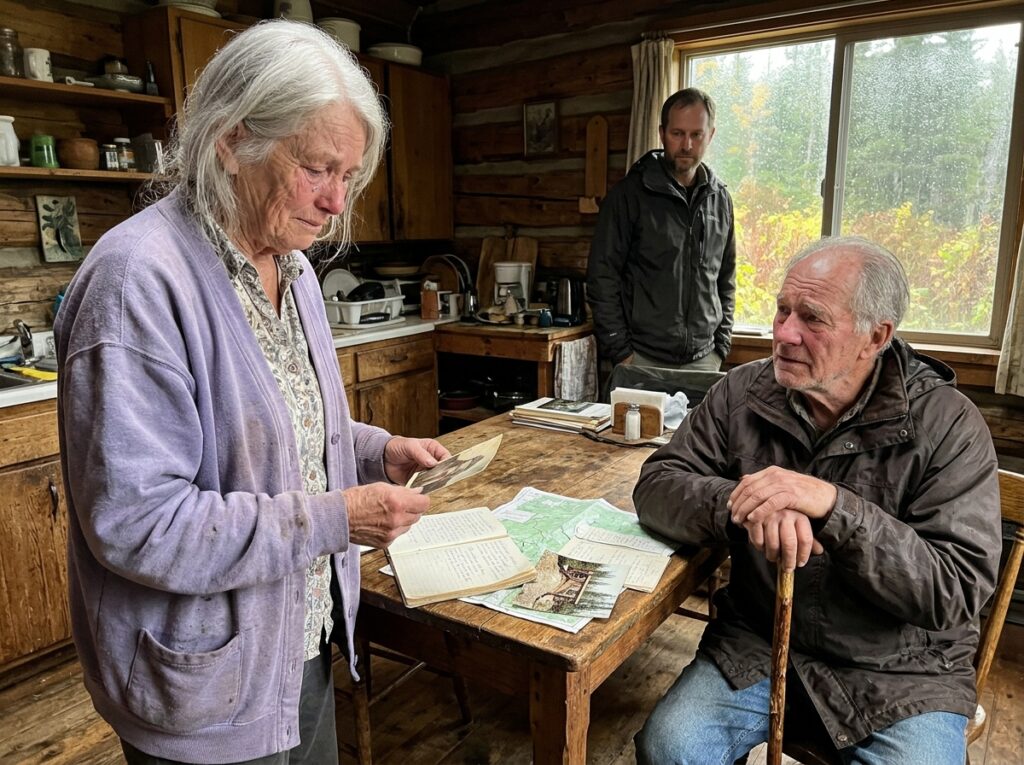
Robert folded his hands.
“After Emily died, Henry couldn’t bear to walk past the little creek where she used to play.”
Margaret closed her eyes.
Emily had loved that creek.
She collected smooth stones, watched dragonflies settle on the reeds, and insisted that every injured insect deserved a second chance.
Henry used to carry her on his shoulders along the old forest trail.
Margaret could still remember her daughter’s laughter echoing between the trees.
Robert continued.
“One afternoon, Henry found a young deer caught in some discarded wire near the old bridge. He called for help, and the animal survived.”
Margaret listened silently.
“Afterward, he told me he wanted to make the crossing safer. He said Emily would have wanted that.”
“Why didn’t he tell me?”
Robert’s eyes filled.
“He tried once. But you were still grieving, and he was afraid the bridge would remind you of everything you’d lost.”
Margaret looked toward the photograph of the little wooden sign.
Wilson Wildlife Crossing. In Memory of Emily.
For forty years, she had believed Henry avoided speaking about their daughter because the pain was too great.
Now she understood that he had been remembering Emily in his own quiet way.
Robert explained that he and Henry had worked together for years, helping report damaged fencing, clearing approved trails, and coordinating with local landowners.
But eventually, they disagreed about the bridge.
Robert wanted to repair an old vehicle access route across North Creek.
Henry believed the structure had deteriorated too badly and should remain closed until professionals could inspect it.
“The argument got ugly,” Robert admitted. “I said things I shouldn’t have said.”
Margaret watched him.
“What things?”
Robert lowered his head.
“I told Henry he was using Emily’s memory as an excuse to control what happened in those woods.”
The room fell silent.
Margaret felt the words like a physical blow.
Robert began crying.
“I knew it was cruel the moment I said it. Henry walked away, and I was too proud to apologize.”
Margaret looked toward the window.
She remembered Henry returning home one evening with his eyes red and his hands shaking.
He had told her he was tired.
She had believed him.
Robert wiped his face.
“Years later, I finally went back to the bridge. I wanted to help him fix what was damaged.”
“That’s when the photograph was taken?” Daniel asked.
Robert nodded.
“Henry asked me to meet him there. We inspected the old barriers and photographed the dangerous sections.”
Margaret looked at the date.
One month before Henry died.
“Then why did Daniel keep the photograph?”
Robert turned toward him.
“Because Henry wanted someone younger to continue the work. Someone who understood why that place mattered.”
Daniel opened his notebook.
“Henry told me the crossing needed another inspection. He wanted the damaged cable reported before the winter storms.”
Margaret looked between them.
“So the secret wasn’t something terrible?”
Robert shook his head.
“The terrible thing was that I wasted nine years being too stubborn to tell my brother-in-law I was sorry.”
Margaret covered her mouth.
For years, she had imagined that Henry’s silence meant something had been left unresolved.
Now she realized it had.
But not in the way she feared.
It was an apology.
A family divided by grief.
And a promise neither man had fully completed.
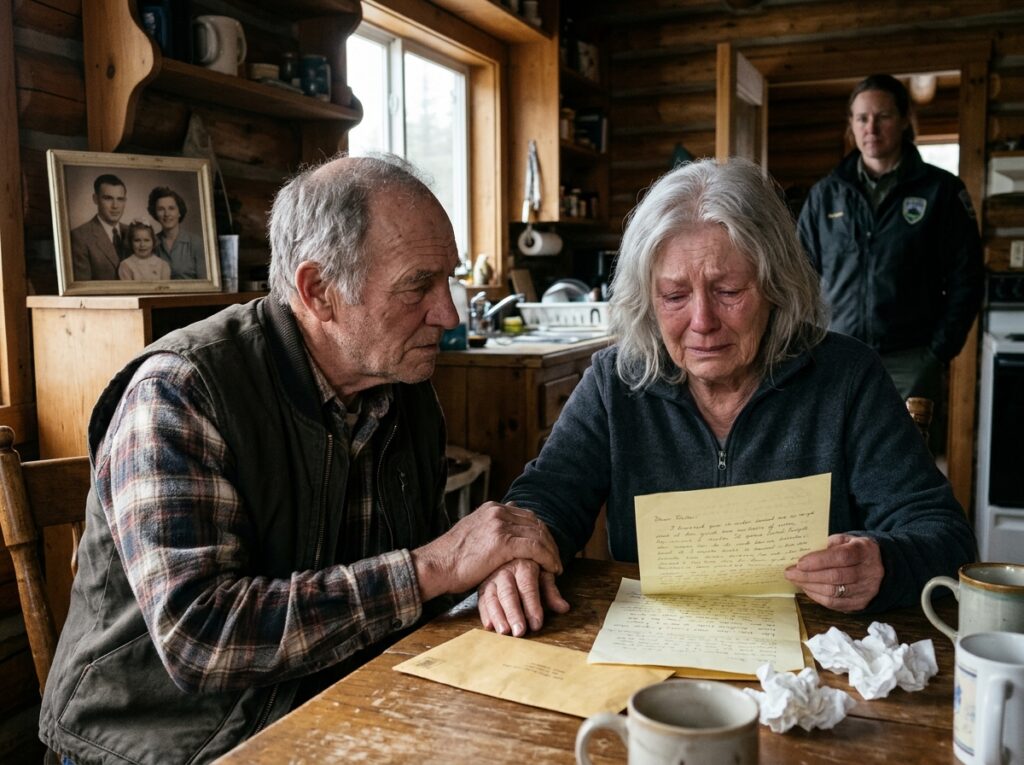
That evening, Robert took an old envelope from his coat.
“Henry gave me this the last time we met.”
Margaret recognized his handwriting immediately.
Inside was a short letter.
“Robert, we both loved Emily. We both want this forest to remain a place where living things have a chance. I don’t want our last years wasted on an argument. When the bridge is safe, come have coffee with Margaret and me. We have enough empty chairs already.”
Margaret pressed the letter against her chest.
Henry had been waiting for reconciliation.
But he died before it happened.
Robert looked at her.
“I should have come sooner.”
Margaret reached across the table.
“Yes,” she whispered. “You should have.”
Then she took his hand.
“But you’re here now.”
Over the following days, Margaret learned more about Henry’s final project.
Daniel showed her old maps, photographs, and maintenance reports documenting the North Creek crossing.
The bridge had once served a narrow logging road.
After the road fell into disuse, sections of fencing and cable deteriorated.
Henry had repeatedly reported the hazards because deer, foxes, and other wildlife used the creek corridor.
His handwritten records described several occasions when animals became tangled in loose material.
Some had been helped by trained responders.
Others had disappeared before anyone could assess them.
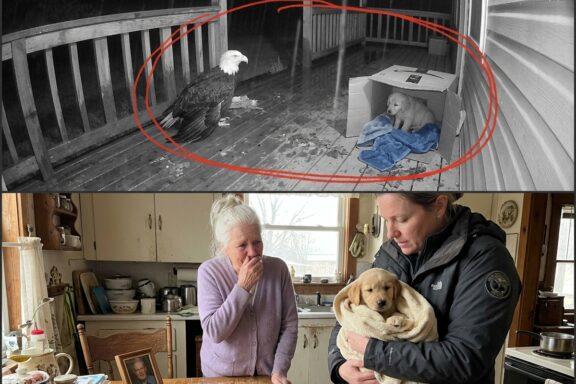
Margaret thought about the tiny black bear cub struggling through the rain.
And the injured bald eagle dragging its wing beside her porch.
She wanted to believe Henry’s work had somehow brought them to safety.
But she knew the animals had simply encountered danger during the same storm.
Their presence did not prove that the bridge had injured them.
What mattered was that the crossing still needed attention.
Daniel contacted the responsible county and land management offices.
He submitted the photographs and reported the damaged cable.
Robert offered copies of the old property records.
Margaret provided Henry’s notebooks.
Within two weeks, an inspection team visited North Creek.
They documented deteriorated barriers, exposed wire, and loose cable near the seasonal creek.
Some material appeared to have shifted during the recent storm.
The team arranged for hazardous debris to be removed or secured where access and ownership permissions allowed.
They also reviewed whether the old bridge should remain permanently closed.
Margaret did not visit the crossing during the inspection.
She stayed at home, watching the woods from the kitchen window.
But when Daniel called to say the work had begun, she cried.
“Henry waited so long for this.”
Daniel answered gently.
“Then we’ll make sure his concerns aren’t forgotten.”
Meanwhile, the wildlife team continued monitoring the area where the bear cub had been seen.
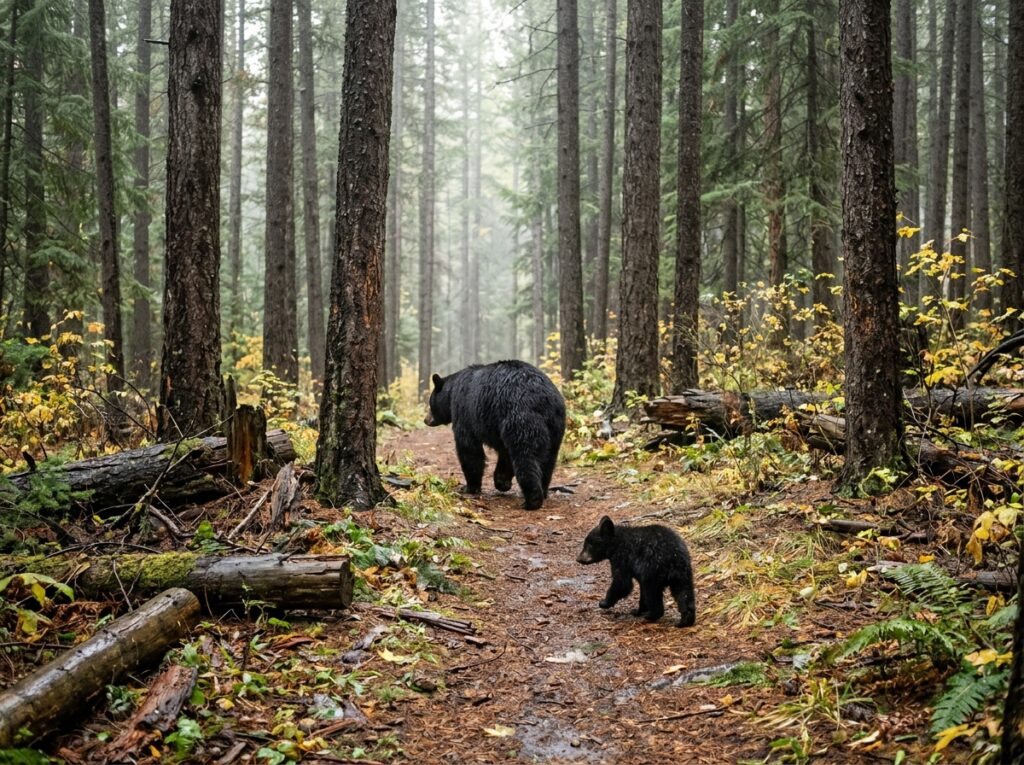
Several days after the storm, a trail camera recorded a large black bear moving through the forest with a smaller bear following behind.
The cub appeared to be walking more comfortably.
Wildlife officers cautioned that the recording could not confirm whether it was the same pair or establish the cub’s full condition.
But the footage was encouraging.
Margaret watched it three times.
She remembered the tiny animal crying in the rain, unable to put weight on its injured paw.
Now a little bear was walking beside its mother through the trees.
Margaret smiled through her tears.
“Stay safe, sweetheart.”
The bald eagle’s recovery was more complicated.
Veterinarians had confirmed a significant wing injury.
The bird required rest, treatment, and continued monitoring at the licensed rehabilitation center.
There was no guarantee it would fly again.
Margaret understood.
She had spent enough years caring for Henry during his final illness to know that healing could be slow and uncertain.
Still, she asked Daniel for updates whenever they were available.
Some days brought encouraging news.
Other days brought little change.
But the eagle remained alive.
And that was enough to keep Margaret hopeful.
As autumn faded into winter, Robert began visiting Margaret regularly.
At first, their conversations were awkward.
They had lost nine years.
There were birthdays they had missed, holidays spent apart, and countless ordinary afternoons that could never be recovered.
But slowly, the silence between them softened.
Robert helped repair the cabin steps.
Margaret made his favorite apple pie.
Sometimes they sat beside the window and talked about Emily.
For decades, Margaret had avoided speaking her daughter’s name because she feared the pain would overwhelm her.
Now she found herself remembering the little things.
Emily’s muddy boots.
Her crooked pigtails.
The way she insisted on carrying injured butterflies inside, even though Henry gently explained that most needed to remain outdoors.
Robert laughed when Margaret remembered Emily trying to feed a pinecone to a squirrel.
“She told me it was a forest sandwich,” he said.
Margaret laughed so hard she began crying.
For the first time in years, remembering Emily brought warmth alongside the grief.
One afternoon, Robert arrived carrying a small wooden box.
Inside was a weathered brass plaque.
The original sign from the wildlife crossing.
The lettering had faded, but Margaret could still read the words.
“Wilson Wildlife Crossing. In Memory of Emily.”
Robert placed it carefully on the table.
“Henry asked me to keep this safe when the bridge started falling apart.”
Margaret touched the worn letters.
She imagined Henry standing beside the creek, holding the sign he had made for their daughter.
All those evenings she thought he was simply working in the forest, he had been building something from his grief.
Something that might protect other living things.
Something that kept Emily’s memory alive.
Margaret looked at Robert.
“Would you help me put this somewhere safe?”
He nodded.
“Of course.”
Together, they placed the plaque on a shelf beneath Emily’s photograph.
Margaret stepped back.
For the first time in forty years, the cabin held a visible reminder of the daughter she and Henry had loved so deeply.
And somehow, it felt right.
Winter settled over Montana.
Snow gathered along the porch railing.
The creek slowed beneath thin ice.
Margaret continued checking her security camera each morning.
Sometimes she saw deer.
Sometimes a fox.
Often nothing at all.
But every recording reminded her of Henry sitting beside the window, smiling whenever an animal wandered past.
Then, one morning in early spring, Daniel called.
“Margaret, are you sitting down?”
She gripped the telephone.
“Is something wrong?”
“No,” he said. “Something wonderful.”
The bald eagle had made substantial progress.
After months of specialized care, the bird had completed its flight assessments.
The veterinary team had determined that it was strong enough to return to the wild.
Margaret covered her mouth.
“Oh, Daniel.”
Her voice broke.
“They’re going to release it?”
“Yes. And the center says you can observe from a designated safe distance.”
Margaret sat down slowly.
She remembered the night the eagle appeared beside her porch.
Its white head lowered.
Its left wing dragging through the mud.
The tiny bear cub trembling nearby.
She had been so afraid neither animal would survive.
Now the eagle was going home.
The release took place several days later at a suitable location selected by wildlife professionals.
Margaret arrived with Daniel and Robert.
The morning was clear and cold.
Pine trees stood against a pale blue sky.
Margaret wore Henry’s old wool scarf.
When the rehabilitator opened the transport carrier, the eagle hesitated.
Then it stepped forward.
Its wings spread wide.
Margaret held her breath.
With several powerful beats, the bird lifted into the air.
It climbed above the clearing, turned toward the mountains, and continued flying until it disappeared beyond the ridge.
Margaret began crying.
Robert stood beside her.
Daniel placed a gentle hand on her shoulder.
For several minutes, nobody spoke.
Then Margaret whispered, “Henry would have loved that.”
Robert nodded.
“He would have.”
Margaret looked toward the distant trees.
“And Emily, too.”
That evening, Margaret returned to the cabin and sat beside the window.
The forest was quiet.
The repaired and secured crossing was no longer the same dangerous place Henry had worried about.
The eagle had returned to the sky.
The bear cub had been seen moving through the woods.
And Robert, the brother she thought she had lost to anger and pride, was sitting across from her drinking coffee.
Margaret looked at the brass plaque beneath Emily’s photograph.
For forty years, she had believed grief was something she and Henry carried separately.
Now she understood that he had found a way to turn his sorrow into kindness.
He could not bring Emily back.
But he could help protect the small, vulnerable lives that wandered through the forest she had loved.
Robert followed her gaze.
“Do you think Henry would forgive me?”
Margaret smiled gently.
“He already did.”
Robert lowered his head.
Tears slipped down his cheeks.
Margaret reached across the table and took his hand.
Outside, the evening light faded behind the Montana mountains.
The porch light came on.
And for the first time in many years, Margaret did not feel alone.
She had lost her husband.
She had lost her daughter.
She had lost precious years with her brother.
But love had not disappeared from that little wooden cabin.
It had simply been waiting for someone to find the courage to open the door again.
Margaret looked toward Henry’s photograph.
“You kept your promise,” she whispered.
Then she glanced at the plaque bearing Emily’s name.
“And so will we.”
The End.
This is a fictional wildlife rescue and kindness story created for emotional storytelling.
No Comments