

Margaret Wilson stared at the photograph until the faces began to blur.
The woman standing beside the metal box was her younger sister, Ruth.
Forty years had passed since Margaret last saw her.
Yet she recognized the same dark eyes, the same narrow smile, and the little silver brooch Ruth always wore on the collar of her coat.
Margaret’s hands began trembling.
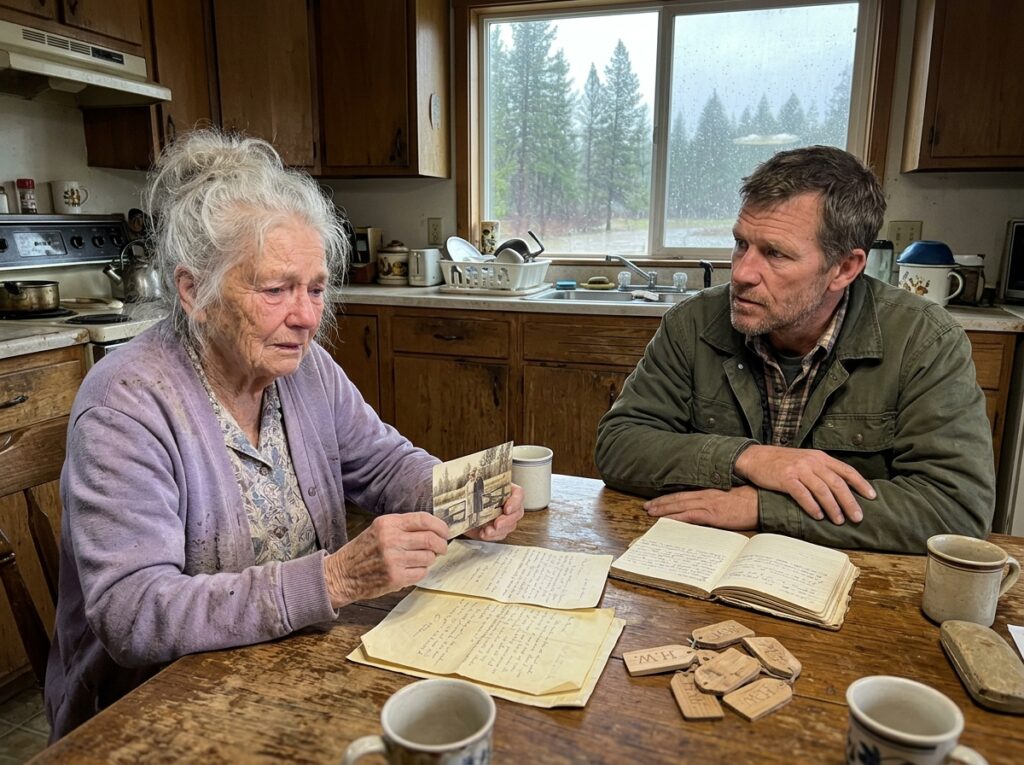
“Daniel,” she whispered, “why was my sister here the day before Henry died?”
Daniel Mercer looked down at the photograph.
“I was hoping you could tell me.”
Margaret shook her head.
“Ruth and I haven’t spoken in forty years.”
Outside the kitchen window, rainwater dripped from the pine branches surrounding the farmhouse. The pond was still swollen, and the damaged footbridge leaned toward the muddy bank.
But Margaret barely noticed.
Her mind had returned to a summer afternoon four decades earlier.
Emily had been gone only a few months.
The farmhouse had been filled with flowers, sympathy cards, and visitors who didn’t know what to say.
Ruth had come to help.
She washed dishes, folded Emily’s little dresses, and tried to persuade Margaret to leave the house occasionally.
Then, one evening, they argued.
Margaret remembered every word.
Ruth had suggested packing away Emily’s toys until Margaret felt ready to see them again.
Margaret, overwhelmed by grief, accused her sister of trying to erase Emily from the family.
Ruth cried.
Margaret told her to leave.
And Ruth did.
For years afterward, neither woman found the courage to repair what had happened.
Now Margaret was holding proof that Ruth had returned.
Not to visit her.
But to see Henry.
“Why wouldn’t he tell me?” she asked.
Daniel pulled out a chair.
“Maybe he was waiting for the right moment.”
Margaret looked toward Henry’s empty seat.
“He always thought there would be more time.”
Daniel didn’t answer.
They sat quietly until Margaret finally reached for the telephone.
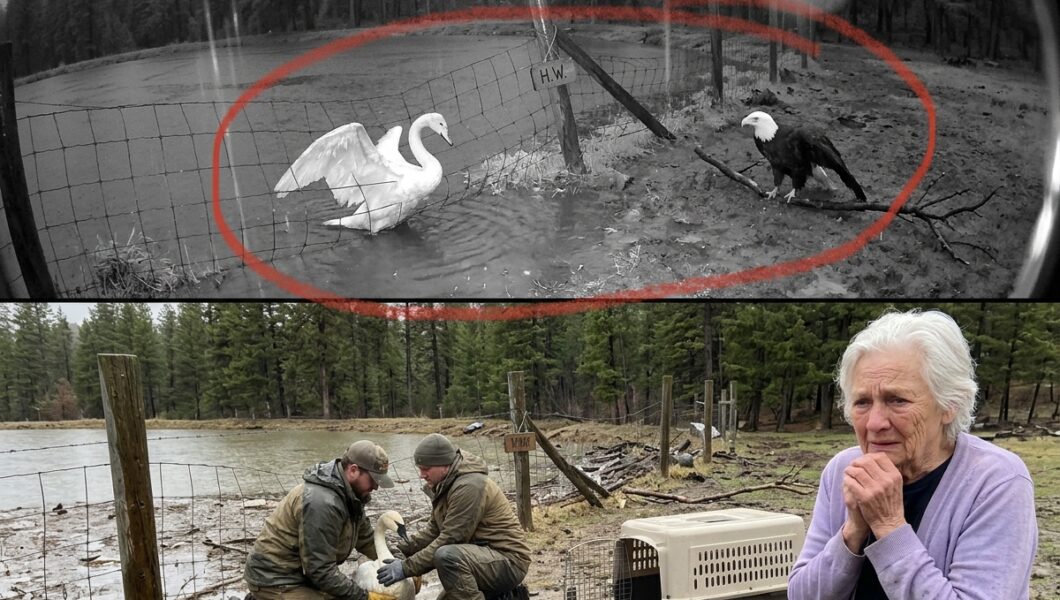
She called the county wildlife officer who had helped rescue the injured birds.
After explaining the photograph and the metal box beneath the bridge, she asked whether someone could examine the location safely.
The officer agreed to coordinate with the appropriate property and maintenance personnel.
“The bridge is unstable, Mrs. Wilson,” she explained. “Please don’t attempt to retrieve anything yourself.”
Margaret promised she wouldn’t.
She had already watched two injured birds struggle in floodwater.
She would not put herself or Daniel in danger.
But as she ended the call, she looked again at the photograph.
Ruth stood beside Henry, one hand resting on the metal box.
And for the first time in forty years, Margaret wondered whether her sister had been waiting for forgiveness too.
The following morning, Margaret received an update from the wildlife rehabilitation center.
The young swan was improving.
Its wing had suffered bruising and feather damage, but the veterinarian had found no obvious fracture. The bird was eating, alert, and responding to treatment.
Margaret smiled.
“And the eagle?”
The rehabilitator paused.
“The eagle is stable, but the wing injury is more serious. We’re continuing treatment and evaluating its ability to recover.”
Margaret thanked her.
She understood that the eagle might need months of care.
There was no guarantee it would ever fly again.
But both birds had survived the storm.
That was something.
Later that afternoon, Daniel returned with two county maintenance workers and a wildlife officer.
The pond level had fallen enough for them to assess the footbridge from stable ground.
Margaret watched from the farmhouse.
She could see the workers examining the damaged supports and photographing the collapsed fencing.
Eventually, they located the metal box beneath a section of old timber.
It had been placed inside a sheltered recess near the bridge support, rather than buried deeply in the ground.
The team documented its position and, after determining it could be recovered safely, brought it to the farmhouse.
The box was small, no larger than a shoebox.
Its metal sides were stained with rust.
A faded blue ribbon had been tied around the handle.
Margaret recognized the knot.
Henry had always tied ribbons with two loops instead of one.
She touched it gently.
“Oh, Henry.”
Daniel placed the box on the kitchen table.
The latch was stiff, but the container opened without much difficulty.
Inside was a waterproof pouch.
And inside that were photographs, several folded letters, a tiny white child’s bracelet, and a small notebook.
Margaret’s breath caught.
The bracelet had belonged to Emily.
She remembered buying it for her daughter’s sixth birthday.
It had a little silver swan charm.
Emily had worn it everywhere.
Even when she slept.
Margaret lifted the bracelet with trembling fingers.
For forty years, she had believed it was lost.
She pressed it against her chest and began crying.
Daniel stepped quietly toward the window, giving her space.
Margaret sat for several minutes, holding the tiny bracelet.
Then she opened the notebook.
On the first page, Henry had written:
“Emily’s Pond. The things we never stopped loving.”
Margaret turned the page.
There were sketches of swans, ducks, dragonflies, and the little wooden footbridge.
Beside one drawing, Henry had written:
“Emily says the white birds look like clouds that learned to swim.”
Margaret laughed through her tears.
She remembered those words.
Emily had said them one bright summer morning while sitting on Henry’s shoulders.
Margaret had forgotten.
Henry had not.
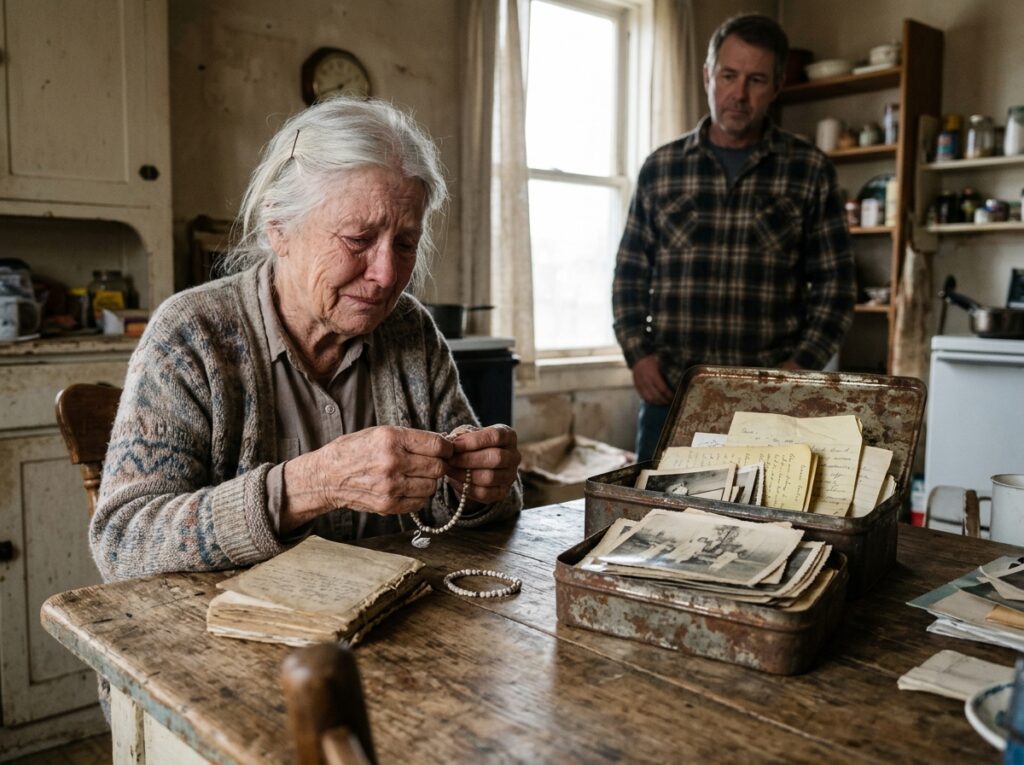
Beneath the notebook was a sealed envelope.
On the front, Henry had written:
“For Margaret, when she’s ready.”
Margaret carefully opened it.
The letter inside was dated one day before Henry died.
“My dearest Ellie,
There is something I should have told you many years ago.
Ruth came to see me.
She has been asking about you for years, but she was afraid you would turn her away.
I told her that grief made us both say things we never truly meant.
She cried when I showed her the pond.
She remembered Emily feeding the ducks and carrying that little white stuffed swan everywhere.
Ruth brought Emily’s bracelet with her. She found it among the things she’d kept after helping us during that terrible summer.
She wanted you to have it, but she was frightened that returning it would reopen old wounds.
I told her that some wounds never close completely, but love can still grow around them.
I asked Daniel to help me finish the pond restoration.
I wanted the footbridge repaired, the fencing made safe, and a little bench placed beneath the willow tree.
I imagined you and Ruth sitting there together someday, remembering Emily without feeling that you had to hide your tears.
If I don’t finish the work, please don’t think I failed.
The pond was never meant to be a monument to sadness.
It was meant to be a place where life could continue.
I love you, Ellie.
And I hope one day you’ll let your sister come home.
Henry.”
Margaret lowered the letter.
For a long time, she couldn’t speak.
She had spent forty years believing Ruth had chosen to leave her life.
Now she understood that both sisters had been trapped by the same grief.
Neither had known how to reach across the distance.
And Henry, quietly, had been trying to build a bridge between them.
Not only across the pond.
But across forty years of silence.
Daniel returned to the table.
“Mrs. Wilson?”
Margaret wiped her cheeks.
“Do you know where Ruth lives?”
Daniel nodded.
“Henry gave me an address. I don’t know whether it’s still current.”
Margaret looked at the bracelet in her palm.
“Would you help me find her?”
Daniel smiled gently.
“Of course.”
Three days later, they located Ruth through an old family contact.
She was seventy-three now, living in a small house outside Missoula.
When Margaret heard her sister’s voice on the telephone, she almost dropped the receiver.
“Ruth?”
There was silence.
Then a quiet voice answered.
“Maggie?”
Margaret began crying.
“I found Emily’s bracelet.”
On the other end of the line, Ruth gasped.
“Oh, Margaret.”
“I found Henry’s letter too.”
Neither sister spoke for several seconds.
Then Ruth whispered, “I’ve wanted to call you so many times.”
Margaret pressed the telephone against her ear.
“Why didn’t you?”
“Because I thought you hated me.”
Margaret closed her eyes.
“I never hated you. I was just hurting.”
Ruth began crying.
“So was I.”
They spoke for nearly two hours.
They remembered Emily’s laughter, her favorite stories, and the little white stuffed swan she carried everywhere.
They talked about Henry.
They talked about the years they had lost.
And when the conversation finally ended, Margaret asked a question she had been afraid to ask.
“Ruth, would you come home?”
Her sister’s answer came immediately.
“Yes, Maggie. I’d love to.”
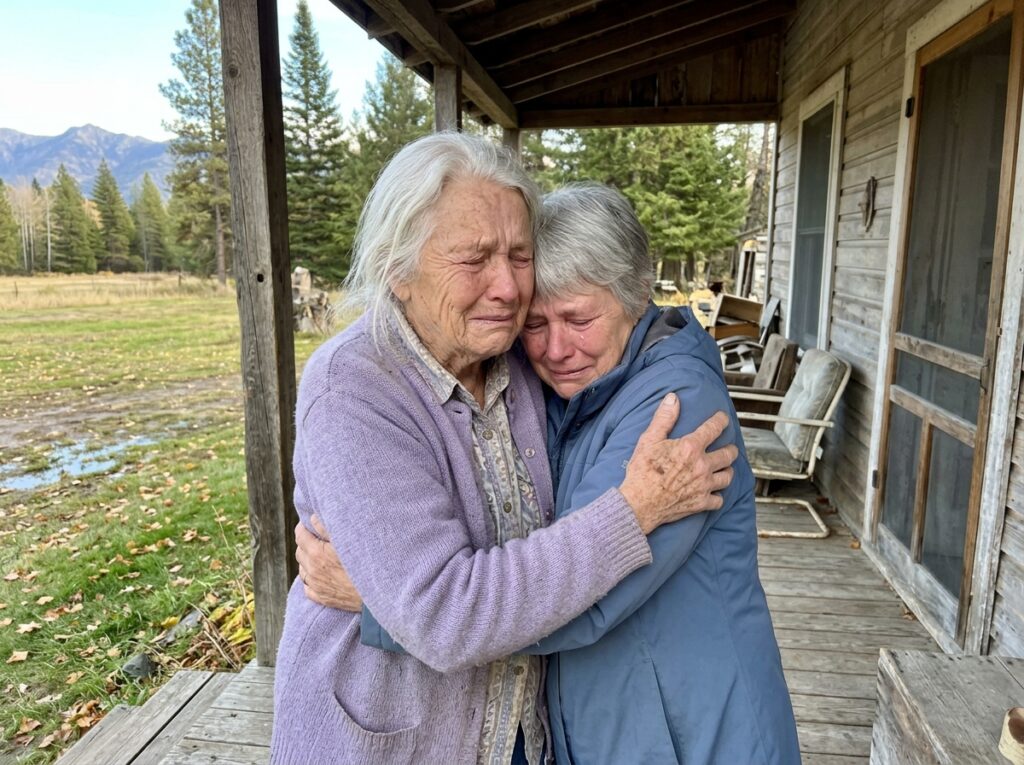
The following Saturday, Ruth arrived at the farmhouse.
Margaret stood on the porch waiting.
When her sister stepped out of the car, both women stopped.
Forty years had changed them.
Their hair had turned silver.
Their faces carried deep wrinkles.
Their hands trembled.
But when Ruth whispered, “Maggie,” Margaret walked forward.
They embraced beside the porch steps.
Neither tried to hide her tears.
“I’m sorry,” Ruth whispered.
Margaret held her tighter.
“So am I.”
For several minutes, they stood together beneath the Montana sky.
Then Margaret took Ruth inside.
She showed her Henry’s letters.
She showed her Emily’s bracelet.
And she showed her the photograph of their little girl standing beside the pond.
Ruth touched Emily’s face in the photograph.
“She was so happy that day.”
Margaret nodded.
“She was.”
For the first time in forty years, the two sisters remembered Emily together.
Over the following weeks, Margaret, Ruth, and Daniel began planning how to restore the pond safely.
The damaged fence was inspected and repaired by experienced workers.
The unstable footbridge remained closed until its supports could be properly assessed.
Daniel helped coordinate with the appropriate landowners and wildlife specialists to make sure the restoration would not disturb nesting birds or other wildlife.
Margaret could no longer do the heavy work herself.
But she made sandwiches for the workers.
Ruth brought homemade apple pie.
And Daniel spent his weekends helping organize the project.
They called it Emily’s Pond.
Not because they wanted to turn the place into a memorial that nobody could touch.
But because they wanted it to remain a safe, living place for the animals Emily had loved.
One afternoon, Daniel brought Margaret a small wooden sign.
He had carved the words himself.
“Emily’s Pond. A Place for Every Living Thing.”
Margaret ran her fingers across the letters.
“Henry would have loved this.”
Daniel smiled.
“He taught me how to carve signs when I was seventeen.”
Margaret looked at him.
“Then I suppose he’s still teaching us.”
Winter came slowly.
The pond froze along its edges.
Snow gathered on the pine branches.
Margaret continued receiving updates about the injured birds.
The young swan recovered steadily.
Once wildlife professionals determined it was healthy enough for release, they selected a suitable location and returned it to the wild.
Margaret was grateful.
She knew it might never return to her pond.
But the important thing was that it had another chance.
The bald eagle’s recovery took longer.
Its injured wing required months of rehabilitation.
The veterinary team monitored its strength, coordination, and ability to fly.
There were difficult days.
Margaret tried not to hope too much.
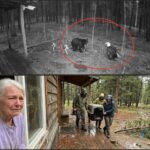
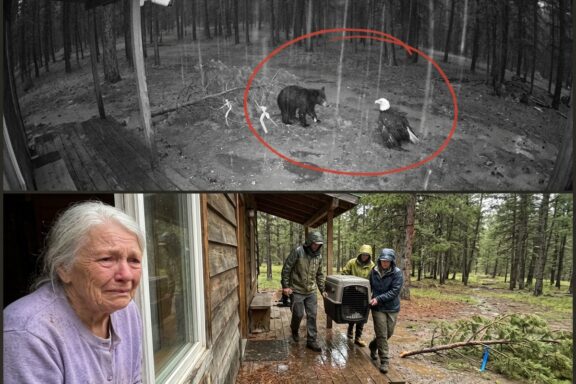
But every positive update reminded her of that terrible night when the eagle stood in the rain beside the trapped swan.
Then, one morning in early spring, Daniel called.
“Margaret, are you sitting down?”
She smiled nervously.
“Daniel, don’t frighten me.”
He laughed softly.
“The eagle passed its final flight assessment.”
Margaret pressed a hand against her chest.
“It’s going home?”
“Yes. The rehabilitation team has approved its release.”
Margaret began crying.
Ruth, sitting beside her at the kitchen table, reached for her hand.
Several days later, the sisters traveled with Daniel to a suitable release location selected by wildlife professionals.
They stood at a safe distance as the rehabilitator prepared the carrier.
Margaret wore Henry’s old wool scarf.
Ruth held Emily’s little swan bracelet inside her coat pocket.
When the carrier opened, the eagle stepped forward.
For a moment, it remained still.
Then it spread its enormous wings.
Margaret held her breath.
With several powerful beats, the bird lifted into the air.
It climbed above the clearing, turned toward the distant mountains, and disappeared beyond the trees.
Margaret began crying.
Ruth placed an arm around her shoulders.
“Henry would have loved that.”
Margaret nodded.
“And Emily.”
They stood together for a long time.
Neither felt the need to say anything else.
That evening, Margaret returned to the farmhouse.
The pond was quiet beneath the soft spring light.
The repaired fencing stood safely along the bank.
The footbridge was still awaiting its final inspection, but a new bench had been placed beneath the willow tree.
Margaret and Ruth sat there together.
Between them rested the old photograph of Emily holding her stuffed swan.
Margaret looked across the water.
“For forty years, I thought this pond only reminded me of what we’d lost.”
Ruth took her hand.
“And now?”
Margaret smiled through her tears.
“Now it reminds me of what we still have.”
A pair of ducks moved quietly across the water.
The evening sun slipped behind the pine trees.
And somewhere in the distance, a bird called from the forest.
Margaret looked toward Henry’s favorite chair near the farmhouse window.
For three years, she had believed his unfinished work was simply another reminder of his absence.
Now she understood.
Henry had left behind more than a damaged fence and a weathered footbridge.
He had left a way for two sisters to find each other again.
He had left a place where Emily’s memory could bring comfort instead of only pain.
And he had left a reminder that kindness could continue long after the person who began it was gone.
Margaret squeezed Ruth’s hand.
“Welcome home, little sister.”
Ruth leaned her head against Margaret’s shoulder.
“I’m glad I came back.”
Margaret looked toward the pond.
Then she whispered the words she wished Henry could hear.
“You finished it, sweetheart.”
And for the first time in forty years, the water beside the farmhouse no longer seemed to hold only sadness.
It held memories.
It held forgiveness.
And it held the quiet promise that love, even after a lifetime of loss, could still find its way home.
The End.
This is a fictional kindness and wildlife rescue story created for emotional storytelling.
No Comments