

Three years after the Pine Ridge Motor Lodge was demolished, Eleanor Harper stopped answering her phone.
That wasn’t like her.
Eleanor was eighty-eight by then.
Still living alone.
Still driving the beige Buick, although everyone who loved her had developed strong opinions about whether she should.
Still buying groceries every December for somebody who needed them.
Still denying responsibility whenever anyone figured out she was the one who’d helped.
But on December 14, Kayla called me.
“Have you talked to Eleanor?”
“Not this week.”
“I’ve called four times.”
That got my attention.
Kayla had become close to her.
What began with two grocery bags outside Room 7 had turned into lunches, phone calls and occasional arguments.
Mostly arguments about Eleanor’s refusal to accept help.
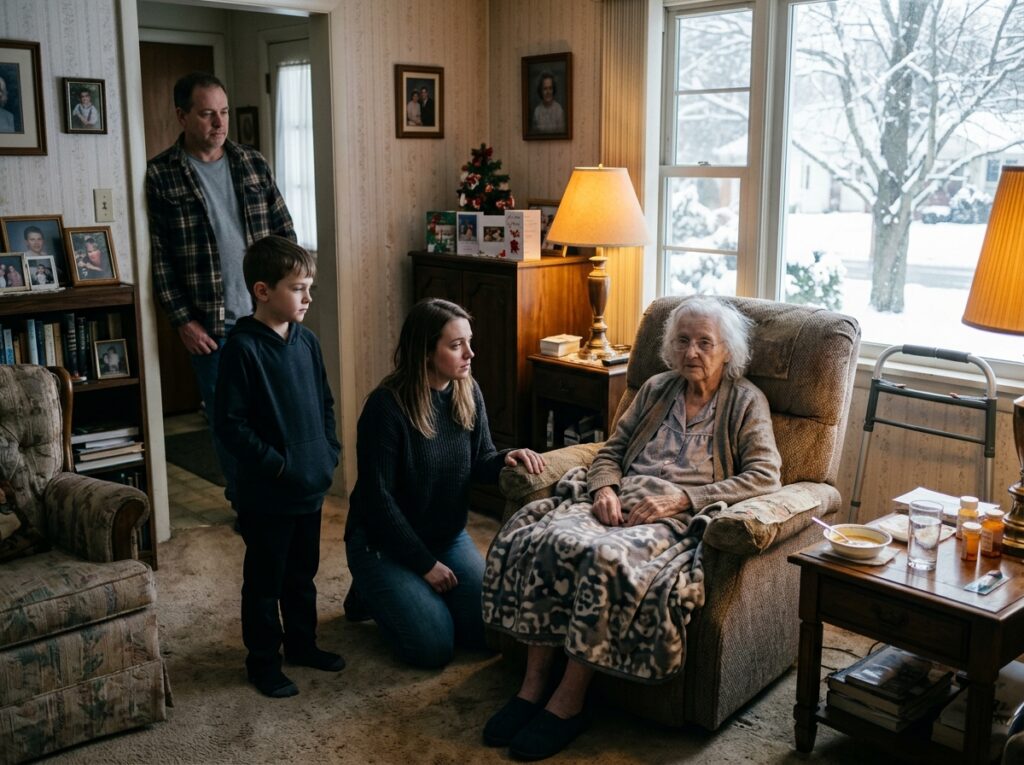
I drove to her house.
Kayla was already there.
So was Mason, now ten.
Eleanor’s Buick sat in the driveway under three inches of snow.
The walkway hadn’t been shoveled.
Kayla knocked.
Nothing.
She used the spare key Eleanor had reluctantly given her the year before.
We found Eleanor sitting in her recliner.
Blanket over her legs.
Television on.
Alive.
Very annoyed.
“What are you people doing in my house?”
Kayla almost cried.
“You haven’t answered your phone.”
“Battery died.”
“Four days ago?”
“I’ve been busy.”
Doing what, exactly, remained unclear.
Then I noticed the untouched bowl of soup on the table.
The nearly empty refrigerator.
And the way Eleanor winced when she tried to stand.
Something was wrong.
She’d fallen two days earlier.
Not badly, according to her.
But her hip hurt.
She hadn’t driven since.
Hadn’t gone grocery shopping.
Hadn’t told anyone.
Kayla stared at her.
“You’ve been sitting here for two days?”
“I’ve been walking.”
“Where?”
“Bathroom.”
“That’s eight feet.”
“Still walking.”
There are few people more stubborn than an eighty-eight-year-old woman whose entire adult identity has been built around being the helper.
We took her to urgent care.
Nothing broken.
A deep bruise.
Doctor’s orders: rest, use the walker she already owned but refused to acknowledge, and accept help for a while.
Eleanor hated every word.
Especially the last three.
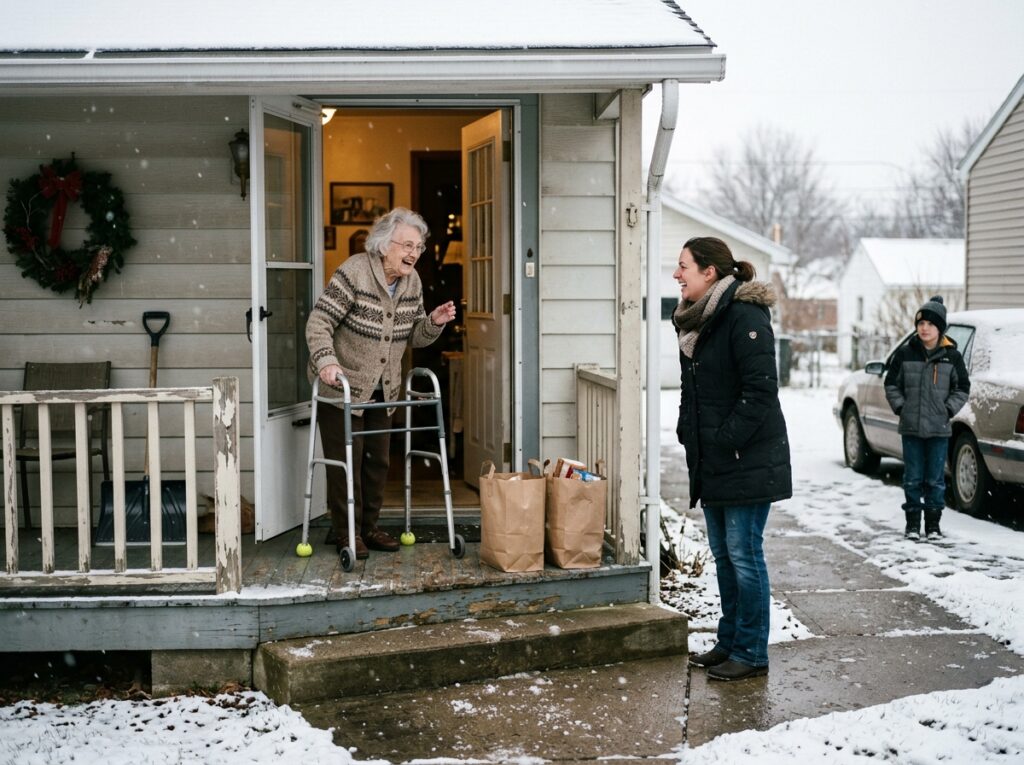
The next morning, Kayla showed up at Eleanor’s house with groceries.
Two paper bags.
She placed them outside the front door.
Knocked three times.
Then walked away.
At least she tried to.
Eleanor opened the door before Kayla reached the sidewalk.
“Kayla.”
Kayla kept walking.
“Kayla!”
She turned.
“Yes?”
“What is this?”
Kayla looked at the bags.
“No idea.”
“There is milk in here.”
“Better put it inside before it freezes.”
I wish I’d been there.
Kayla told me Eleanor stared at her for about five seconds.
Then started laughing.
Then crying.
Then laughing again.
“You think you’re funny.”
“A little.”
Eleanor looked at the groceries.
“I can buy my own food.”
“I know.”
“I have money.”
“I know.”
“Then why are you doing this?”
Kayla walked back toward the porch.
“Because being steady doesn’t mean you never wobble.”
Eleanor hated that sentence.
Mostly because it was good.
She let Kayla carry the bags inside.
That was the beginning of the hardest lesson Eleanor ever had to learn from Charlie.
She had spent forty-five years believing his words meant:
When you get steady, steady somebody else.
She had never considered that being steady wasn’t permanent.
Life moves.
Health changes.
Jobs disappear.
Marriages end.
Bodies age.
The person helping this year may need help next year.
The person receiving may eventually be the one knocking on somebody else’s door.
There aren’t two permanent groups.
Helpers.
And helped.
There are just people.
Eleanor understood that intellectually.
Living it was different.
Kayla started bringing dinner twice a week.
Eleanor complained.
I shoveled her walkway.
She complained.
Her daughter Sarah arranged grocery delivery.
More complaining.
Mason took her trash cans to the curb.
That one she tolerated because he was ten and apparently exempt from criticism.
Then Kayla caught her trying to carry laundry downstairs.
“You’re going to fall.”
“I’ve been doing laundry since before your mother was born.”
“That doesn’t make gravity respect you.”
Eleanor glared.
“You’ve gotten mouthy.”
“You raised me.”
“I absolutely did not.”
“Close enough.”
Eleanor smiled despite herself.
But underneath the jokes was something real.
She was scared.
Not of dying.
At least not mainly.
She was afraid of becoming dependent.
One afternoon she admitted it.
“I don’t want to be somebody’s project.”
Kayla was quiet.
Then she said:
“Did I feel like your project?”
Eleanor looked at her.
“No.”
“You paid my security deposit.”
“You needed somewhere to live.”
“You brought groceries.”
“You needed food.”
“You watched Mason when my babysitter canceled.”
“You needed to work.”
Kayla leaned forward.
“So why does needing something make me a person and make you a burden?”
Eleanor had no answer.
Neither would I.
Because sometimes the beliefs we extend generously to everybody else are the hardest ones to extend to ourselves.
By Christmas, Eleanor was moving better.
Not perfectly.
But enough to become dangerous again.
She called me on December 22.
“I need a ride.”
“Where?”
“Grocery store.”
“No.”
Silence.
“You understand I’m not your mother.”
“Correct.”
“So you don’t get to tell me no.”
“Also correct.”
“Pick me up at ten.”
I picked her up at ten.
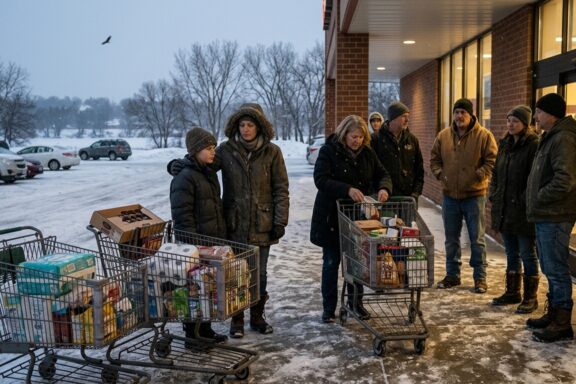
At the store, she filled a cart.
Milk.
Eggs.
Bread.
Chicken.
Cereal.
Apples.
Peanut butter.
I recognized the list.
“Who are these for?”
“Nobody.”
There was that word again.
Apparently “nothing” and “nobody” become equally suspicious after eighty.
She’d heard about a father with two children who had recently moved into temporary housing.
I stopped the cart.
“Eleanor.”
“What?”
“You just got back on your feet.”
“Mostly.”
“You don’t need to do this.”
She looked at me like I’d missed the entire point of the last forty years.
“I know.”
Fair enough.
Then I noticed she was buying less than usual.
Not because she couldn’t afford more.
Because she was tired.
Halfway through the store, she sat on a bench.
I finished the list.
She let me.
That mattered.
We delivered the groceries together.
Quietly.
No introduction.
No photograph.
Knock.
Walk away.
Except Eleanor couldn’t walk away quickly anymore.
So we had to perform what may have been the slowest anonymous getaway in Pennsylvania history.
“Hurry up,” she whispered.
“You’re using a walker.”
“I know.”
“We’re terrible criminals.”
“Drive.”
The father opened the door while we were still twenty feet away.
“Excuse me?”
Eleanor stared straight ahead.
I did too.
“Did you leave these?”
Eleanor yelled:
“No.”
I looked at her.
“That was convincing.”
“Get in the car.”
He knew.
Of course he knew.
But he didn’t chase us.
Didn’t force a thank-you.
He simply carried the bags inside.
Eleanor watched in the side mirror.
Then smiled.
Charlie would’ve appreciated that.
The following spring, Eleanor stopped driving.
Her decision.
Mostly.
The Buick went to her grandson.
She complained about that too.
Kayla became one of her regular drivers.
Somewhere along the way, their relationship changed.
Kayla no longer felt like the young woman Eleanor had once helped.
Eleanor no longer felt like the old woman helping her.
They became friends.
A very strange pair of friends.
Almost sixty years between them.
One had survived losing a house in 1983.
The other survived losing an apartment after a fire decades later.
Both knew what it felt like to stand on the receiving side of kindness.
Both knew how much dignity mattered.
Mason grew up between them.
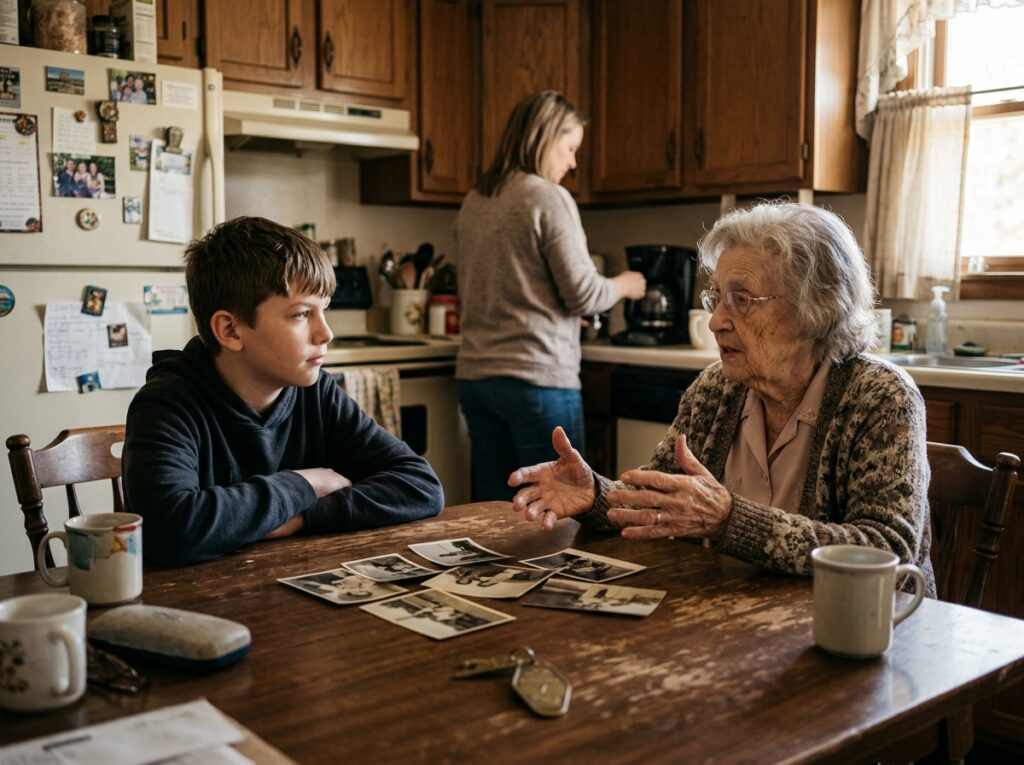
By thirteen, he understood the Room 7 story better.
One afternoon he asked Eleanor:
“Did Mr. Bennett save you?”
She shook her head.
“No.”
“Mom says he did.”
“Your mother gets dramatic.”
Kayla, from the kitchen:
“I can hear you.”
Eleanor smiled.
Then looked at Mason.
“Charlie helped me survive a bad stretch.”
“Isn’t that saving somebody?”
“Maybe.”
She thought.
“But I don’t want you thinking people who need help are waiting for somebody else to fix their lives.”
She pointed toward herself.
“I worked.”
“Your mom worked.”
“Lots of people work very hard and still need help.”
Mason nodded.
Eleanor continued.
“Charlie didn’t become the hero of my story. He just made sure I stayed warm long enough to keep writing it.”
I’ve never forgotten that.
There is a kind of generosity that accidentally steals the center of somebody else’s story.
The giver becomes the hero.
The person struggling becomes scenery.
Eleanor hated that.
Charlie apparently had too.
Help should enlarge someone’s options.
Not shrink their dignity.
Eleanor made it to ninety-one.
By then, she lived with Sarah.
Not because she wanted to.
Because stairs and stubbornness are a dangerous combination.
Her mind remained sharp.
Her hearing didn’t.
Every conversation eventually included:
“What?”
followed by:
“I heard you. I just didn’t like what you said.”
That final December, Kayla asked what she wanted for Christmas.
“Nothing.”
“That’s not an answer.”
“Coffee.”
“You have coffee.”
“Then I’ve got everything.”
Mason was sixteen.
He’d gotten his first job at a grocery store.
That detail wasn’t lost on any of us.
One evening, a week before Christmas, Mason came home from work quieter than usual.
Kayla asked what was wrong.
There was an older man who came through his checkout line most evenings.
Bought almost the same things.
Soup.
Bread.
Bananas.
Dog food.
That night, his card declined.
He removed the dog food.
Declined.
Removed the bananas.
Still declined.
The man looked embarrassed.
People were waiting.
Mason didn’t know what to do.
Eventually the customer left with nothing.
“I should’ve paid.”
Kayla asked:
“Did you have enough?”
“Yeah.”
“Then why didn’t you?”
Mason stared at the floor.
“I froze.”
That’s honest.
We like to imagine kindness always arrives perfectly on cue.
It doesn’t.
Sometimes we notice too late.
Sometimes we’re afraid of embarrassing someone.
Sometimes we don’t know what to say.
Sometimes the moment passes.
Mason couldn’t stop thinking about it.
The next evening, the man returned.
Mason had twenty dollars in his pocket.
But before doing anything, he asked his manager what he was allowed to do.
Good kid.
They worked something out.
When the man reached his register, Mason quietly covered what remained after the man’s available cash.
No announcement.
No line of customers applauding.
The man looked at him.
“You don’t have to do that.”
Mason said:
“I know.”
Three words.
That’s all.
I know.
The man thanked him once.
Mason didn’t tell him about Eleanor.
Or Charlie.
Or Room 7.
He didn’t need to.
When Mason told Eleanor what happened, she was quiet for a long time.
Then:
“Good.”
Mason looked disappointed.
“That’s it?”
“What do you want, a parade?”
“No.”
“Good. Parades are expensive.”
Then she smiled.
“Did you make him explain himself?”
“No.”
“Did you make him promise to pay you back?”
“No.”
“Did you post it online?”
“No.”
“Then you did fine.”
Mason laughed.
Eleanor reached for his hand.
“That’s how you steady somebody.”
She died six weeks later.
February.
At Sarah’s house.
Her children were there.
So was Kayla.
Mason arrived from school twenty minutes too late.
That bothered him for a long time.
Eleanor would’ve told him not to make himself the center of her dying.
She’d been surrounded by people she loved.
That was enough.
At the funeral, there were more people than I expected.
Former nursing-home employees.
Neighbors.
People from church.
Kayla.
Mason.
And several people none of us recognized.
One woman approached Sarah afterward.
“Your mother paid my electric bill in 2002.”
Another man said:
“She bought tires for me.”
A woman in her fifties whispered:
“She paid for three nights at a motel after my husband hurt me. I never knew how she knew.”
Sarah kept hearing versions of the same story.
Small amounts.
Small moments.
Enormous timing.
Nobody had the full picture.
Not even Eleanor.
That’s what she would’ve liked.
Afterward, Sarah handed Kayla a small envelope.
Inside was the brass key to Room 7.
Eleanor had apparently taken it back from the motel windowsill before demolition.
I laughed when I learned that.
So much for symbolic endings.
Attached was a note:
Kayla —
Charlie gave me this when I needed a door.
I don’t think keys should sit in drawers.
You decide what it opens next.
Love, Eleanor
Kayla kept it for almost a year.
Then she figured it out.
She and Sarah worked with a local community organization to establish a small emergency fund.
Nothing huge.
Short-term help.
A motel room after a fire.
A tank of gas to reach work.
Groceries.
A utility payment.
The kind of expenses that don’t fix poverty but can prevent a bad week from becoming a catastrophe.
They called it the Room 7 Fund.
There was one rule Eleanor would’ve approved of.
People didn’t have to tell their worst story publicly to receive help.
No social-media photographs.
No donor standing beside a recipient holding an oversized check.
No forced testimonials.
Professional staff handled requests privately.
The brass key hangs inside the office.
Not on display to the public.
Just a reminder.
A door.
That’s all.
Last December, Mason came home from college.
Nineteen.
Too tall.
Hungry constantly.
Still working at the grocery store during breaks.
We met for breakfast near the old Pine Ridge property.
Kayla came.
Sarah too.
Afterward, we drove to the creek.
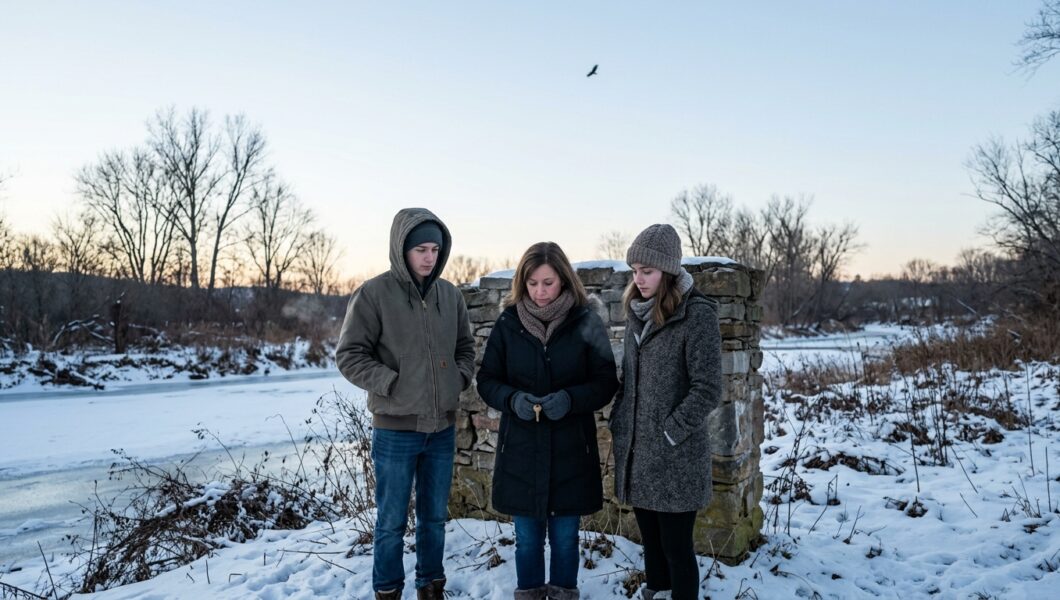
Snow had fallen overnight.
The motel had been gone for years.
Most people driving past wouldn’t know it ever existed.
At 6:47, Mason checked his phone.
“Isn’t this the time?”
Kayla smiled.
“Pretty close.”
We stood there.
Nothing.
6:50.
Nothing.
Sarah started complaining about the cold.
Then at 6:53, an eagle crossed above the creek.
High.
Slow.
White head catching the morning light.
Mason smiled.
“Is that Charlie?”
Kayla shook her head.
“Eleanor would haunt you for saying that.”
We laughed.
The eagle kept flying.
Just a bird.
Beautiful enough without becoming anything else.
I thought about Charlie Bennett.
He’d been dead nearly thirty years.
The motel was gone.
Room 7 was gone.
Eleanor was gone.
Yet that morning, somewhere in the county, a family would buy groceries because of a small emergency fund carrying the number of an old motel room.
Somebody might sleep indoors after a house fire.
Somebody might keep the electricity on.
Somebody might put gas in the car and make it to work.
They probably wouldn’t know Charlie’s name.
That’s okay.
Kindness doesn’t need to preserve our names to preserve our influence.
That’s something I understand better now.
We spend so much time wanting to be remembered.
Maybe there’s another way to leave something behind.
Teach someone how to help without humiliating.
Show someone that receiving isn’t failing.
Let them see that generosity doesn’t require ownership of the outcome.
Then disappear from the story.
Charlie did.
Eleanor eventually did.
Someday Kayla will.
Someday I will.
The door can keep opening anyway.
And I’ve changed my mind about one thing Eleanor used to say.
She always told me:
“When you get steady, steady somebody else.”
I love that sentence.
But now I’d add something.
When you aren’t steady, let somebody steady you.
That’s part of it too.
You don’t graduate permanently from needing people.
You don’t become so generous that you’re no longer allowed to receive.
Some years you’re carrying the groceries.
Some years they’re outside your door.
Both are human.
Both belong in the same story.
So if somebody helped you once, don’t spend your life trying to repay a debt they never asked you to carry.
Pass kindness forward when you can.
And when life knocks you sideways again, don’t be ashamed to open the door.
There may be two grocery bags sitting there.
The milk may be freezing.
And somewhere down the walkway, someone who loves you may be pretending they had absolutely nothing to do with it.


No Comments