

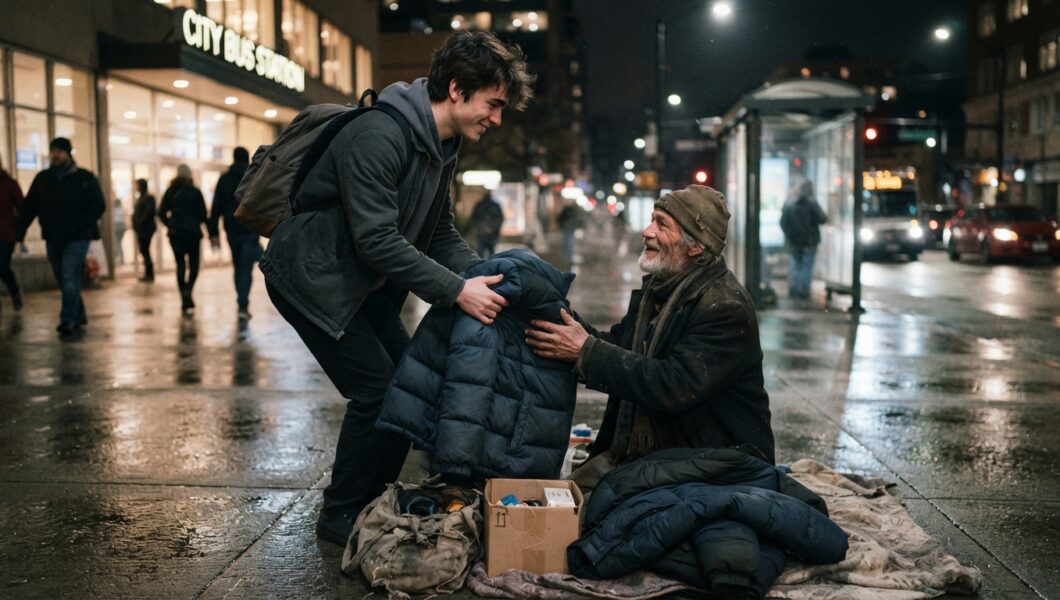
By the next morning, my dad’s little thrift-store story was no longer little.
When he called me the night before, he had expected nothing more than a quiet conversation between a father and daughter. He told me about the young man he had seen at the Community Goodwill in Canton, the cart full of winter coats, and the simple reason he was buying them. Dad had taken one photograph and posted it online because he wanted to remember the moment.
He never expected thousands of people to notice.
But when he woke up the next morning, his phone was filled with notifications.
People had shared the photograph over and over. Some had left comments saying they were inspired. Others were telling stories about people who had helped them during difficult times. A few were asking the same question Dad had wondered about all night.
“Does anyone know who this young man is?”
Dad didn’t know.
Neither did I.
We only knew what he had said in that quiet thrift store: the coats were for people sleeping downtown near the bus station, and he wanted them to have something warm before the weather got worse.
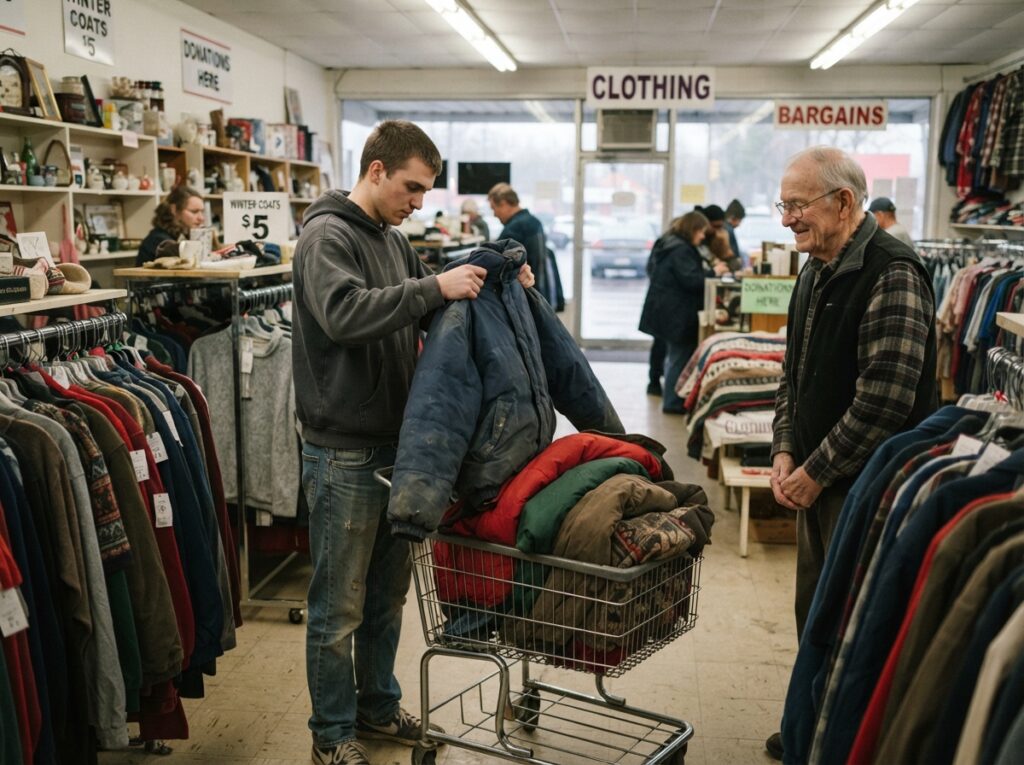
By lunchtime, Dad received a message from someone he didn’t know.
The person said they believed they knew the young man in the photograph.
His name was Marcus.
Dad immediately called me.
“You’re not going to believe this,” he said.
Apparently, Marcus wasn’t connected to a large charity. He wasn’t the face of some organization. He didn’t have a social media following or a fundraising page. He was simply a young man who worked a regular job and had started noticing the people who slept outside around town.
That detail somehow made the story even more meaningful.
According to the person who contacted Dad, Marcus had been doing small acts of kindness for months. He sometimes brought food downtown. Other times he carried bottled water, blankets, socks, or hand warmers in his car. He didn’t announce any of it. Most people didn’t know.
The coats weren’t even his first attempt to help people prepare for winter.
They were just the biggest thing he had done so far.
Dad was stunned.
“You mean he’s been doing this all along?” he asked.
I told him that sometimes the people doing the most good are the ones nobody notices.
A few hours later, another message arrived. This one was from a woman who said her brother had received one of Marcus’s blankets earlier in the year.
She explained that her brother had fallen on hard times. He had lost his apartment and spent several weeks sleeping wherever he could. She said Marcus had never asked him why. He never made him explain what happened or prove that he deserved help.
He simply handed him a blanket and something to eat.
That message made Dad quiet for a long time.
Then he said something I don’t think I’ll ever forget.
“He reminds me of what people used to be like.”
I knew exactly what he meant.
Dad grew up in a family that didn’t have much. There were years when his parents had to choose carefully between necessities. He remembers cold mornings, worn-out shoes, and the embarrassment of pretending everything was fine when it wasn’t.
He told me that when you’re poor, sometimes the hardest part isn’t being cold or hungry.
It’s feeling like nobody sees you.
That’s what stayed with him about Marcus.
The young man hadn’t simply bought coats.
He had noticed people.
That difference matters more than most of us realize.
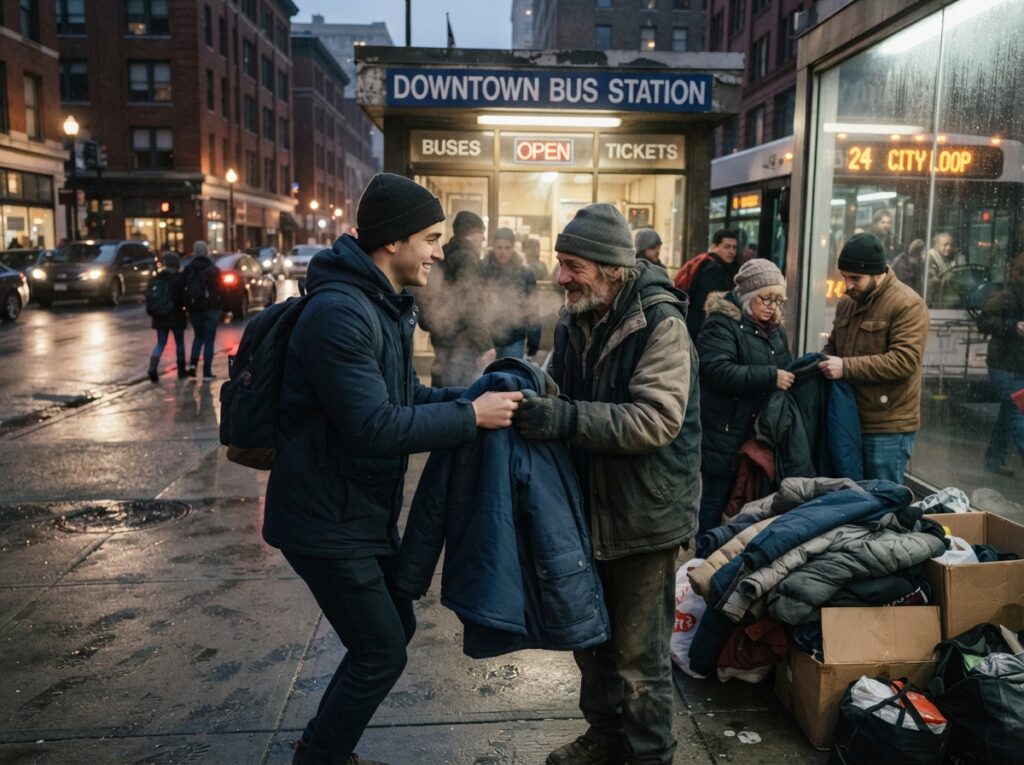
That afternoon, Dad decided he wanted to find Marcus.
Not because he wanted another photograph.
Not because he wanted an interview.
He simply wanted to shake his hand.
After a little searching, someone gave Dad a way to contact him. Dad sent a short message explaining who he was and why he was reaching out.
Marcus replied later that evening.
His response was almost exactly what Dad expected.
He said he was glad the coats were getting attention, but he didn’t think he had done anything special.
Dad showed me the message.
I laughed.
“Of course he says that.”
But Marcus went on to explain why he had started helping people in the first place.
A few years earlier, someone had helped him when he was struggling.
It wasn’t a huge gesture. It wasn’t thousands of dollars or some dramatic rescue.
Someone had simply noticed that he needed help.
They gave him a meal, listened to him, and treated him with dignity when he wasn’t feeling particularly proud of where his life was going.
Marcus never forgot it.
He said that experience taught him something simple: sometimes a person doesn’t need you to solve their entire life. Sometimes they just need somebody to make one difficult day a little easier.
So that’s what he tried to do.
One meal.
One blanket.
One pair of socks.
One coat.
Whatever he could afford.
He wasn’t wealthy. In fact, he admitted that spending nearly seventy dollars at the thrift store wasn’t exactly an insignificant purchase for him.
But he said he could afford it.
And he knew there were people who couldn’t.
That was enough.
When Dad read that, he didn’t respond for several minutes.
Then he sent Marcus a message telling him about his own childhood.
He told him about the newspaper stuffed into his shoes.
He told him about the winters when his family tried to stay warm without enough money for proper heating.
And he told him that seeing Marcus buy those coats had reminded him of something he had almost forgotten.
People can survive hard times.
But they remember the people who helped them through those times.
Marcus thanked Dad for sharing that with him.
Then he said something that made Dad smile.
“Maybe that’s why I do it.”
There was no grand speech after that.
No television interview.
No organization created in his name.
Just two strangers, from different generations, realizing they understood something about hardship and kindness.
But the story was still moving.
People who had seen Dad’s post began organizing their own donations. Someone offered to provide gloves. Another person wanted to donate blankets. A local business offered boxes of socks and hand warmers.
Then a woman posted that she had ten brand-new winter hats sitting at home.
Someone else said they had several coats their family had outgrown.
A man who lived several towns away asked where he could send supplies.
The post that had started with one photograph had turned into something much bigger.
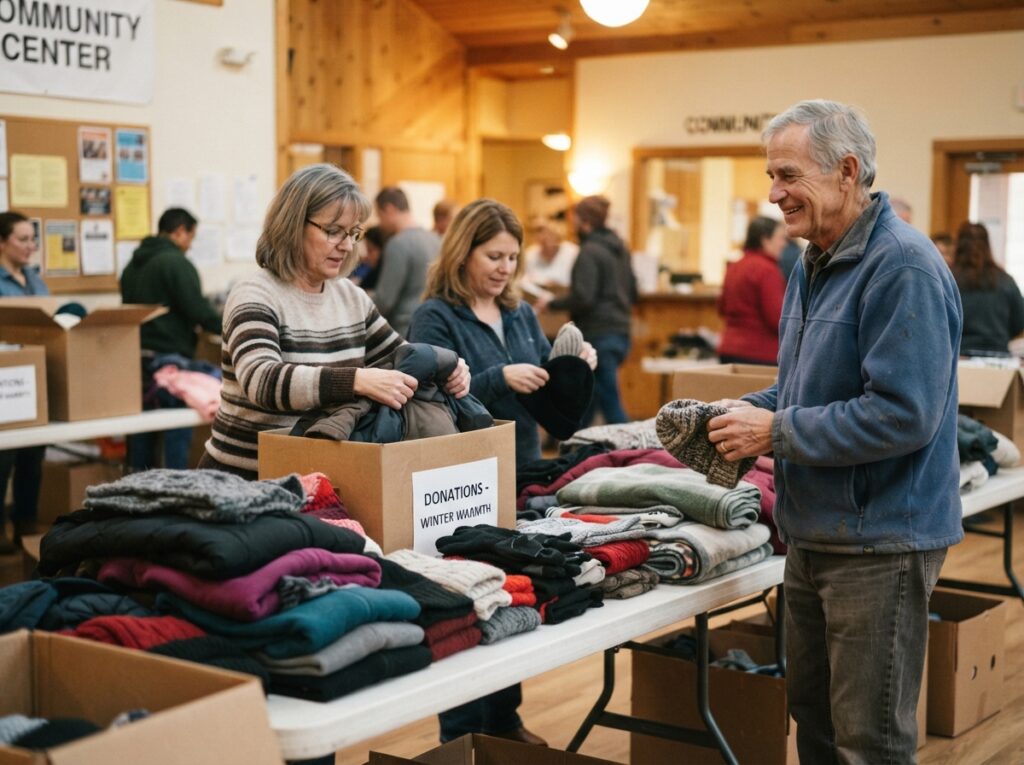
Dad eventually met Marcus in person.
They chose a quiet coffee shop, nothing fancy.
When Dad saw him walk through the door, he recognized him immediately.
Marcus looked almost exactly like he had in the photograph: young, slightly shy, dressed simply, with the kind of expression that made him seem uncomfortable being the center of attention.
Dad stood up and shook his hand.
“I just wanted to say thank you,” Dad told him.
Marcus smiled.
“For what?”
Dad laughed.
“For reminding an old man that people still care.”
Marcus looked down for a second.
Then he said, “I think people always cared. We just don’t always see it.”
Dad told me those words stayed with him all the way home.
They stayed with me too.
Because he was right.
We hear so much about everything that’s going wrong. We see arguments, outrage, cruelty, bad news, and people treating one another as enemies.
After a while, it’s easy to believe that’s all there is.
But kindness rarely makes as much noise.
It happens in grocery-store parking lots.
It happens at bus stops.
It happens when someone pays for another person’s meal.
It happens when a neighbor checks on an elderly person during a storm.
It happens when somebody sees a stranger shivering in the cold and decides that walking past isn’t an option.
And sometimes it happens in a thrift store, when a young man spends money he could have kept for himself because he knows someone else needs a coat more than he does.
A week after Dad’s photograph was posted, the weather turned sharply colder.
Marcus and a small group of volunteers distributed the coats.
Dad wasn’t there for all of it, but Marcus sent him a few photographs afterward.
There were older men wearing the heavy jackets.
There were women wrapped in blankets.
There were people smiling, some of them holding their new coats tightly around themselves.
One photograph showed an elderly man sitting on a bench outside the bus station wearing the same brown coat Marcus had picked from the thrift store.
Dad stared at that picture for a long time.
“That could have been me,” he said quietly.
I knew what he meant.
Years ago, he had been the person who needed someone to notice.
Now he was watching someone else do the noticing.
And perhaps that’s how kindness really travels.
It doesn’t always move from rich people to poor people or from adults to children. Sometimes it moves from one struggling person to another. Someone receives help, remembers what it felt like, and years later decides to offer that same feeling to somebody else.
No announcement.
No expectation.
Just a quiet decision to make someone’s life a little easier.
Dad still has the original photograph on his phone.
Every once in a while, he’ll pull it up and look at it.
He says the picture isn’t really about Marcus anymore.
It’s about the reminder behind it.
That we don’t have to wait until we’re rich, powerful, important, or perfectly prepared to help somebody.
We can help with what we have.
A coat.
A meal.
A ride.
A phone call.
Ten minutes of our time.
Sometimes even a little kindness toward a stranger can become the thing they remember years later.
And maybe that’s the part of this story I needed most.
The young man in that thrift store probably thought he was just buying winter coats.
My dad thought he was simply taking a photograph.
I thought I was just listening to my father tell me about something that happened during his afternoon in town.
None of us knew where that moment would lead.
But one quiet act of generosity reminded hundreds of people that they could do something too.
Maybe that is what makes kindness so powerful.
You don’t always get to see where it goes.
You may never know whose life it touches or how far it travels after you’ve walked away.
Marcus never asked for recognition.
Dad never expected his photograph to spread.
And the people receiving those coats never had to know the name of the person who bought them.
They simply knew that on a cold week, someone cared enough to make sure they weren’t facing it without something warm to wear.
That’s more than enough.
So tonight, when I look at that photograph again, I don’t just see a young man holding bags of winter coats.
I see a choice.
A very simple choice.
He saw someone who was cold, and instead of wondering whose responsibility it was, he decided to help.
Maybe we can’t change everything that’s wrong with the world.
Maybe we can’t fix every hardship or rescue every person who needs help.
But we can notice.
We can care.
And when we have the chance to make one person’s day a little warmer, a little easier, or a little less lonely, we can choose not to walk away.
My dad thought he had found a story at the thrift store that afternoon.
Instead, that story found all of us.
And perhaps the greatest thing Marcus gave those people wasn’t even the coats.
He reminded us that we still have a choice about the kind of people we want to be.


No Comments