

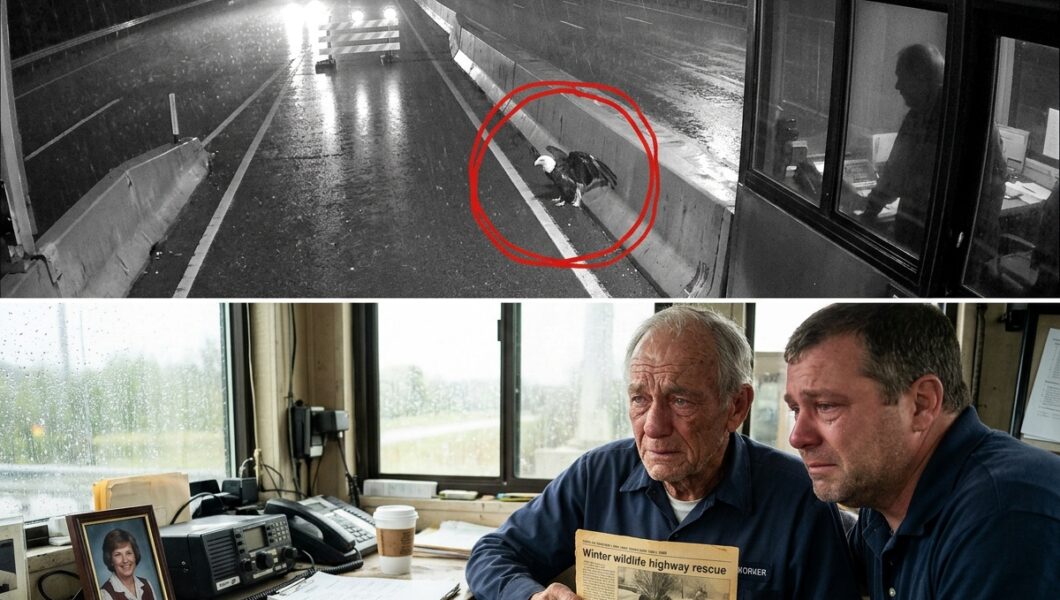
Daniel Brooks stared at the yellowed newspaper clipping in Walter Hayes’s trembling hands. The little boy being carried away from the wrecked car was unmistakably him. He recognized the red winter coat, the frightened expression, and the small scar above his eyebrow that he had carried into adulthood.
For thirty-seven years, Daniel had believed a passing truck driver had rescued him from that terrible accident. His mother had told him the story only once, and whenever he asked about it afterward, she became quiet. Now the man who had saved him was standing inside his own toll booth, wearing a faded uniform and holding a photograph of a woman Daniel had loved without ever knowing her name.
“Walter,” Daniel whispered, “that’s me.”
The sixty-eight-year-old toll worker nodded slowly. His eyes filled with tears as he lowered himself into the chair beside the window. Outside, morning traffic moved through the toll lanes, unaware that two men were discovering a connection that had begun nearly four decades earlier.
“I know, son,” Walter said. “I recognized you when you told me your mother’s name. But I wasn’t sure how much you remembered.”
Daniel pulled another chair closer. “Tell me everything.”
Walter looked down at the newspaper clipping. “It was February 1989. One of the coldest mornings I can remember. Your mother was driving you to school when her car slid on black ice near the old highway bridge. She hit the guardrail, and the car came to rest against a snowbank.”
Daniel remembered flashes of that morning. His mother’s frightened voice, broken glass on the passenger seat, and the strange smell inside the car. He remembered being cold and unable to open his door, but everything after that had disappeared into a blur.
“I was driving home from an early maintenance shift,” Walter continued. “I saw the wreck and pulled over. Your mother was conscious, but she couldn’t get her door open. You were crying in the back seat.”
Walter paused and pressed his fingers against his eyes. He explained that he had called emergency services and, after finding that the vehicle was stable enough to approach, helped Daniel out through an accessible door. He carried the boy to a safer location away from passing traffic while they waited for responders.
“Your mother kept asking whether you were hurt,” Walter said. “She wouldn’t let anyone worry about her until she knew you were safe.”
Daniel’s voice broke. “That sounds exactly like Mom.”
Walter nodded. “When the ambulance arrived, she made me promise I’d stay with you until somebody from your family came.”
Daniel looked toward the photograph of Margaret Hayes beside the toll booth window. “Where was your wife?”
“At Lincoln Elementary. She worked the breakfast shift back then. I called her from the hospital because I knew she’d want to help.”
Walter explained that Elizabeth Brooks had been treated for injuries that morning and needed several weeks to recover. Margaret arranged meals through the school and helped coordinate support with neighbors. When Elizabeth returned to work, she struggled to cover the expenses that had accumulated during her recovery.
“Margaret never made a big fuss about it,” Walter said. “She just started putting an extra sandwich in your lunch bag.”
Daniel closed his eyes. He could almost smell the warm tomato soup that Margaret served on cold afternoons. He remembered how she always saved him the corner piece of cornbread because she knew it was his favorite.
“She used to tell me I was a good boy,” Daniel whispered.
Walter smiled through his tears. “She meant it.”
Daniel looked down at the clipping again. The photograph showed a younger Walter carrying him toward an ambulance while snow covered the roadside. In the background, Elizabeth stood beside the damaged car, wrapped in a blanket.
“Why didn’t anyone tell me it was you?”
Walter took a slow breath. “Your mother was proud. She didn’t like feeling that she owed anyone something. Margaret told her she didn’t owe us a thing. We were just glad you were both alive.”
Daniel shook his head. “I spent my whole life wondering who that man was.”
Walter looked toward the window. “And I spent eleven years working for the little boy I once carried out of the snow.”
Neither spoke for a long time.
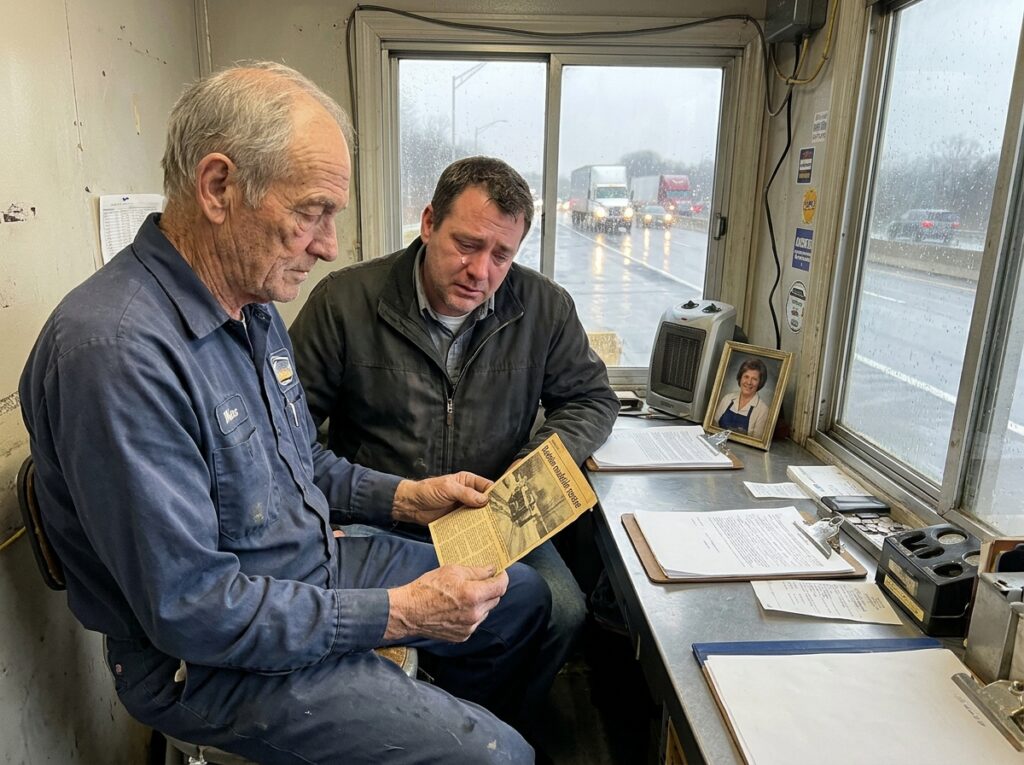
Eventually, Daniel reached for the old recipe card his mother had kept. On the back were the seven words that had started this conversation.
“Ask Margaret about the boy from 1989.”
He turned it over. The front contained a recipe for chicken and rice soup, written in Elizabeth’s careful handwriting. Daniel remembered his mother making it whenever someone in their neighborhood was sick.
“She must have wanted me to find you someday,” he said.
Walter studied the card. “Elizabeth gave Margaret that recipe after the accident. They used to make soup together for the church’s winter meal program.”
Daniel looked surprised. “My mother never mentioned that.”
“She helped more people than you probably knew.”
Daniel smiled sadly. “I think I’m beginning to understand where she learned it.”
Walter opened his work bag and removed a small notebook. It was the same notebook he had used for years to record the names of stranded motorists and travelers who needed assistance.
He turned to a page near the beginning.
Written in faded blue ink were the words: “Daniel Brooks, age seven. February 1989. Safe with his mother.”
Daniel stared at the entry.
“You kept my name all these years?”
Walter nodded. “Margaret and I started writing down the names of people we helped after that winter. She said remembering their names made the world feel smaller and kinder.”
Daniel carefully touched the edge of the page. “Did you ever hear from my mother again?”
“Sometimes. She sent Christmas cards for a few years. Then life got busy, and we lost touch.”
Walter paused. “Margaret kept every card.”
Daniel looked up. “Do you still have them?”
Walter smiled. “In a shoebox at home.”
That afternoon, Daniel drove Walter to his small house outside Harrisburg. The house was modest, with a narrow front porch, faded white shutters, and a garden that had grown untidy since Margaret’s death.
Inside, Walter led Daniel to the living room. A photograph of Margaret stood on the mantel beside a small ceramic angel.
Walter opened a wooden cabinet and removed an old shoebox.
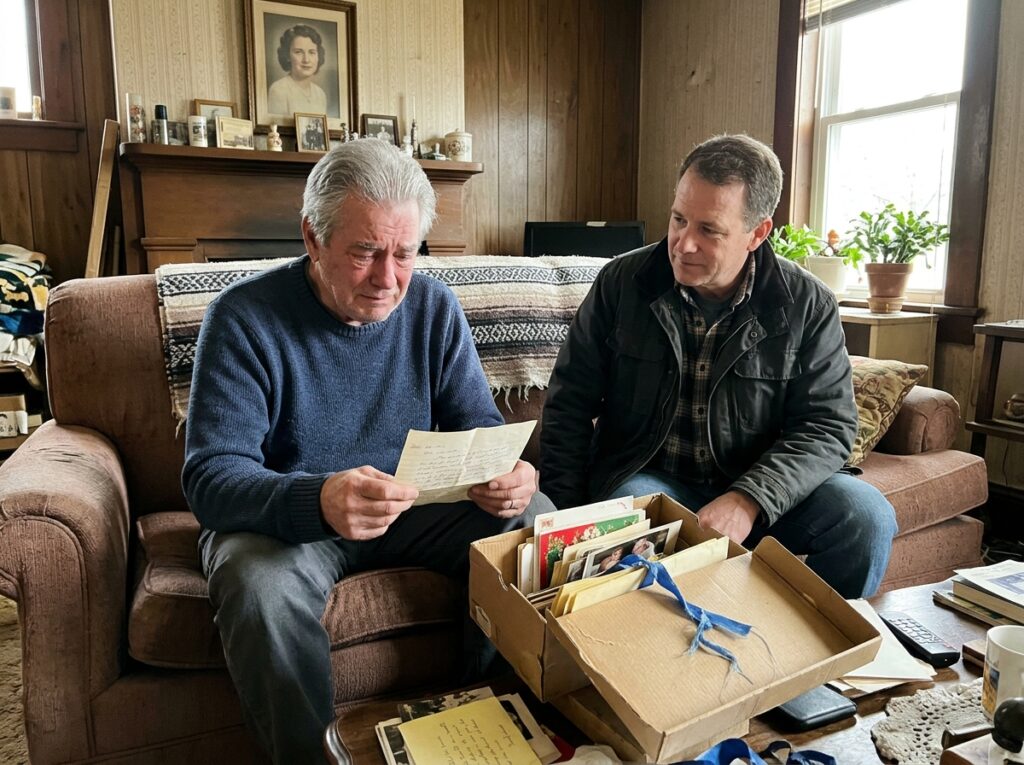
Inside were birthday cards, church bulletins, faded photographs, and letters tied together with a blue ribbon.
Daniel recognized his mother’s handwriting immediately.
The first card was dated December 1989.
“Dear Walter and Margaret, Daniel is doing well in school. He still talks about the nice lady who gives him extra soup. I hope one day he understands how much you both did for us.”
Daniel read the words twice.
Then he found another card, dated three years later.
“Daniel says he wants to help people when he grows up. I told him that’s the best way to thank someone who helped you.”
Daniel pressed the card against his chest.
His mother had died before she could see him become the manager of a highway facility. She had never known that he would eventually supervise the very man who had once carried him out of danger.
Walter sat beside him.
“Your mother would have been proud of you.”
Daniel shook his head. “I don’t know about that.”
Walter looked confused.
Daniel lowered his eyes. “Yesterday morning, when I saw the lane closure report, I was worried about complaints. I was thinking about delays and paperwork. I almost forgot there was a living creature suffering beside the road.”
Walter gently placed a hand on his shoulder.
“But you watched the footage. You listened. And you understood.”
Daniel wiped his eyes. “Because you reminded me.”
Walter smiled. “Then Margaret’s lessons are still working.”
The following morning, Daniel contacted the wildlife rehabilitation center for another update about the injured bald eagle.
The bird had survived the first critical period. Veterinarians had confirmed a serious wing injury and were continuing treatment. The rehabilitator explained that recovery would require patience, and there was still no guarantee the eagle would regain enough strength to return to the wild.
Daniel thanked her and asked whether the facility needed support.
The rehabilitator explained that donations through the center’s official program helped cover food, medical supplies, and specialized care for injured wildlife.
Daniel made a personal contribution in Margaret Hayes’s memory.
Then he returned to the toll facility and reviewed the emergency closure procedures with the highway safety team.
He wanted to ensure that employees understood how to report injured wildlife without putting themselves or drivers in danger. He also wanted workers to know that following the proper safety process would be supported by management, even when it caused inconvenience.
At the next staff meeting, Daniel addressed the overnight crew.
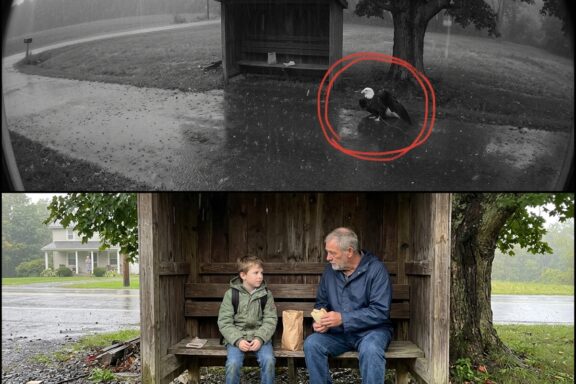
“Last week, Walter Hayes reported an injured bald eagle beside Lane Four,” he began. “He followed the closure procedure, contacted the appropriate responders, and helped prevent another vehicle from striking the bird.”
Several employees turned toward Walter.
Walter shifted uncomfortably in his chair.
Daniel continued. “Some drivers complained. But the safety procedure exists for a reason. Walter made the correct decision, and I want everyone here to understand that.”
He paused.
“There’s something else.”
Walter looked up.
Daniel explained that he had recently learned Walter had spent years quietly helping stranded travelers without seeking recognition or reimbursement.
He did not share private details about the people Walter had assisted.
Instead, he spoke about the importance of treating every person who passed through the toll facility with dignity.
“Most drivers will never remember our names,” Daniel said. “But they may remember how we treated them when they needed help.”
Walter stared at the floor.
Daniel turned toward him.
“Walter, you’ve reminded me what this work is supposed to mean.”
The room filled with applause.
Walter’s face turned red.
He tried to smile, but tears slipped down his cheeks.
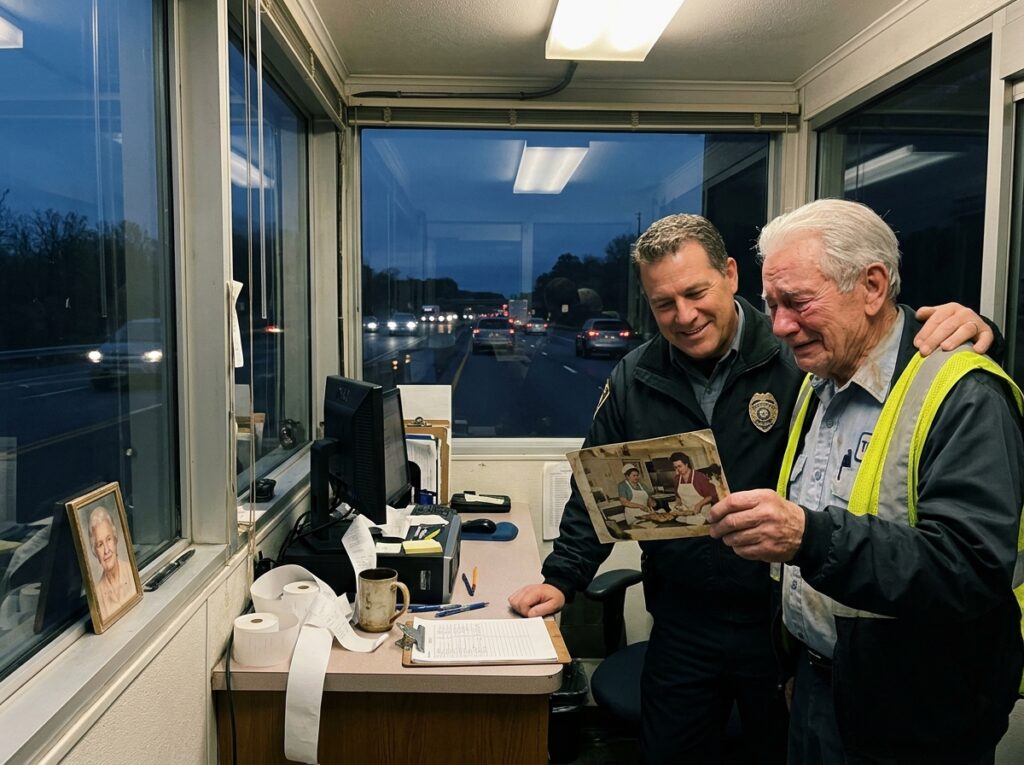
After the meeting, Daniel handed him a small framed photograph of Margaret.
Beneath it was a simple inscription:
“In gratitude for a lifetime of kindness.”
Walter held the frame carefully.
“She wouldn’t have wanted a fuss.”
Daniel smiled. “Then we’ll keep the fuss small.”
Walter laughed through his tears.
For the first time since Margaret’s death, he felt that the people around him understood why he continued coming to work each night.
It wasn’t because he loved collecting tolls.
It was because he loved being useful.
And because every traveler who passed his window reminded him that someone, somewhere, might need a little kindness.
Over the following weeks, Walter continued his overnight shifts.
He checked the safety cameras, greeted drivers, and recorded unusual incidents in his notebook.
Sometimes he helped someone contact roadside assistance.
Sometimes he simply listened to a frightened driver who had become lost.
And sometimes he sat quietly beside Margaret’s photograph, remembering the sound of her laughter.
Daniel visited the booth more often.
He brought coffee occasionally and asked Walter about the early years of his marriage.
Walter told him about meeting Margaret at a church picnic, their first apartment above a grocery store, and the way she always insisted on feeding anyone who visited.
Daniel shared memories of his mother.
He told Walter about the little garden Elizabeth kept behind their house and the way she made soup whenever the weather turned cold.
Gradually, the two men began to feel less like supervisor and employee.
They became friends.
One evening, Daniel arrived carrying a small envelope.
Inside was a photograph he had found in his mother’s album.
It showed Elizabeth Brooks standing beside Margaret Hayes outside Lincoln Elementary. Both women were smiling, holding large cooking pots.
On the back, Elizabeth had written:
“Two mothers making sure nobody goes hungry.”
Walter stared at the photograph.
Then he began laughing softly.
“Margaret always said your mother was the best soup maker in Pennsylvania.”
Daniel smiled. “And Mom always said the cafeteria lady made the best cornbread.”
They looked at each other.
Then both men began crying.
As winter approached, the bald eagle continued recovering at the wildlife rehabilitation center.
The injury required months of treatment and supervised flight conditioning. The veterinary team monitored the bird’s strength, balance, and ability to use its injured wing.
Some updates were encouraging.
Others reminded Walter that recovery could be uncertain.
He never demanded promises.
He simply asked whether the eagle was comfortable and receiving the care it needed.
One afternoon, Daniel received a call from the rehabilitation center.
The eagle had made substantial progress.
Its wing had healed well enough for the team to begin more demanding flight assessments.
Daniel called Walter immediately.
“Walter, I’ve got good news.”
Walter sat down.
“The eagle?”
“Yes. It’s flying again.”
Walter closed his eyes.
For several seconds, he couldn’t speak.
Then he whispered, “Thank God.”
The rehabilitation team continued its assessments over the following weeks.
Finally, in early spring, the eagle was cleared for release.
The center invited Walter and Daniel to observe from a designated safe distance.
Walter hesitated.
“I don’t know if I should go.”
Daniel looked surprised. “Why not?”
Walter glanced at Margaret’s photograph.
“She would’ve loved to see it.”
Daniel placed a hand on his shoulder.
“Then take her with you.”
On the morning of the release, Walter arrived wearing his old brown jacket.
Inside the pocket was a small photograph of Margaret.
Daniel drove them to the designated release location in the Pennsylvania countryside.
The sky was clear.
A cold breeze moved through the trees.
Walter stood quietly beside Daniel as the wildlife team prepared the transport carrier.
When the rehabilitator opened the door, the eagle remained still for a moment.
Then it stepped forward.
Its white head turned toward the open sky.
Walter held his breath.
The bird spread its enormous wings.
With several powerful beats, it lifted into the air.
It climbed above the clearing, circled once, and continued toward the distant trees.
Walter began crying.
Daniel stood beside him.
Neither spoke until the eagle disappeared.
Then Walter reached into his pocket and removed Margaret’s photograph.
He held it gently.
“You would’ve liked that, sweetheart.”
Daniel wiped his eyes.
Walter looked toward the sky.
“She always said every life mattered.”
Daniel nodded.
“She was right.”
They stood together for several minutes, listening to the wind moving through the trees.
Then Daniel turned toward Walter.
“There’s something I’ve been wanting to ask you.”
Walter smiled faintly.
“What is it?”
Daniel hesitated.
“Would you come to my house for Sunday dinner?”
Walter looked surprised.
Daniel continued. “My wife and kids have heard so much about you. They want to meet the man who saved their dad.”
Walter’s eyes filled again.
“I wouldn’t want to impose.”
Daniel shook his head.
“You wouldn’t be imposing. You’d be family.”
Walter looked down at Margaret’s photograph.
For four years, he had eaten most of his meals alone.
He had spent holidays sitting in his quiet house, listening to the clock and remembering the life he once shared with his wife.
Now someone was inviting him to a family dinner.
Not out of pity.
But because he belonged.
Walter nodded slowly.
“I’d like that very much.”
That Sunday, Daniel’s family welcomed Walter into their home.
The children asked questions about the highway rescue.
Daniel’s wife served chicken and rice soup using Elizabeth’s old recipe.
Walter tasted the first spoonful and stopped.
His eyes filled with tears.
“That’s Margaret’s favorite soup.”
Daniel smiled.
“Mom learned it from her.”
Walter looked around the table.
Children were laughing.
Someone passed a basket of warm bread.
Daniel’s youngest daughter asked whether Walter wanted another bowl.
For the first time in four years, Walter didn’t feel like a visitor in someone else’s life.
He felt like he had come home.
Later that evening, Daniel drove Walter back to his house.
Before getting out of the car, Walter reached into his pocket and removed his little notebook.
He opened it to the page where he had written Daniel’s name in 1989.
Beneath the old entry, he added a new line.
“Daniel Brooks. Safe again. March, thirty-seven years later.”
Daniel looked at the words.
Then he hugged Walter.
Neither man tried to hide his tears.
The next night, Walter returned to his toll booth.
He placed Margaret’s photograph beside the window, filled his thermos with coffee, and opened his notebook.
Outside, headlights moved along the Pennsylvania highway.
Drivers handed over tickets, asked for directions, and disappeared into the darkness.
Most never noticed the elderly man sitting behind the glass.
Walter didn’t mind.
He had never needed applause.
He had never needed recognition.
He only wanted to know that his small acts of kindness still mattered.
And now he knew.
Thirty-seven years earlier, he had carried a frightened little boy away from a wrecked car.
That boy had grown into a man.
That man had become his supervisor.
And when Walter feared he might lose the only job that kept him connected to the world, the boy he once saved had reminded him that he was not forgotten.
Walter looked at Margaret’s photograph.
He smiled.
“Well, sweetheart,” he whispered, “I think your kindness finally found its way back to us.”
Then the next car approached his window.
Walter straightened his uniform.
And greeted the driver with the same gentle words he had spoken for eleven years.
“Good evening. Drive safely.”
The End.
This is a fictional kindness and wildlife rescue story created for emotional storytelling.
No Comments