

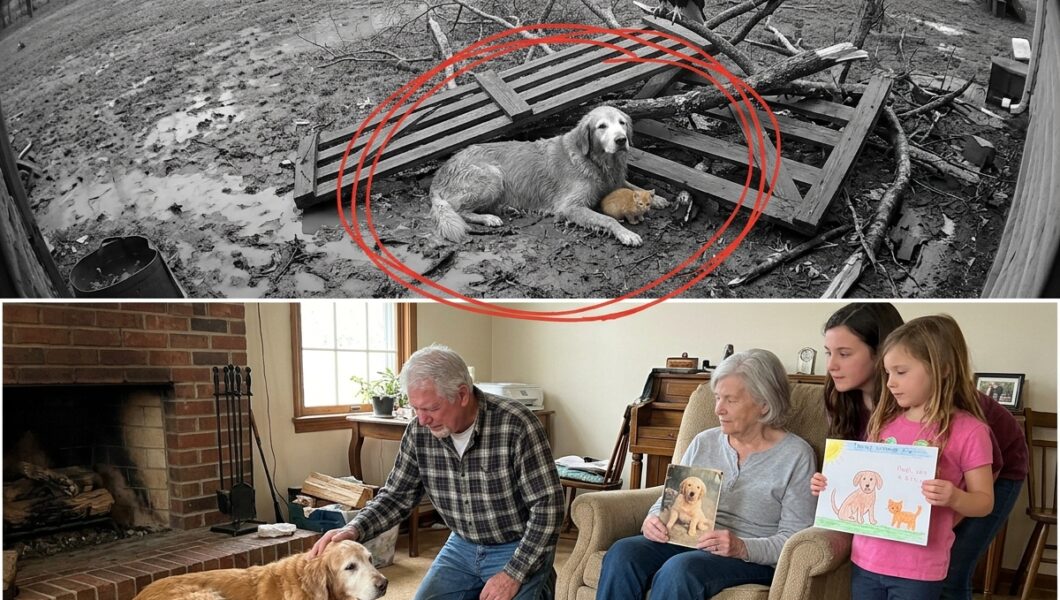
Margaret Wilson gripped the telephone so tightly that her fingers began to ache. Across the living room, fifteen-year-old Duke slept beside the fireplace, his gray muzzle resting on the same faded blanket their daughter Emily had bought him twelve years earlier.
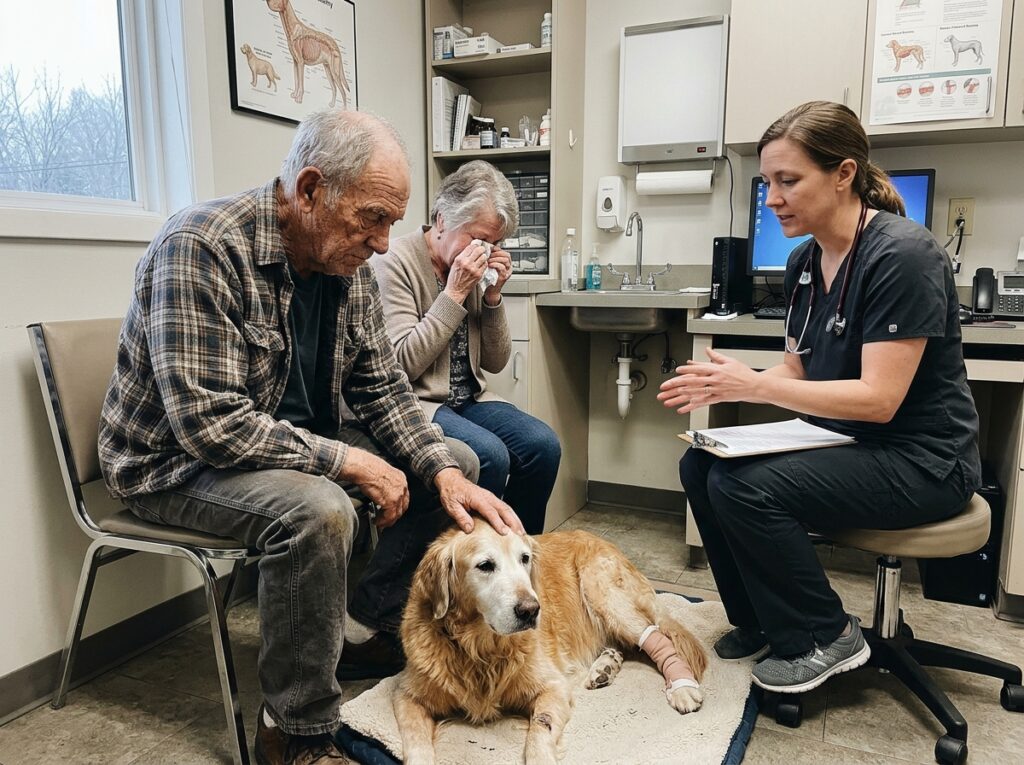
“Mrs. Wilson,” the veterinarian said gently, “Duke’s leg injury is healing. But during his examination, we noticed something else that needs further investigation.”
Margaret felt the room grow strangely quiet.
“What is it?”
“We found an abnormality near his heart. It may be serious, but we can’t know exactly what we’re dealing with until we perform additional tests.”
Margaret looked toward Duke.
The old golden retriever was breathing peacefully, unaware that the woman who had loved him since he was a puppy was struggling to remain standing.
“Is he dying?” she whispered.
The veterinarian paused.
“I don’t want to frighten you with conclusions we haven’t confirmed. But given his age, I think you and Henry should come in tomorrow so we can discuss the findings and what will keep Duke comfortable.”
Margaret thanked her and slowly lowered the telephone.
Henry was sitting at the kitchen table, studying the photograph of Emily holding Duke as a puppy.
He looked up.
“Margaret? What’s wrong?”
She tried to answer.
But the words wouldn’t come.
Henry stood and walked toward her.
“Is it Duke?”
Margaret nodded.
And then she began crying.
For twelve years, Duke had been the last living connection to their daughter. He had slept outside Emily’s bedroom after her funeral, refused to eat from anyone else’s hand for nearly a week, and eventually learned to follow Henry around the house as though he understood the old man needed someone beside him.
Now they were facing the possibility of losing him too.
Henry wrapped his arms around Margaret.
“We don’t know anything for certain yet,” he whispered.
She pressed her face against his shoulder.
“I can’t lose another piece of her.”
Henry closed his eyes.
Neither could he.
But when Duke lifted his head from beside the fireplace and gave a soft, questioning whine, Henry wiped his tears and knelt beside him.
“Hey, old buddy.”
Duke’s tail moved slowly against the blanket.
Henry placed a hand on his gray muzzle.
“We’re going to take care of you. Whatever happens.”
The following morning, Henry and Margaret brought Duke back to the veterinary clinic.
Additional testing confirmed that Duke had a serious heart condition requiring ongoing monitoring and treatment. The veterinarian explained that his age, arthritis, and recent injuries made his overall health more fragile.
There were treatment options that might help manage his symptoms, but no one could promise how much time he had left.
Henry sat quietly, holding Duke’s leash.
“Is he suffering?”
“Right now, his pain appears manageable,” the veterinarian replied. “He’s eating, responding to you, and resting comfortably. Our goal is to preserve those good days and watch carefully for changes.”
Margaret wiped her eyes.
“And if he gets worse?”
“Then we’ll talk honestly about his comfort and quality of life. You won’t have to make those decisions alone.”
Henry nodded.
He had spent twelve years wishing he could go back and change the day Emily died.
He couldn’t.
But he could make sure Duke’s remaining days were filled with love.
That evening, Henry carried Duke’s bed closer to the fireplace.
He placed a bowl of fresh water beside it and arranged the dog’s favorite blanket so he wouldn’t have to climb the porch steps or walk across slippery floors.
Margaret prepared his medication according to the veterinarian’s instructions.
Then they sat beside him.
For the first time in years, the farmhouse felt exactly as it had after Emily’s funeral.
Quiet.
Heavy.
Full of things nobody knew how to say.
Henry looked toward the photograph above the mantel.
Emily was seventeen in the picture, laughing as a tiny golden puppy tried to lick her face.
He remembered the day she brought Duke home.
She had arrived carrying a cardboard box, her jacket soaked from rain.
“Dad, don’t be mad.”
Henry had looked inside.
A frightened golden puppy stared back at him.
“Emily, we can’t keep every animal you find beside the road.”
She had smiled.
“Just this one.”
Margaret had laughed from the kitchen.
And somehow, that had been the end of the argument.
Duke stayed.
He grew into a clumsy, affectionate dog who followed Emily everywhere.
He waited outside the bathroom when she brushed her hair.
He slept beside her bed when she studied for exams.
And whenever she cried, he placed his head in her lap until she smiled again.
After Emily died, Henry couldn’t bear to enter her bedroom.
But Duke did.
Every evening, the dog carried his faded red tennis ball to her closed door and waited.
For months, Henry couldn’t understand why.
Then one night, Margaret opened the door.
Duke walked inside, placed the ball beside Emily’s bed, and lay down.
Henry stood in the doorway and cried.
That was the night he realized Duke was grieving too.
Now, twelve years later, the old dog was still carrying that same red ball.
Only his movements had become slower.
And Henry knew he couldn’t ask him to stay forever.
Three days after the veterinary appointment, Lily Carter arrived with her mother and Pumpkin.
The kitten was recovering well from his injuries.
Lily carried a small handmade card.
On the front, she had drawn Duke wearing a superhero cape.
Inside were the words:
“Dear Duke, thank you for saving Pumpkin. I hope you feel better soon. Love, Lily.”
Henry smiled through his tears.
“That’s beautiful, sweetheart.”
Lily looked toward Duke.
“Can he still play?”
Henry shook his head gently.
“Not the way he used to. But you can sit beside him if you’re careful.”
Lily nodded.
She sat on the floor a short distance from Duke’s bed.
Pumpkin remained safely in his carrier, watching through the little door.
Duke lifted his head.
His tail moved once.
Lily smiled.
“He remembers him.”
Margaret watched from the doorway.
She couldn’t stop thinking about the security footage.
Duke had walked into a violent storm despite his stiff legs and failing strength.
He had found a frightened kitten.
He had barked for help.
And when nobody came, he had tried to move the fallen timber himself.
He hadn’t been strong enough to lift the gate.
But he had been strong enough to care.
That evening, Margaret opened Emily’s old bedroom.
She hadn’t changed much since her daughter’s death.
The books remained on the shelves.
A faded blue sweater hung behind the door.
And beneath the bed was a wooden box filled with photographs, letters, and childhood keepsakes.
Margaret sat on the floor and opened it.
Inside was a small notebook.
On the cover, Emily had written:
“Things I Want to Do Someday.”
Margaret smiled sadly.
She remembered Emily filling the notebook during her final year of high school.
There were ordinary dreams.
Travel to California.
Learn to play the guitar.
Adopt another dog.
And one entry that made Margaret stop breathing.
“Someday, I want to help rescue animals nobody else wants.”
Margaret pressed the notebook against her chest.
She had known Emily loved animals.
But she had never realized how deeply that dream mattered to her.
Then she turned another page.
There was a drawing of Duke.
Beneath it, Emily had written:
“Duke doesn’t care if an animal is big or small. He just wants everybody to be safe.”
Margaret began crying.
She carried the notebook downstairs and handed it to Henry.
He read the pages slowly.
When he reached the drawing, his hands began trembling.
“She knew,” he whispered.
Margaret nodded.
“She always knew.”
Over the following weeks, Duke settled into a quieter routine.
He no longer walked far.
He slept more often.
And some mornings, Henry had to help him stand using the supportive harness recommended by the veterinarian.
But Duke still enjoyed sitting on the porch when the weather was mild.
He still lifted his head when Margaret entered the room.
And whenever Lily visited, his tail moved slowly against the floor.
The veterinarian monitored his condition and adjusted his care as needed.
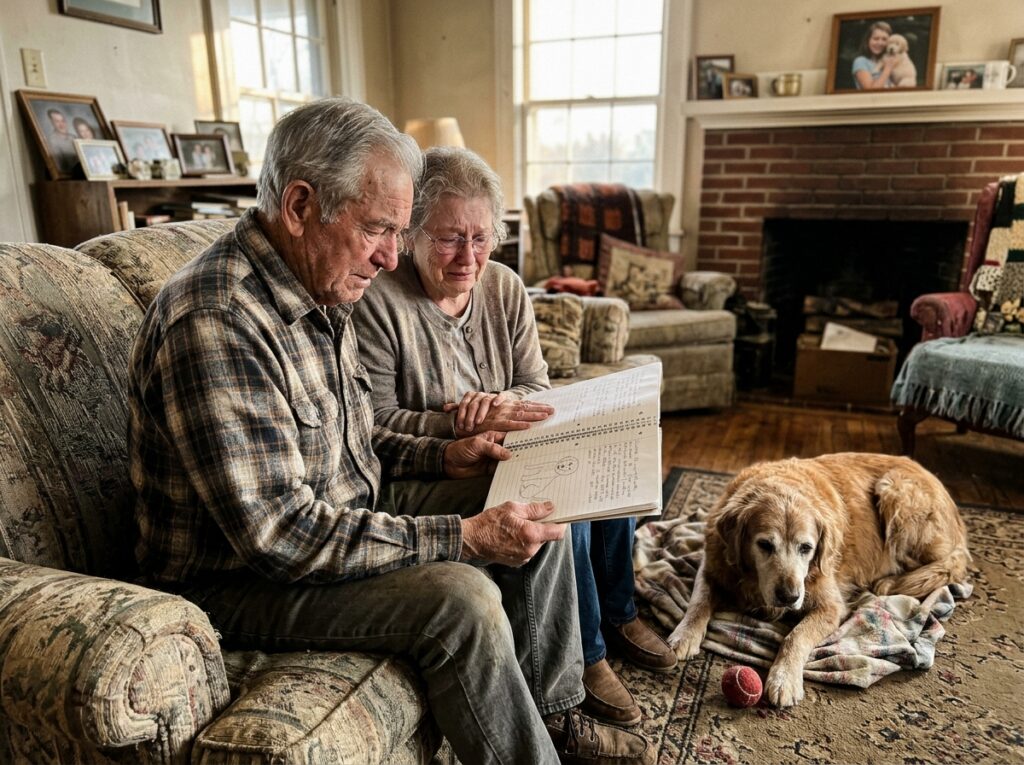
Henry began keeping a small notebook.
Each evening, he recorded whether Duke had eaten, rested comfortably, and shown interest in the things he loved.
At first, the notebook frightened him.
It felt like counting down the days.
But eventually, he began to see it differently.
He wasn’t measuring how much time Duke had left.
He was making sure every day mattered.
One afternoon, Lily arrived carrying a small box.
Inside were photographs of Pumpkin recovering at home.
One showed the orange kitten sleeping in a basket.
Another showed him chasing a toy mouse.
Lily placed the pictures beside Duke’s bed.
“Look,” she whispered. “Pumpkin’s getting better because of you.”
Duke lifted his head.
Henry smiled.
“I think he’d like to hear that.”
Lily sat beside him.
“Mr. Wilson?”
“Yes, sweetheart?”
“Why do old dogs have to get sick?”
Henry looked toward Duke.
He thought about Emily.
About the years that had passed.
And about all the things he still wished he could change.
Then he answered carefully.
“Because even the best bodies wear out eventually.”
Lily looked down.
“That’s not fair.”
Henry nodded.
“No. Sometimes it isn’t.”
The little girl was quiet for a moment.
Then she reached toward Duke’s blanket.
“But he still knows we love him, right?”
Henry’s eyes filled.
“Yes, Lily. I believe he does.”
That night, Henry told Margaret about their conversation.
She sat beside him at the kitchen table.
“Emily used to ask questions like that.”
Henry smiled sadly.
“She did.”
Margaret reached for his hand.
“Maybe that’s why Duke went out into the storm.”
Henry looked confused.
“What do you mean?”
“He spent his whole life with Emily. She was always bringing home injured birds, abandoned kittens, and frightened little creatures.”
Margaret looked toward Duke sleeping beside the fireplace.
“Maybe helping something small was simply what he’d learned to do.”
Henry wiped his eyes.
“He learned from the best.”
Several weeks later, the Wilsons received a letter from a local animal rescue organization.
Lily’s mother had shared Duke’s story with the group after asking Henry and Margaret for permission.
The organization wanted to honor Duke’s kindness by supporting veterinary care and adoption efforts for older and vulnerable animals.
They proposed creating a small community fund in Emily’s memory.
Henry read the letter twice.
Then he handed it to Margaret.
She covered her mouth.
“Our Emily?”
Henry nodded.
The organization explained that the fund would help provide supplies and approved veterinary assistance for rescued animals, especially senior pets whose care could be expensive.
They suggested calling it the Emily and Duke Kindness Fund.
Margaret began crying.
For twelve years, she had believed her daughter’s dreams ended with her life.
Now one of those dreams was finding a way forward.
Henry contacted the organization.
He asked that any donations be handled directly by the registered rescue group, with clear records and no money passing through the family’s personal accounts.
He also requested that the fund support practical needs rather than publicity.
“Emily wouldn’t have wanted a fuss,” he explained.
The volunteer coordinator smiled.
“Then we’ll make sure the animals get the attention.”
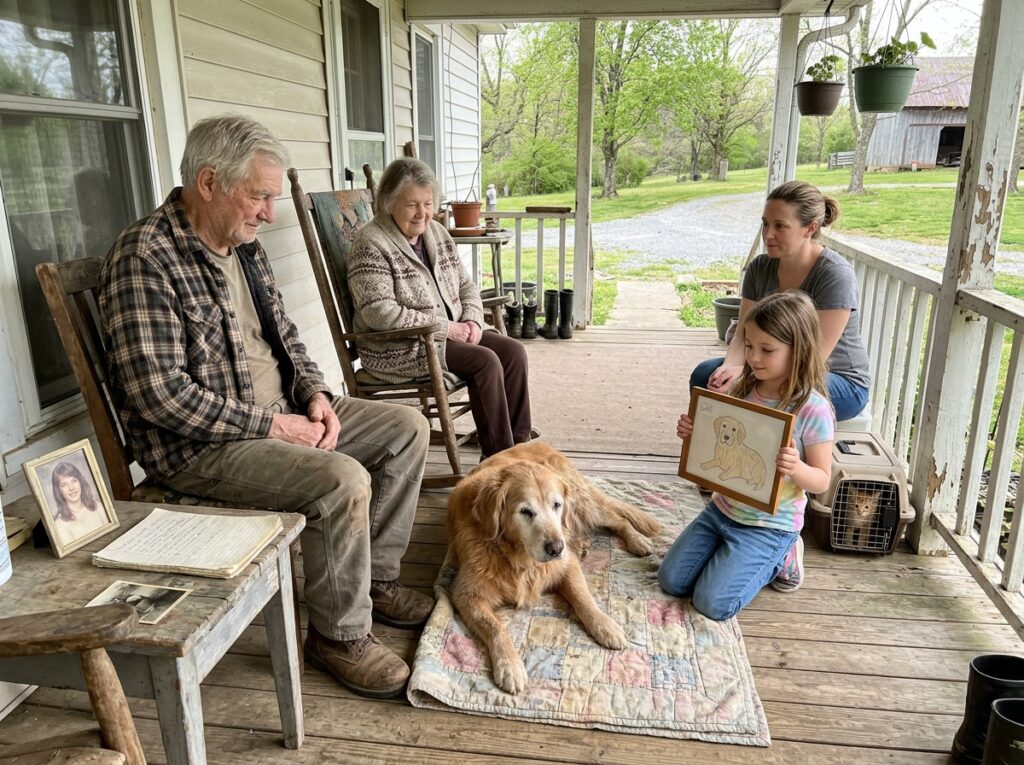
By early spring, Duke’s health had become more fragile.
He still enjoyed his favorite treats and the sound of Henry’s voice.
But his walks had grown shorter, and some days he seemed too tired to lift his head.
Henry continued following the veterinarian’s guidance.
He watched for signs of discomfort.
He helped Duke change positions.
And every evening, he sat beside the fireplace and told him stories about Emily.
Sometimes he talked about the day she learned to ride a bicycle.
Sometimes he remembered her first school dance.
And sometimes he simply sat quietly, stroking Duke’s fur.
One evening, Duke refused his dinner.
The following morning, he struggled to stand even with assistance.
Henry called the veterinarian.
After examining him, she explained that Duke’s condition had progressed and that his comfort was becoming increasingly difficult to maintain.
She discussed the options gently.
Henry listened.
Margaret held Duke’s head in her lap.
They asked questions.
They wanted to know whether more treatment would give him meaningful comfort or simply prolong his suffering.
The veterinarian answered honestly.
Together, they made a compassionate decision.
They would not allow Duke to suffer simply because they were afraid to say goodbye.
That afternoon, they brought him home for a quiet final evening, following the veterinarian’s plan to keep him comfortable.
Henry placed Duke’s bed beside the fireplace.
Margaret brought his favorite blanket.
And Lily came to say goodbye.
She sat beside the old dog, tears running down her cheeks.
“Thank you for saving Pumpkin,” she whispered.
Duke lifted his head slightly.
His tail moved once.
Lily kissed her fingers and gently touched the edge of his blanket.
Then she stepped back.
Henry watched her leave.
He remembered Emily carrying Duke into the house fifteen years earlier.
He remembered the tiny puppy looking up from a cardboard box.
And he wondered how something so small could fill so much of a life.
That evening, Henry sat beside Duke until the house grew quiet.
Margaret brought out Emily’s old notebook.
She opened it to the drawing of Duke.
Then she read aloud the words their daughter had written:
“Duke doesn’t care if an animal is big or small. He just wants everybody to be safe.”
Henry began crying.
He leaned down and kissed Duke’s gray forehead.
“You did good, buddy.”
Duke rested his head against Henry’s hand.
For a long time, they remained together.
The next morning, with Henry and Margaret beside him, Duke was peacefully euthanized by the veterinarian after his suffering could no longer be adequately relieved.
Henry held him close.
Margaret whispered that he was loved.
And when it was over, the farmhouse became quiet in a way neither of them had experienced since Emily died.
For several days, Henry couldn’t bring himself to move Duke’s bed.
His red tennis ball remained beside the fireplace.
His water bowl stayed near the kitchen door.
And every morning, Henry instinctively looked toward the rug, expecting to see the old dog’s gray muzzle resting against the blanket.
Margaret understood.
She missed him too.
But one afternoon, Lily arrived carrying a small wooden box.
Inside was a photograph of Pumpkin sleeping peacefully beside a window.
Beneath it was a card.
“Dear Duke,
You saved my best friend.
I will never forget you.
Love, Lily.”
Henry read the words slowly.
Then he began crying.
Lily hugged him.
“I’m sorry he’s gone.”
Henry nodded.
“Me too, sweetheart.”
She looked toward the empty dog bed.
“Do you think he knew he was a hero?”
Henry smiled through his tears.
“I don’t think Duke ever thought about being a hero.”
Lily frowned.
“Then why did he help Pumpkin?”
Henry looked toward Emily’s photograph.
“Because he saw somebody who needed him.”
The little girl thought about that.
Then she whispered, “I want to be like Duke.”
Henry closed his eyes.
For the first time since losing his old friend, the sadness in his chest felt a little less heavy.
Several months later, the Emily and Duke Kindness Fund helped a local rescue organization provide veterinary care for an elderly dog who had been surrendered after his owner became seriously ill.
The dog was frightened, thin, and struggling with arthritis.
Henry and Margaret visited the rescue center to meet him.
They weren’t ready to adopt another dog.
Not yet.
But they brought blankets, supplies, and a photograph of Duke.
The volunteer coordinator showed them the elderly dog resting in a quiet kennel.
He had a pale muzzle and gentle brown eyes.
Henry knelt beside the kennel door.
“Hey, old fellow.”
The dog slowly lifted his head.
For one brief moment, Henry felt the familiar ache of missing Duke.
Then he remembered something Emily had written in her notebook.
“Someday, I want to help rescue animals nobody else wants.”
Henry smiled through his tears.
“Well, sweetheart,” he whispered, “we’re still trying.”
That evening, Henry returned home and placed Duke’s red tennis ball beside Emily’s photograph.
Margaret stood beside him.
Neither spoke for a long time.
Then Henry looked toward the backyard.
The broken gate had been repaired.
The storm debris was gone.
And the little corner where Pumpkin had been trapped was now covered with fresh green grass.
Henry remembered the security footage.
Duke walking into the rain.
Duke finding the kitten.
Duke barking for help.
And Duke refusing to leave.
He had once believed the recording showed the final terrible night of an old dog’s life.
Now he understood it differently.
It showed the same kindness that had filled Duke’s fifteen years with the Wilson family.
The kindness Emily had recognized when he was only a frightened puppy.
The kindness that had survived her death.
And the kindness that would continue through every animal helped in their names.
Margaret reached for Henry’s hand.
“Do you think Emily would’ve been proud?”
Henry looked at the photograph above the fireplace.
He smiled through his tears.
“I think she’d have been proud of both of them.”
Outside, the evening sky turned gold.
A bird passed above the old oak tree.
And somewhere down the road, a little orange kitten named Pumpkin was safe at home because an elderly golden retriever had once walked into a storm when everyone else was sleeping.
Henry looked at Duke’s red tennis ball.
Then he whispered the words he had wanted to say since that morning.
“Thank you for taking care of the smallest things, old boy.”
The End.
This is a fictional animal kindness story created for emotional storytelling.
No Comments