

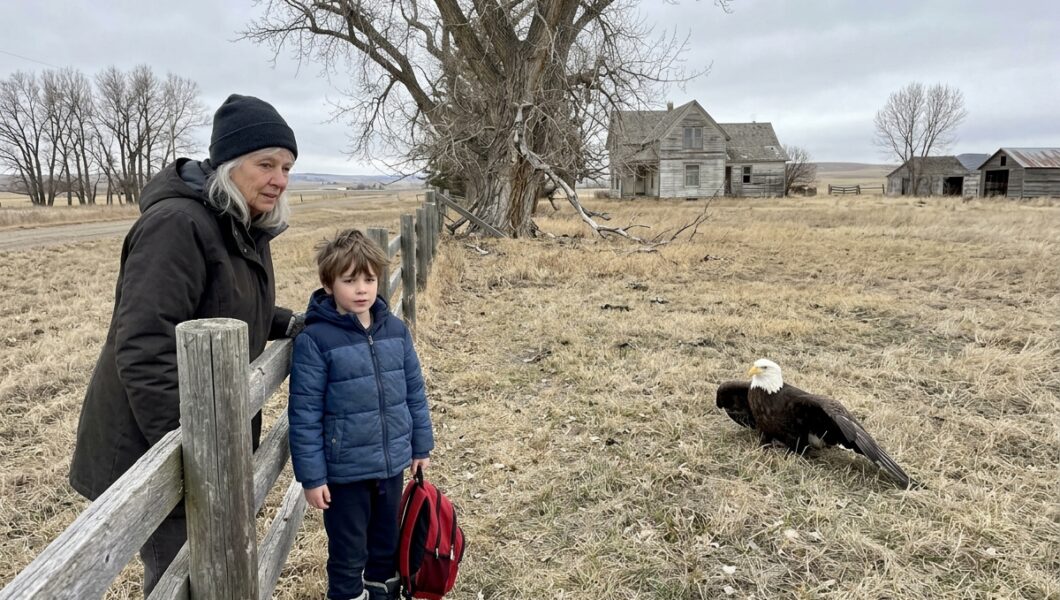
Eleanor Brooks had always believed that the best moments in life were often the quietest ones.
A cup of tea beside the window. The sound of rain on the roof. A familiar voice asking whether she needed anything from the grocery store.
After her husband, Thomas, died, she had learned how different a house could feel when the person who once filled it with conversation was gone.
But since meeting Noah, her farmhouse had begun to feel different.
There were small muddy footprints near the porch after his visits. Children’s books lay on the coffee table. Sometimes, when Daniel finished work early enough, the two of them would join Eleanor in the kitchen, where she made soup or baked something sweet while Noah talked about school.
She had never planned to become part of another family’s life.
It had happened one small kindness at a time.
Then, one chilly November morning, Daniel called her with news that made her sit down.
“Noah’s teacher contacted me yesterday,” he said. “He’s been doing much better at school. He’s talking more, joining activities, and even helping another boy who recently moved into his class.”
Eleanor smiled.
“That sounds like our Noah.”
Daniel laughed softly, but his voice soon grew serious.
“I wanted to thank you. I know I haven’t always been good at asking for help. After my wife died, I thought I had to keep everything together by myself. I was so focused on working and making sure Noah had what he needed that I didn’t always notice how lonely he was.”
Eleanor looked toward the old cottonwood tree beyond her window.
“I understand more than you know,” she replied. “Sometimes, when you’re trying to survive a difficult season, you forget that other people might be willing to walk through it with you.”
Daniel was quiet for a moment.
“There’s something else. Noah has been working on a surprise for you. He made me promise not to tell you what it is.”
Eleanor smiled again.
“Then I suppose I’ll have to wait.”
She had no idea how much that little surprise would mean to her.
For the next several days, Noah continued visiting on Sundays. He helped Eleanor rake the last of the autumn leaves, carried small pieces of firewood to the porch, and read aloud beside the fireplace while Daniel prepared dinner.
Sometimes, Noah still became quiet when someone mentioned his mother.
Eleanor never forced him to talk.
She had learned that grief did not follow a schedule. Some days, a person could laugh and feel almost normal. On other days, a familiar song, a photograph, or the smell of a particular meal could bring back everything that had been lost.
Instead of asking Noah to be cheerful, Eleanor simply made room for whatever he was feeling.
One Sunday, he sat beside her at the kitchen table while she peeled apples for a pie.
“Grandma Eleanor?”
“Yes, sweetheart?”
“Do you ever forget what your husband sounded like?”
The knife stopped in Eleanor’s hand.
She thought carefully before answering.
“Sometimes, I have to work harder to remember the exact sound of his voice. But I remember the way he made me feel. I remember the things he used to say, the silly jokes he told, and the way he always sang the wrong words to songs.”
Noah smiled faintly.
“My mom used to sing while she washed dishes.”
“What song did she sing?”
He told her the name of a song his mother had loved. Eleanor did not know it well, so Noah hummed a few notes.
His voice was soft and uncertain.
When he finished, he looked down at the table.
“I don’t want to forget her.”
Eleanor reached across and placed her hand over his.
“Loving someone doesn’t mean you have to hold every memory perfectly. You can keep the little things. You can talk about her. You can laugh about the funny things she did. And if you have a day when remembering hurts too much, that’s all right too.”
Noah nodded.
Then he returned to peeling apples, taking the task very seriously.
That afternoon, Eleanor found a small drawing tucked beneath the fruit bowl. It showed a woman standing beneath a tree, with a little boy holding her hand. Above them was a bright yellow sun.
Noah had written his mother’s name at the bottom.
Eleanor placed the drawing on the refrigerator beside his picture of the eagle.
The two images stayed there together.
One reminded her of the injured bird that had brought them into one another’s lives. The other reminded her that helping someone did not always mean fixing everything that hurt.
Sometimes, it meant giving them a safe place to remember.
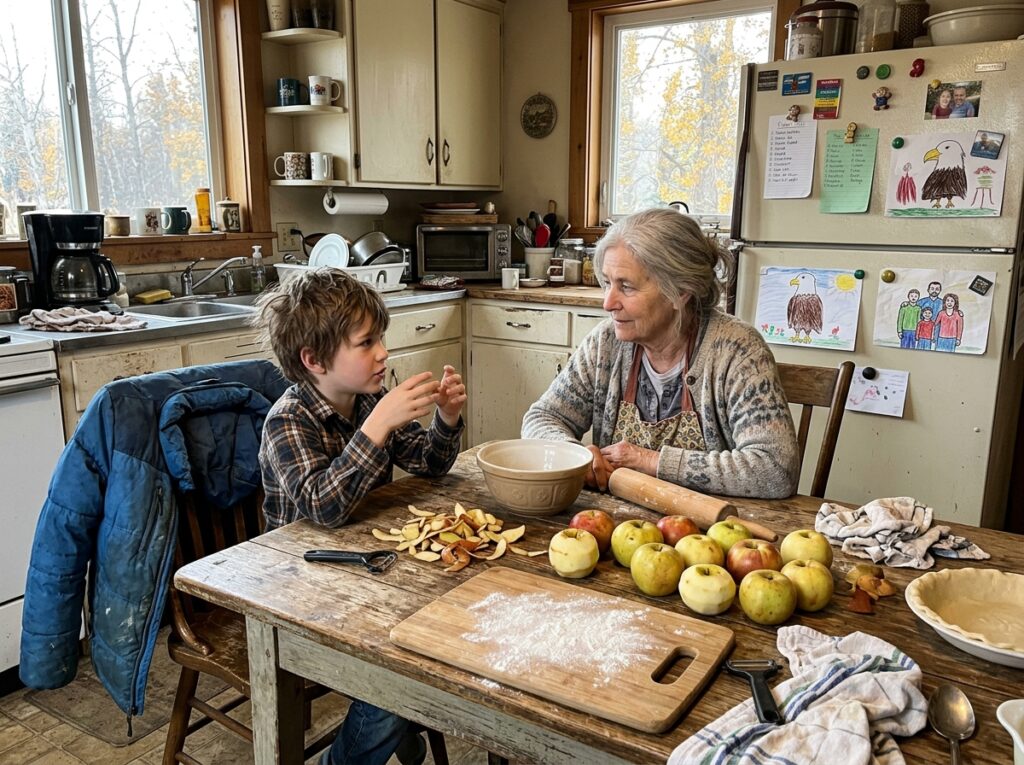
As winter approached, Eleanor began preparing for the holidays.
For years, she had kept Christmas simple. She decorated a small tree, cooked a modest meal, and called a few relatives. Thomas had loved the season, but after his death, the house had seemed too quiet for celebrations.
This year, she found herself looking forward to it.
Noah had already asked whether he could help decorate the tree. Daniel had offered to bring food, and Eleanor had told him he was welcome to bring whatever he liked.
“You don’t have to do anything special,” Daniel reminded her over the phone.
“I know,” she replied. “That’s why I’m doing something special.”
She bought extra lights and brought down the box of ornaments Thomas had collected over their forty years together. Each ornament carried a memory: a tiny wooden bird from their first holiday as a married couple, a glass star from a trip they had taken years later, and a small red mitten Noah might enjoy hanging near the bottom of the tree.
When Noah arrived the following Sunday, he stood in the doorway and stared at the decorations.
“Are we having Christmas here?”
“Only if you’d like to.”
His face brightened.
“Can we make cookies, too?”
“I was hoping you’d ask.”
Daniel watched them from the kitchen doorway, smiling.
For the first time in a long while, he felt that the holidays might be something other than a difficult reminder of the person who was missing. His wife would always be part of their family, and there would still be moments when her absence hurt. But he was beginning to understand that welcoming new people into their lives did not mean leaving her behind.
It meant finding a way to carry her memory forward.
A few days before Christmas, Daniel stopped by Eleanor’s farmhouse after work. He looked unusually nervous.
“Is Noah here?” she asked.
“He’s in the truck. He wants to bring something inside himself.”
Eleanor opened the door wider.
Noah climbed out, holding a flat package wrapped in brown paper. He carried it carefully with both hands, as though it were something fragile.
“I made this for you,” he said.
Eleanor sat down at the kitchen table while he placed the package in front of her.
“Can I open it?”
He nodded.
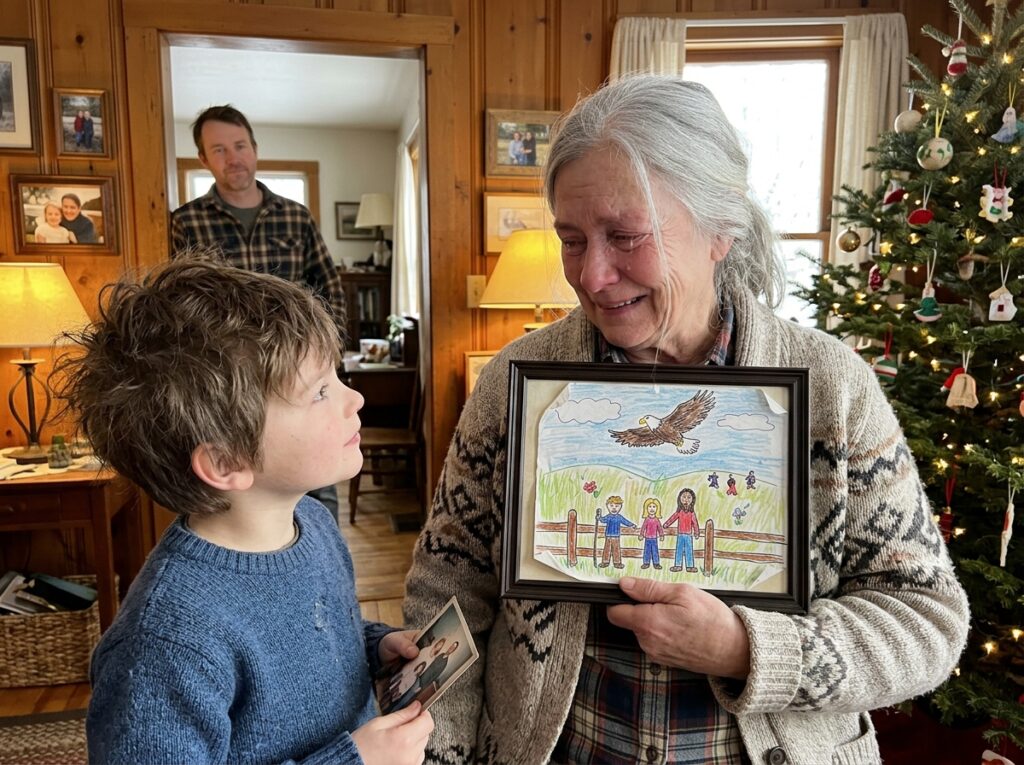
Inside was a framed drawing.
Eleanor stared at it.
The picture showed the old cottonwood tree at the edge of her meadow. Beneath it stood a large bald eagle with its wings spread wide. Beside the fence were three people: Eleanor, Noah, and Daniel. Noah had drawn himself in his blue jacket, while Eleanor’s silver hair was represented by dozens of careful gray pencil strokes.
Above them, the sky was bright blue.
At the bottom, in Noah’s careful handwriting, were the words:
“YOU HELPED THE EAGLE. THEN YOU HELPED US.”
Eleanor’s eyes filled with tears.
“Oh, sweetheart.”
She tried to speak, but her voice broke.
Noah suddenly looked worried.
“Is it bad?”
Eleanor shook her head quickly.
“No, no. It’s beautiful.”
“Dad helped me with the frame, but I did all the drawing myself.”
“I can tell.”
She held the picture against her chest, just as she had imagined doing when Daniel first told her about the surprise.
Then Noah reached into his red backpack.
“There is one more thing.”
He pulled out a small envelope.
Inside was a photograph of his mother.
It showed her sitting outside a house, smiling at the camera with Noah as a baby in her arms. The edges were worn, and the back carried a short message in Daniel’s handwriting.
For Noah, so he always remembers how much his mother loved him.
Daniel stood quietly beside the table.
“I wanted him to have something he could keep with him,” he explained. “He asked me to bring it today because he wanted to show you.”
Eleanor looked at the photograph and then at Noah.
“Your mother would be proud of you,” she said gently.
Noah’s eyes filled with tears.
For a moment, he looked very small.
“I wish she could have met you.”
Eleanor felt her own tears fall.
“I wish that too, sweetheart.”
She opened her arms, and Noah stepped into them. She held him gently while he cried, not trying to stop the tears or hurry him through them.
Daniel turned toward the window, wiping his eyes.
The farmhouse was quiet except for the ticking clock and the soft sound of the wind outside.
Noah stayed in Eleanor’s arms until he was ready to let go.
Then he looked up.
“Can we put the picture on the wall?”
“Of course.”
Together, they chose a place above the small table near the fireplace. Eleanor hung the drawing beside a photograph of Thomas, who was smiling in front of the same cottonwood tree many years earlier.
For a long moment, she stood back and looked at both pictures.
One showed the life she had shared with her husband.
The other showed a new friendship that had begun because a lonely little boy had sat beside a fence, watching an injured eagle.
She thought about how easily that afternoon might have passed without changing anything. She could have stayed inside, assumed Noah wanted to be left alone, and continued with her day.
Instead, she had carried two cups of hot chocolate outside.
That simple decision had changed the shape of her winter.
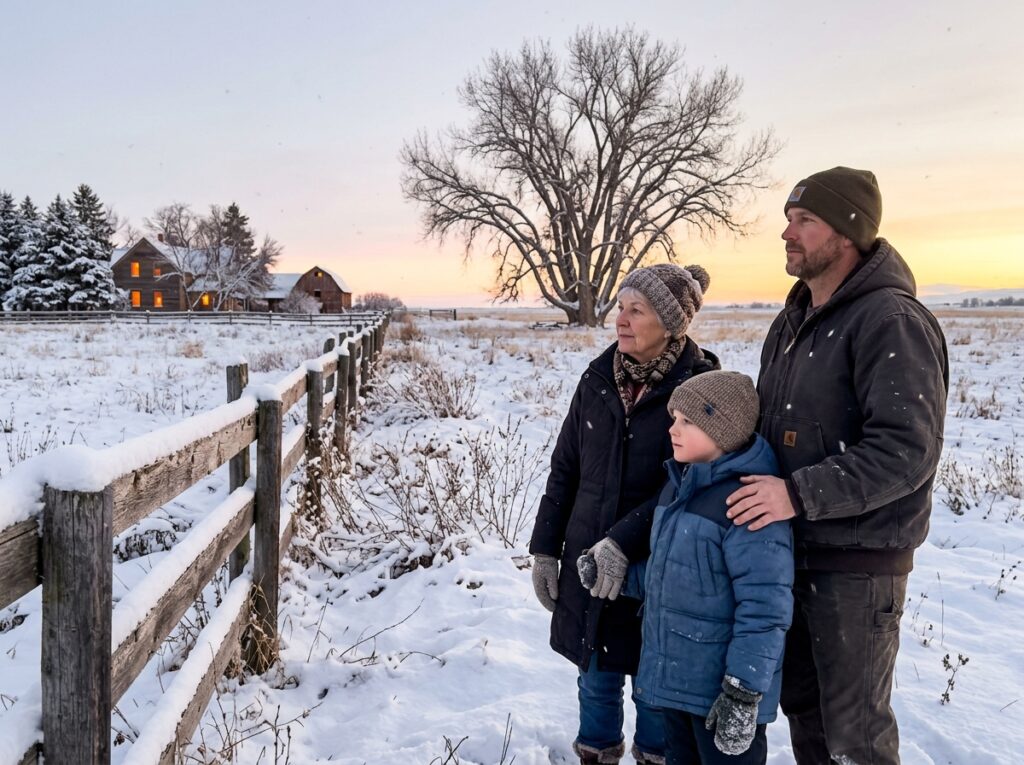
Christmas arrived with fresh snow covering the meadow.
Daniel and Noah came over in the late morning carrying a casserole dish and a tin of homemade cookies. Eleanor had prepared soup, roasted vegetables, and a small apple pie.
They ate together at the kitchen table, telling stories and laughing over Noah’s attempt to make a snowman that had collapsed before he finished its face.
After lunch, Noah helped Eleanor clear the plates. Daniel repaired a loose board on the porch, then came inside to join them beside the fireplace.
At one point, Noah asked whether they could visit the meadow.
The snow was deep, but the path along the fence had been cleared. Daniel helped him into his coat, and Eleanor followed them outside with a scarf wrapped around her neck.
The cottonwood tree stood bare against the pale winter sky.
No eagle was resting beneath it, and there was no sign that the bird from the autumn rescue had returned. The wildlife rehabilitator had explained that the eagle’s recovery had progressed well enough for release, but Eleanor knew that did not mean it would stay near her property.
Wild animals followed their own paths.
Noah looked up at the branches.
“Do you think it’s out there somewhere?”
“Maybe,” Eleanor said. “It could be a long way from here by now.”
“Do you think it remembers us?”
Eleanor smiled.
“I don’t know. But I think we will remember it.”
Noah considered that answer.
Then he slipped his hand into hers.
They stood together beside the fence, watching the snow move gently across the meadow. Daniel joined them, and for a few minutes nobody spoke.
Eleanor thought of Thomas and the years they had shared. She thought of Noah’s mother and the memories her son was learning to carry. She thought of Daniel, who had been trying to hold everything together alone, and of the small boy who had found comfort in sitting near an injured bird.
There was still sadness in their lives. Christmas did not erase it, and friendship did not make grief disappear.
But they no longer had to face every difficult day alone.
As they walked back toward the farmhouse, Noah looked up at Eleanor.
“Can I come next Sunday, too?”
She squeezed his hand.
“You don’t have to ask every time, sweetheart. You’re always welcome, as long as your dad knows where you are.”
Daniel smiled.
“I think we’ll be seeing a lot of you.”
Eleanor laughed.
“I certainly hope so.”
That evening, after they had gone home, she stood in the living room and looked at the two pictures above the fireplace. Thomas’s photograph hung beside Noah’s drawing, their frames nearly touching.
For the first time in years, the farmhouse did not feel like a place where life had stopped.
It felt like a place where life was continuing, gently and imperfectly, with room for both old memories and new beginnings.
Eleanor turned off the living-room light and looked out at the snowy meadow.
The fence was empty.
The cottonwood tree stood quietly beneath the winter sky.
And somewhere beyond the distant trees, the bald eagle was free to follow the winds wherever they led.
Eleanor would never know whether the bird understood what had happened that autumn afternoon. She would never know whether it had felt comforted by Noah’s quiet presence or whether the boy’s visits had meant anything to the eagle at all.
But she knew what the encounter had meant to Noah.
It had given him a reason to speak to someone. It had helped him discover that loneliness did not have to be faced in silence. And it had brought his father and an elderly neighbor together in a friendship that made life a little easier for all three of them.
The eagle had needed professional care to recover. Noah had needed patience, kindness, and people willing to listen. Daniel had needed the reassurance that asking for help did not make him a failure.
And Eleanor, who had thought her loneliest years were simply something she had to endure, had found a new reason to open her door.
Sometimes, kindness begins with a rescue.
Sometimes, it begins with a meal, a drawing, or an invitation to come back next Sunday.
And sometimes, the person who thinks they are helping someone else discovers that they have been given something precious in return.
Eleanor had gone outside that afternoon to help an injured eagle.
She had no idea that the greatest change would happen in the hearts of the people standing beside it.
Because the eagle was not the only one who needed a safe place to heal.

No Comments