

I thought the story would end in the grocery store.
An old farmer buying a stranger’s groceries. A man in a red hat storming out. A little boy calling me “abuelo” while clutching a box of cereal.
I figured it would become one of those stories you tell once or twice over coffee before life carries everyone in different directions.
I was wrong.
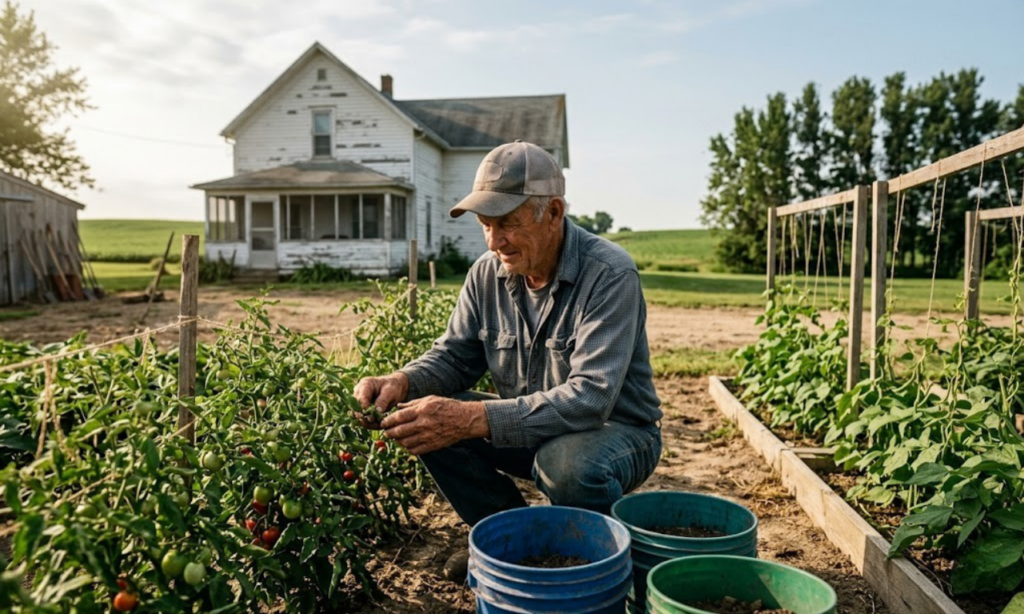
A few days after my niece shared what happened online, I went back to my normal routine. The tomatoes needed staking. The weeds had decided they owned my bean buckets. My wife, Ruth, reminded me for the third time that morning to take my blood pressure medication.
Life on a farm doesn’t pause because you’ve gone a little viral on Facebook.
Still, something had shifted.
The comments kept coming.
People argued under my niece’s post like the future of America depended on winning a debate with strangers they’d never meet.
Some called me a patriot.
Others called me a fool.
One man wrote that people like me were the reason this country was “falling apart.”
I closed my laptop and walked outside.
The beans didn’t care about politics.
Neither did the tomatoes.
They grew where they were planted.
About two weeks later, I heard tires crunching on the gravel driveway.
I looked up from repairing an old fence post and saw a familiar sedan pulling up beside the barn.
Out stepped the young father from the grocery store.
He looked nervous.
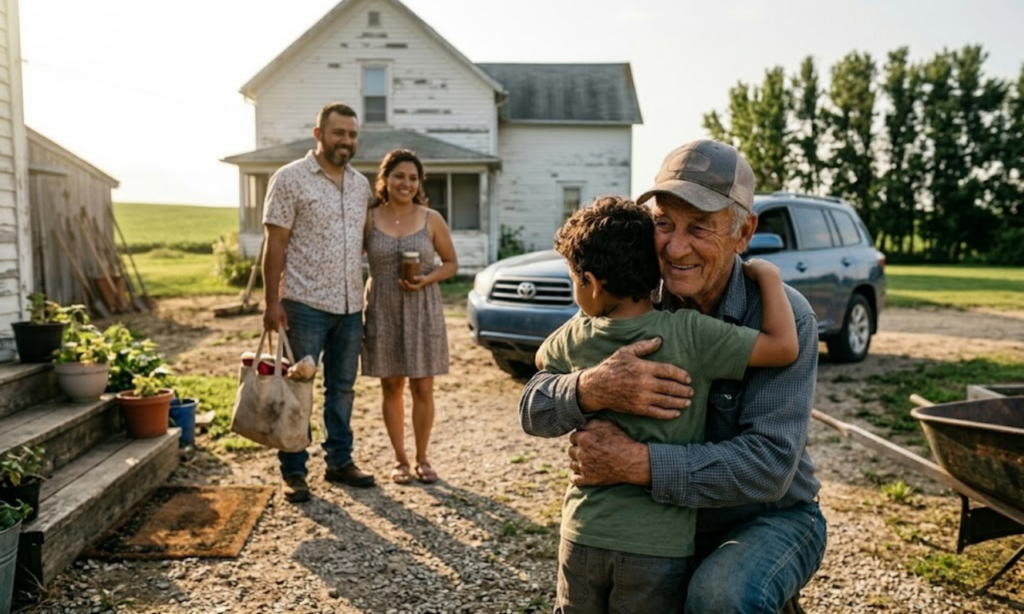
His wife climbed out after him, holding the little boy’s hand.
The boy recognized me immediately.
“¡Abuelo!” he shouted, breaking into a run.
Before I could react, he wrapped his small arms around my waist.
I laughed despite myself.
His father caught up, slightly out of breath.
“I’m sorry,” he said quickly. “He insisted we come.”
He held out a paper bag.
Inside were homemade tamales wrapped carefully in foil.
“We wanted to thank you,” his wife said softly. “You didn’t have to help us.”
I looked down at the tamales, then at their faces.
“You drove all this way for this?”
The father nodded.
“You reminded my son that people can be kind,” he said. “I didn’t want him to forget that.”
For a moment, none of us spoke.
Then Ruth opened the front door and called out, “Well, are you going to invite them in or just stand there crying on the driveway?”
I hadn’t even realized tears had started forming.
That afternoon stretched longer than any of us expected.
The little boy chased barn cats through the yard.
Ruth taught his mother how to make her cornbread recipe while learning how to fold tamales properly in return.
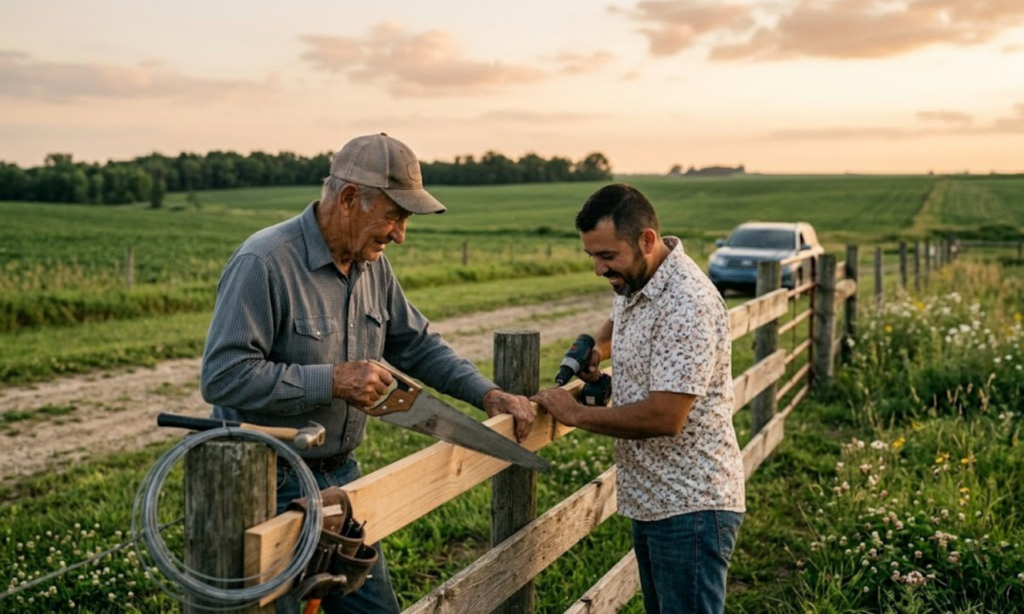
His father helped me repair the fence I’d been putting off for weeks because my back wasn’t what it used to be.
We talked while hammering nails into weathered wood.
He told me he’d come to Iowa from Texas when construction work dried up.
I told him how my grandfather survived the Dust Bowl.
He talked about missing his own father.
I admitted I sometimes worried about losing the farm that’s been in our family for nearly a century.
Different stories.
Same fears.
Same hopes.
At one point he stopped working and looked out across the fields.
“You know,” he said quietly, “people think they know each other just by looking.”
I nodded.
“They don’t,” I replied.
“No,” he agreed. “They don’t.”
The visits continued after that.
Not every week.
But often enough.
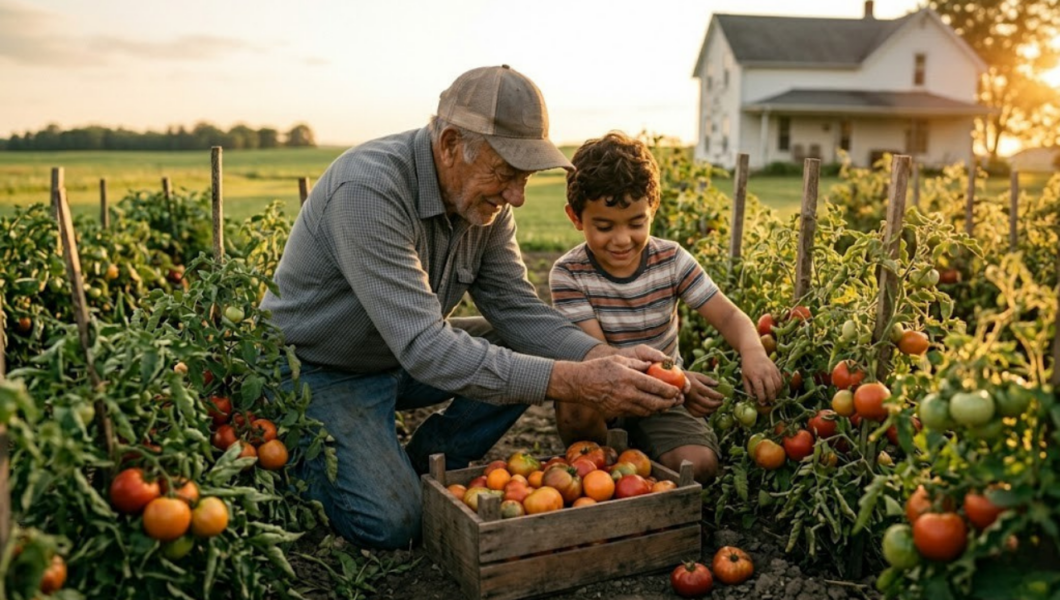
The little boy helped me harvest tomatoes.
Ruth packed extra vegetables into grocery bags for them to take home.
His mother taught us Spanish words.
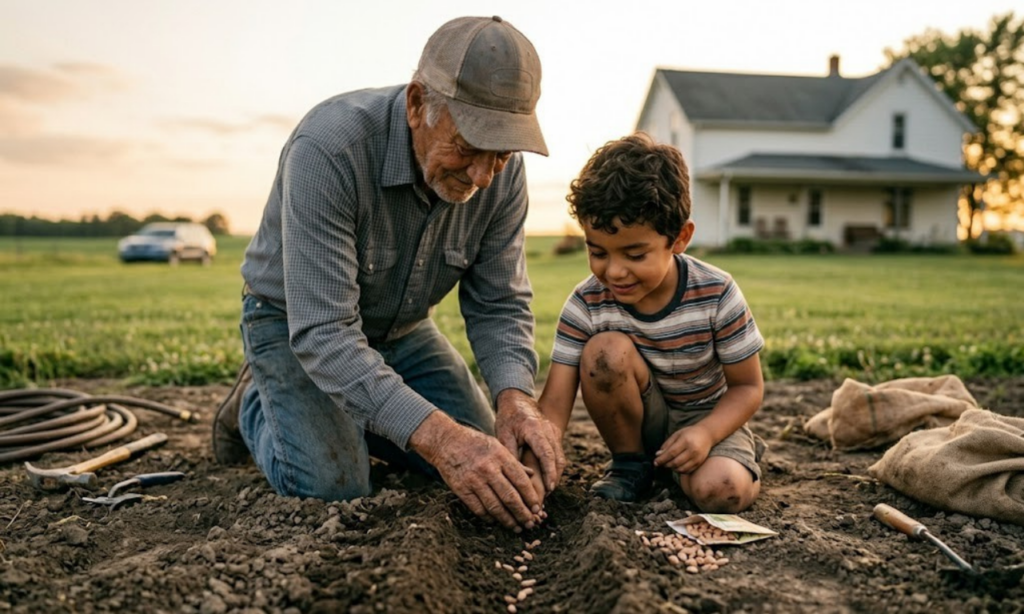
I taught the boy how to plant beans by pressing each seed gently into the soil.
“Not too deep,” I told him.
“Why?” he asked.
“Because growing takes work,” I said. “But it also needs sunlight.”
He considered that carefully.
Then pressed another seed into the dirt.
Months passed.
The buckets I’d planted after the grocery store incident overflowed with produce.
Neighbors stopped by for cucumbers.
Church friends took tomatoes.
Extra beans found their way onto front porches.
I couldn’t solve hunger.
I couldn’t fix politics.
I couldn’t stop people from choosing anger.
But I could share what I had.
Maybe revolutions don’t always begin with speeches.
Maybe sometimes they begin with vegetables grown in plastic buckets.
One Sunday after church, I overheard two men arguing in the parking lot.
The same talking points.
The same fear.
The same certainty that people unlike them couldn’t be trusted.
I listened for a while before finally saying, “You ever shared a meal with someone you’re angry at?”
They looked surprised.
“No,” one admitted.
“You should try it,” I said. “It’s harder to hate people once you know what makes them laugh.”
I don’t know if it changed their minds.
Maybe it didn’t.
But I know this.
The little boy who once hid behind his mother’s coat in a grocery line now races through my garden calling me Grandpa Earl.
His parents became friends.
Our lives intertwined in ways none of us expected.
All because one evening, in the middle of a grocery store filled with tension, someone chose compassion instead of silence.
People ask me sometimes if I regret speaking up.
I don’t.
Because America has never been built by people who only looked after themselves.
It’s been built by neighbors hauling each other out of ditches.
By strangers sharing meals.
By communities planting extra rows because someone else’s harvest failed.
By ordinary people deciding another person’s humanity matters more than their politics.
Maybe empty hearts aren’t filled through arguments.
Maybe they’re filled through proximity.
Through stories.
Through shared gardens and tamales and children playing in farmyards.
I still don’t know what happens to this country.
I don’t know which headlines will dominate tomorrow.
But I know what I witnessed.
A frightened family became friends.
A grocery store encounter became a garden.
And an old farmer learned that hope still grows.
Sometimes in buckets.
Sometimes in fields.
Sometimes in the people we’re told to fear.
All it needs is someone willing to plant it.
No Comments