

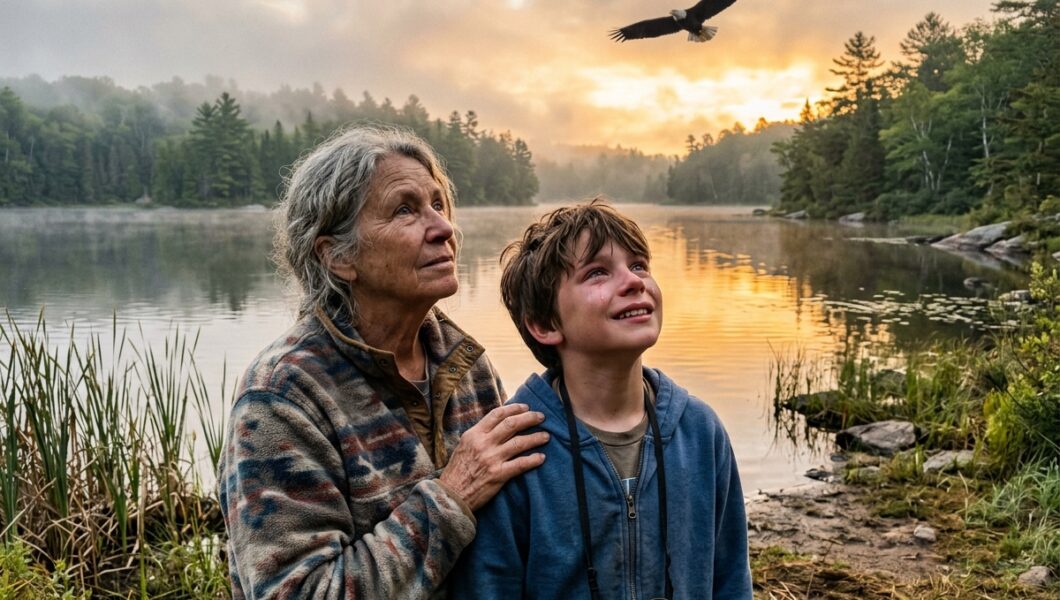
The Eagle Screamed for Help, But Grandma Heard Someone Else
When Noah finally told me why he had been so quiet that morning, I thought I understood what had happened.
I didn’t.
Not completely.
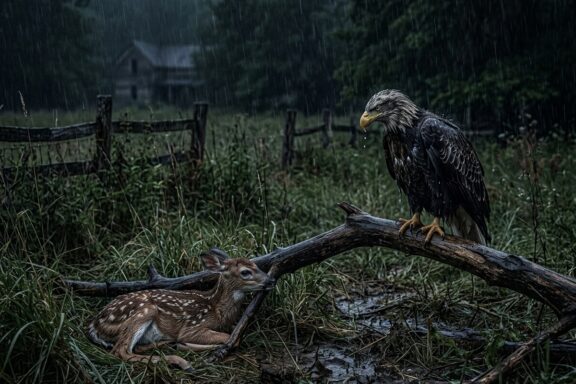
It took years before I realized that the eagle beneath the fallen oak tree had changed both of us.
At the time, Noah was only ten.
He was sleeping on my couch for the summer while his parents tried to figure out what came next for their family. He smiled when he was supposed to smile. He ate when I put food in front of him. He played outside. He watched cartoons in the evening.
And whenever I asked how he was doing, he gave me the same answer.
“I’m fine.”
I had heard that answer from children before.
I had also heard it from adults.
Sometimes “I’m fine” means exactly what it says.
Sometimes it means, “Please don’t ask me again because I don’t know how to explain this.”
I wish I had understood that sooner.
After the eagle was released, Noah became obsessed with the rescue center.
Every few days, he asked whether we could call and see how the bird was doing.
When we were finally told she had been released, he wanted every detail.
Where had they taken her?
Was she scared?
Did she fly immediately?
Would she find food?
Would the other eagle still be nearby?
I answered what I could.
When I didn’t know, I told him.
“I don’t know.”
He used to laugh whenever I said that.
“You say that a lot.”
“I’d rather tell you I don’t know than make something up.”
He thought about that.
Then one afternoon, while we were washing dishes, he asked me something I wasn’t expecting.
“Grandma?”
“Yes?”
“What if you don’t know how to help somebody?”
I dried my hands.
“You can still stay with them.”
“What if staying doesn’t fix it?”
“It doesn’t have to.”
He looked confused.
“But you’re supposed to help.”
“Sometimes helping means finding someone who knows what to do.”
I could see him thinking about the eagle.
“You called the rescue people.”
“Yes.”
“You didn’t try to get it out yourself.”
“No.”
“Because you knew they were better at it.”
“Exactly.”
He nodded.
That seemed to settle something inside him.
I didn’t realize then that he would remember those words for the rest of his life.
The summer ended.
Noah went back home.
I returned to my ordinary mornings, my garden, my coffee, and the quiet rhythm of life near the lake.
But things were different after that.
I found myself listening more carefully.
If someone sounded tired on the phone, I asked another question.
If a neighbor stopped coming outside, I checked on them.
If a friend said they were having a difficult day, I didn’t immediately tell them it would get better.
I simply sat with them.
I suppose Noah had taught me something too.
Children notice more than we think they do.
Years passed.
Noah grew taller.
His voice changed.
The little boy who once needed a flashlight to walk through the woods became a young man who could drive himself to my house.
But whenever he visited, he still came onto the porch early in the morning.
Sometimes we talked.
Sometimes we didn’t.
One summer, when Noah was nineteen, he arrived carrying a small cardboard box.
“What’s that?” I asked.
“Something I found.”
He placed it on the table.
Inside was an old photograph.
The picture showed the eagle standing beside the lake shortly before her release.
I stared at it.
“You kept this?”
Noah smiled.
“I found it at my parents’ house.”
He turned the photograph over.
There was writing on the back.
My handwriting.
I had written the date of the release.
Nothing else.
Noah looked at me.
“You wrote this?”
“Apparently.”
He laughed.
“I don’t remember you taking it.”
“I don’t remember either.”
He looked at the picture again.
“I wish we knew if it was the same eagle I saw years later.”
I smiled.
“Maybe.”
He shook his head.
“You’re never going to give me an answer, are you?”
“No.”
He laughed.
“Fair enough.”
Then his smile faded.
“I think I like that.”
“What?”
“Not knowing.”
I looked at him.
He was quiet for a moment.
“That morning, I wanted somebody to tell me everything was going to be okay.”
I reached across the table.
“And nobody could.”
“No.”
“But you got through it.”
He nodded.
“Because you stayed.”
Those words stayed with me.
Because by then, I had started to understand that staying was not a small thing.
It could be the whole thing.
A few years later, it was my turn to need someone to stay.
It happened slowly.
First, I stopped walking as far as I used to.
Then I started asking Noah to carry things from the car.
Then there were mornings when getting dressed felt like more work than it should.
I tried to hide it.
I told him I was tired.
I told him I was getting older.
Both were true.
Neither was the whole truth.
Noah noticed.
Of course he noticed.
One morning, he found me sitting on the porch steps with a basket of laundry beside me.
“Grandma?”
“I’m fine.”
He smiled.
“I’ve heard that one before.”
I looked at him.
He sat beside me.
For a while, neither of us spoke.
Then he said, “You don’t have to pretend with me.”
I looked down at my hands.
“I don’t want to become a burden.”
“You aren’t.”
“You don’t know that.”
“I do.”
He picked up the laundry basket.
“Because you taught me something.”
“What?”
“You don’t have to fix everything.”
I watched him carry the basket inside.
He came back a few minutes later.
Then he sat beside me again.
No advice.
No speech.
Just sitting.
I smiled.
“You remembered.”
He looked toward the lake.
“How could I forget?”
That became our new routine.
Whenever I needed help, Noah helped.
He brought groceries.
He fixed things around the house.
He checked the porch after storms.
He watered the garden when I couldn’t.
But more than anything, he listened.
And I began talking.
I told him when I was afraid.
I told him when I missed the way things used to be.
I told him I hated needing help.
Sometimes I told him nothing at all.
He never made me feel guilty for any of it.
One morning, years after the eagle had disappeared into the trees, Noah and I were sitting together near the lake.
I was moving more slowly by then.
He had his coffee.
I had tea.
Neither of us said much.
Then a shadow passed over the water.
Noah looked up.
An eagle was circling above the lake.
He smiled.
“Grandma.”
“I see it.”
The bird circled again.
For a moment, I felt like I was ten years younger.
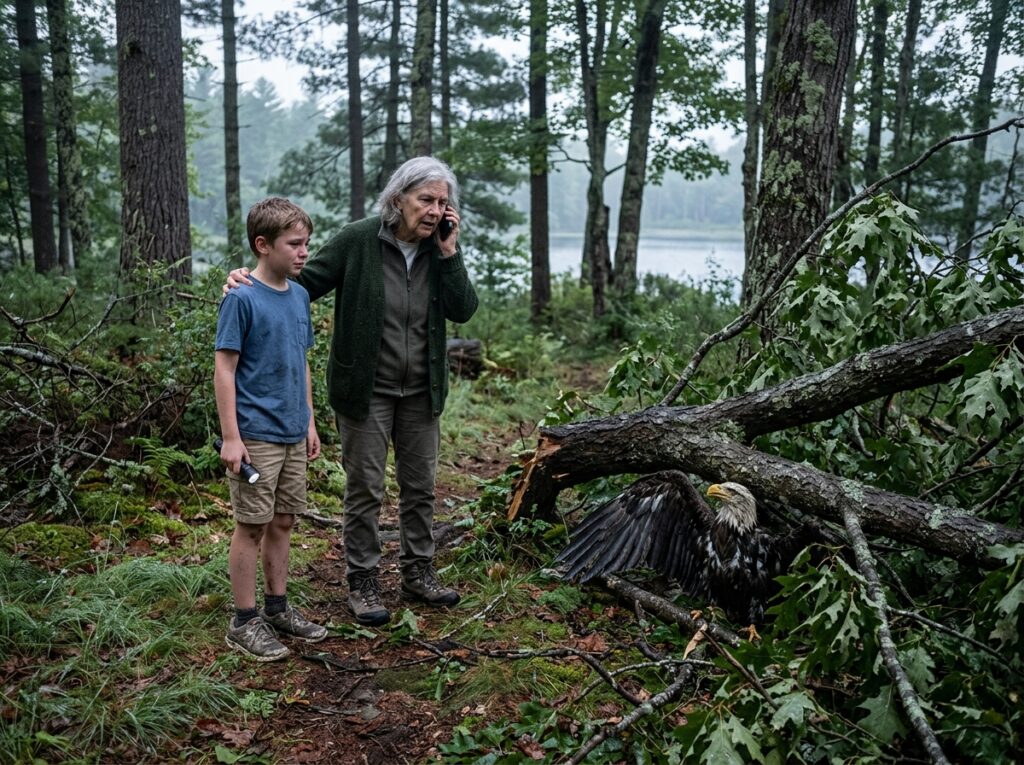
I remembered the fallen oak.
The wet leaves.
Noah’s small hand gripping mine.
The frightened eagle calling for help.
Then I looked at Noah.
“You know something?”
“What?”
“That morning, I thought I was teaching you.”
He smiled.
“You were.”
“No.”
I shook my head.
“I was learning too.”
He looked at me.
“The eagle taught us both.”
Noah watched the bird disappear beyond the trees.
“Do you think it’s the same one?”
I smiled.
“Maybe.”
He laughed softly.
“Of course.”
The bird was gone.
But neither of us needed to know whether it was the same one.
We knew what it had given us.
A lesson about paying attention.
A lesson about asking for help.
A lesson about knowing when something is beyond your ability and calling someone who can help.
And perhaps most importantly, a lesson about staying.
A few months later, I had a difficult morning.
I woke before sunrise and couldn’t get out of bed without help.
For the first time, I was frightened enough that I stopped pretending.
I called Noah.
He arrived before breakfast.
He didn’t panic.
He didn’t tell me not to worry.
He sat beside me and took my hand.
“We’ll figure it out.”
I looked at him.
“What if we don’t?”
He squeezed my hand.
“Then we’ll find someone who can help us.”
I smiled through my tears.
There it was.
The same lesson.
Only this time, I was the one beneath the fallen tree.
I was the one who couldn’t get up alone.
And Noah was the one who noticed.
He arranged the help I needed.
He called the people who knew what to do.
He stayed nearby.
Not because he could solve everything.
Because he understood that he didn’t have to.
That was the part of the story I had never expected.
The eagle had taught a little boy that asking for help was not weakness.
That boy had grown into a man who eventually taught his grandmother the same thing.
One evening, we sat together on the porch while the sky turned orange over the lake.
Noah was quiet.
I looked at him.
“What are you thinking?”
“The eagle.”
I smiled.
“Again?”
“Always.”
He looked toward the trees.
“I used to think the important part was that we saved her.”
“What do you think now?”
He was quiet.
“I think the important part was that she didn’t have to be alone while she waited.”
I felt my eyes sting.
“That’s right.”
He reached over and held my hand.
The sun disappeared.
The lake became dark.
Somewhere in the distance, an eagle called.
I listened.
And for the first time, I understood something I wish I had known much earlier.
Sometimes rescue doesn’t look like pulling someone out of the darkness.
Sometimes it looks like sitting beside them until morning.
Sometimes it means making the phone call.
Sometimes it means asking one more question.
Sometimes it means noticing that someone who keeps saying “I’m fine” has become unusually quiet.
And sometimes it means allowing someone you love to help you.
Noah never saved me.
He did something better.
He reminded me that I didn’t have to face the hard parts alone.
And I think that’s what I remember most about that eagle.
Not the wings.
Not the release.
Not even the moment she finally flew across the lake.
I remember the sound of her calling from beneath that fallen tree.
I remember a little boy crying beside me.
And I remember the moment he finally told the truth about what was hurting him.
The eagle needed someone to notice.
Noah needed someone to listen.
Years later, I needed someone to stay.
And somehow, all three of us were given exactly what we needed.
So if someone in your life has become quieter lately, pay attention.
If a child says they’re fine but stops talking, ask again.
If an older parent starts struggling but insists they don’t need help, sit beside them.
You don’t need to have the perfect words.
You don’t need to know exactly what to do.
You just need to notice.
And when you realize something is wrong, don’t be afraid to call someone who knows how to help.
Then stay.
Stay through the uncomfortable silence.
Stay through the waiting.
Stay until the people you love know they don’t have to carry everything by themselves.
Because sometimes the kindest thing you can do isn’t to save someone.
It’s to remind them that they are not alone while they find their strength again.
And sometimes, just like that morning beneath the fallen oak, someone doesn’t need you to make them fly.
They just need you to stay until they’re strong enough to try.
The photograph Noah found years later stayed on my kitchen table for almost a month.
I couldn’t bring myself to put it away.
Every time I passed it, I remembered that little boy.
I remembered how tightly he had held my hand.
And I remembered the question he asked after the rescuers drove away.
“She screamed because she needed help.”
He had understood something that many adults spend their whole lives learning.
Need doesn’t always look like need.
People don’t always ask clearly.
They don’t always know how.
Sometimes they become angry.
Sometimes they become distant.
Sometimes they sleep too much.
Sometimes they stop calling.
Sometimes they smile harder than usual.
And sometimes they simply become quiet.
Noah grew into someone who listened for those quiet signs.
I saw it happen.
At family gatherings, he was the one who noticed when someone sat alone.
If a neighbor mentioned being overwhelmed, Noah didn’t brush it off.
If a friend was struggling, he didn’t immediately offer a solution.
He would ask, “Do you want me to stay?”
That question always made me smile.
Because he had learned the lesson in a forest before he was old enough to understand what it meant.
Years later, when my own world became smaller, he brought that lesson back to me.
He never treated my slower steps as an inconvenience.
He never made me feel embarrassed when I needed help.
And he never confused helping me with controlling me.
He simply stayed close enough to notice.
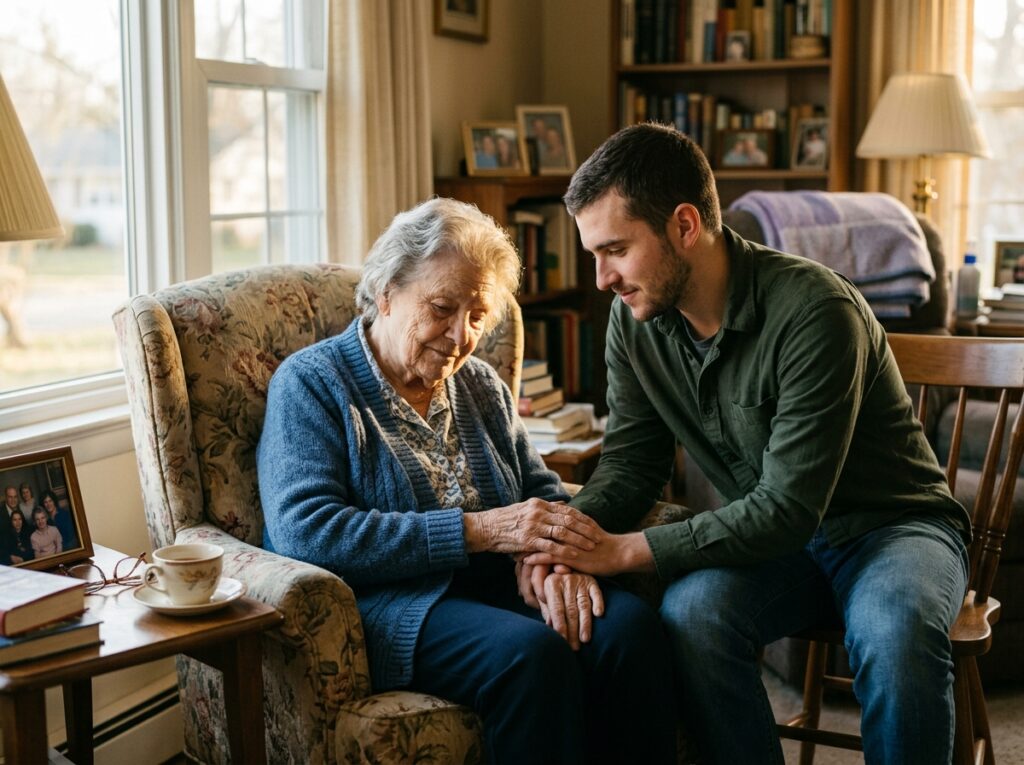
One afternoon, I was sitting in my chair near the window when Noah came inside.
He looked at me.
“You okay?”
I almost said it.
“I’m fine.”
Instead, I smiled.
“I’m having a hard day.”
He nodded.
“Okay.”
He sat down beside me.
That was all.
No panic.
No unnecessary questions.
No attempt to turn my sadness into something smaller.
Just company.
And somehow, that was enough.
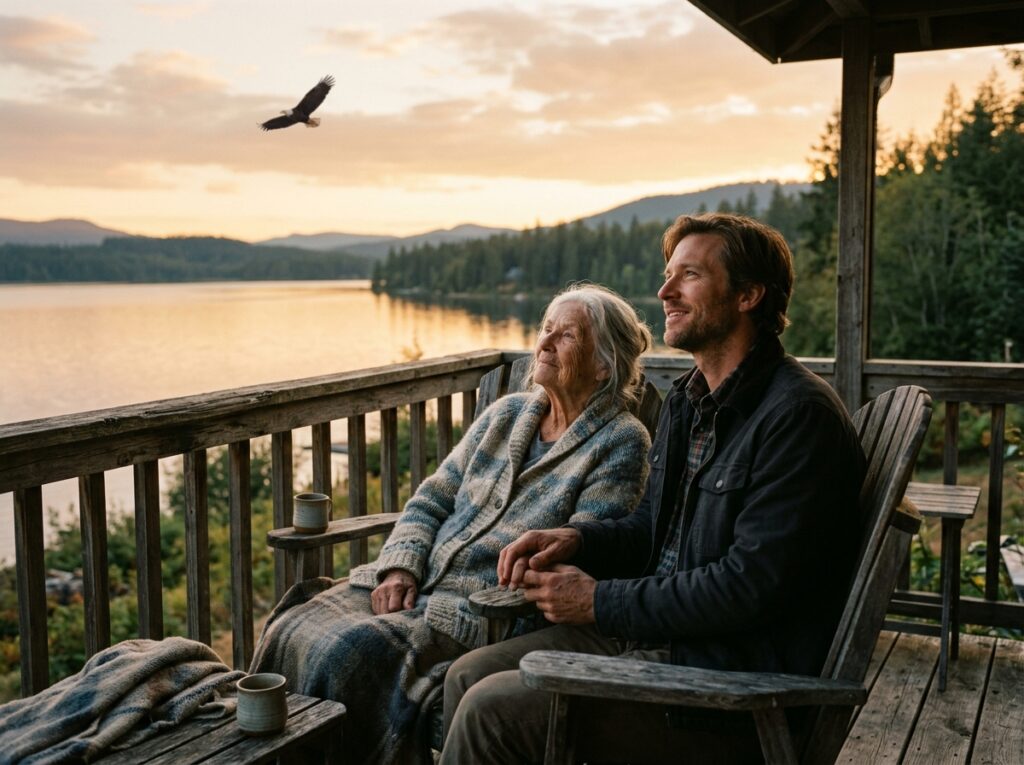
That evening, Noah asked me if I wanted to sit outside.
I said yes.
We walked slowly to the porch.
The air smelled like damp earth.
The lake was almost completely still.
We sat beside each other.
For several minutes, neither of us spoke.
Then an eagle appeared.
It came from somewhere beyond the trees and crossed the sky above the water.
Noah looked up.
I did too.
Neither of us said anything.
We didn’t need to.
The eagle circled once.
Then again.
And finally, it disappeared.
Noah smiled.
“I guess we’ll never know.”
I smiled back.
“Maybe that’s okay.”
He nodded.
For so many years, I had wanted to know whether that bird was the same one.
Now I realized the answer didn’t matter.
The first eagle had taught us to notice.
The second time we saw one, it reminded us to remember.
And everything that happened in between taught us what those lessons were really for.
Not just animals.
Not just children.
People.
The people sitting beside us.
The people who say they’re fine.
The people who don’t know how to ask.
The people who are tired of pretending they are strong.
The people who simply need somebody willing to sit down and listen.
That night, before we went inside, Noah looked at me.
“You know what you told me that morning?”
“What?”
“That caring doesn’t always mean touching.”
I nodded.
He smiled.
“Now I understand.”
I squeezed his hand.
“So do I.”
We watched the last light disappear over the lake.
And somewhere beyond the trees, an eagle called.
This time, nobody was trapped.
Nobody needed rescuing.
But we both listened anyway.


No Comments