

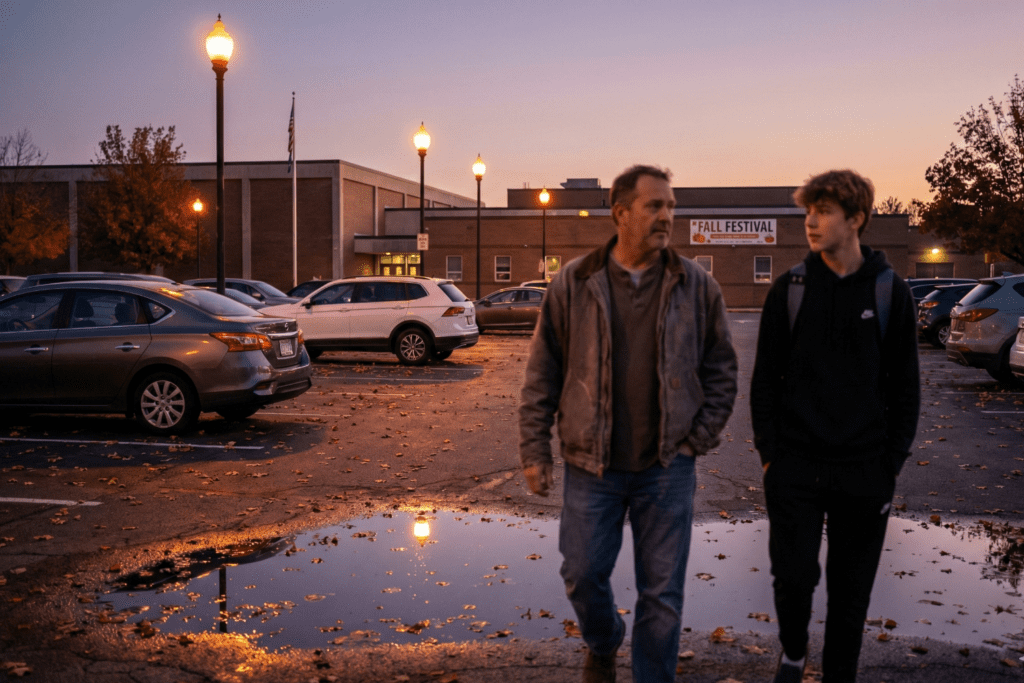
The parking lot was nearly empty when we finally stepped outside the school auditorium. The air had that sharp evening chill that settles in after sunset, the kind that makes you pull your jacket tighter without really thinking about it. Streetlights hummed softly above us, casting long shadows across the pavement. For a moment, neither my son nor I spoke. It felt wrong to break the quiet too quickly, like the silence itself deserved respect.
Inside, the auditorium was probably already being reset. Chairs stacked. Microphones unplugged. Life moving on the way it always does. But for those of us who had been there, something had shifted, even if we didn’t yet have the words to explain it.
As we walked to the car, I glanced at my son again. He wasn’t looking at his phone. He wasn’t distracted. He walked with his hands in his pockets, eyes forward, shoulders squared in a way I hadn’t noticed before. It wasn’t dramatic. Just subtle. But it was there.
The drive home was quiet at first. Not the awkward kind of quiet, but the thoughtful kind. The kind where you know words are forming, just not ready yet.
After a few miles, my son finally spoke. His voice was low, steady, like he was afraid that if he spoke too loudly, the weight of what he was feeling might spill out all at once.
“I keep thinking about that woman,” he said.
I nodded. “Me too.”
He shook his head slightly. “She waited her whole life to say thank you. And they never even knew.”
That simple observation landed harder than he probably realized. He wasn’t talking about dates or battles or military tactics. He was talking about gratitude. About connection. About how history isn’t just something that happens in books, but something that lives inside people for decades.
When we pulled into our driveway, the house looked the same as it always had. Warm lights in the windows. Quiet street. Safe. Ordinary. And yet, it felt different now, like we were seeing it through new eyes.
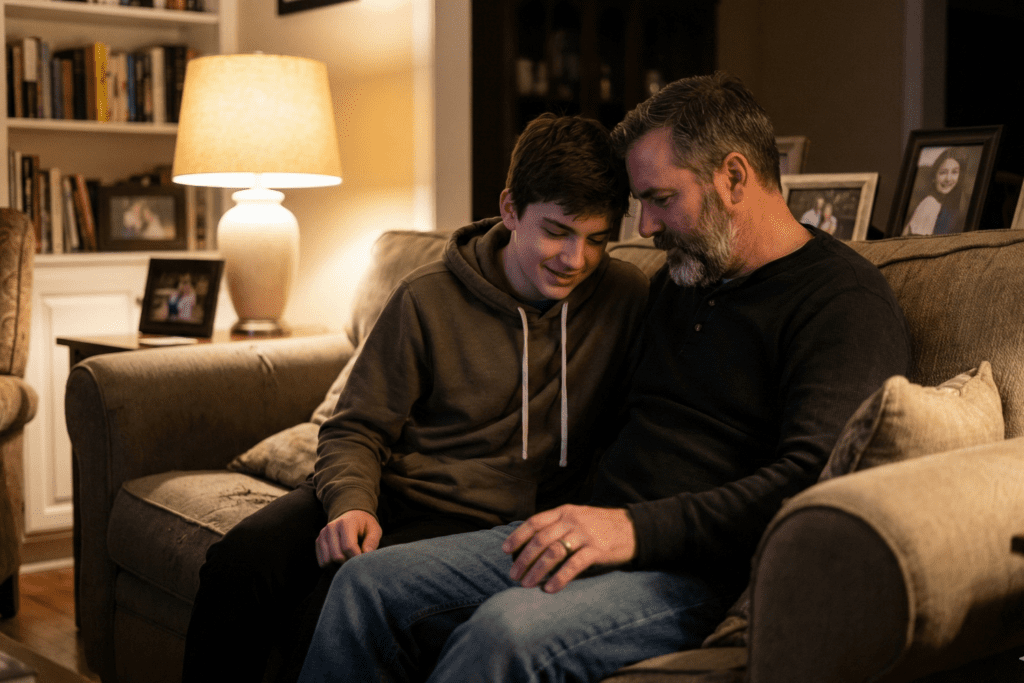
That night, long after my son went to bed, I sat at the kitchen table with a cup of coffee I didn’t really need. My mind kept returning to the expressions on those veterans’ faces when the woman spoke. Not pride. Not triumph. Something deeper. Something closer to release.
They hadn’t gone to war for applause. They hadn’t gone for recognition. They went because they were called, and because someone had to answer.
I wondered how many moments like that they had carried quietly for decades. How many nights they had lain awake remembering faces, sounds, choices that could never be undone. How often they had questioned whether it had all been worth it.
And then, seventy-five years later, a single thank you.
Sometimes it takes a lifetime for words to find the right place to land.
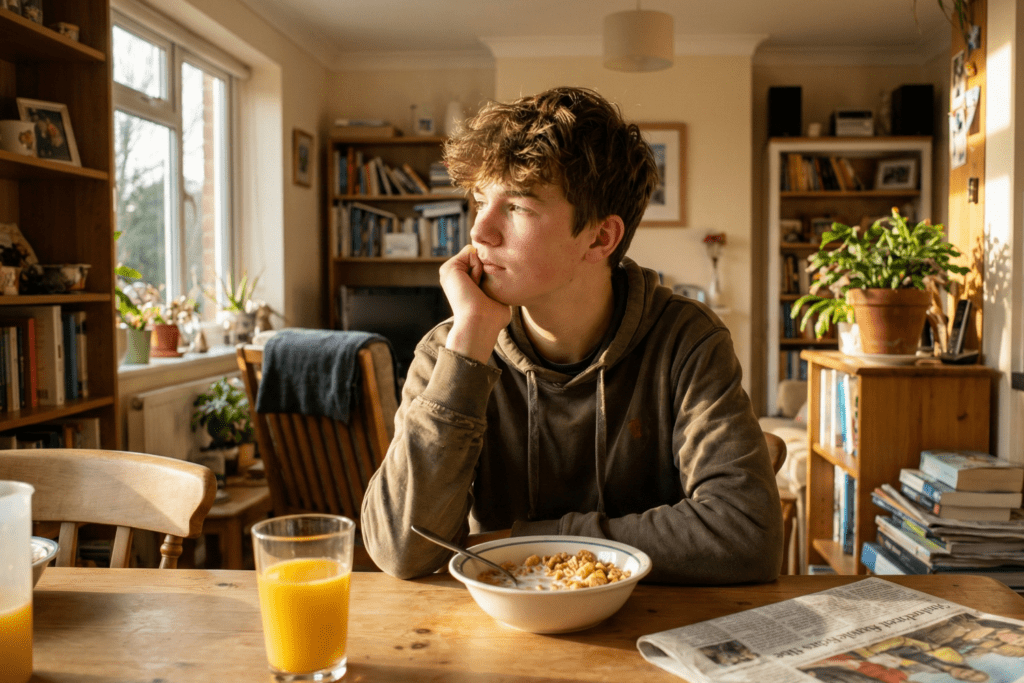
The next morning, my son brought it up again over breakfast. He had been quiet, thoughtful, stirring his cereal longer than necessary.
“Do you think they ever talk about it,” he asked, “when they’re not on a stage?”
“I think they talk about it when they feel safe enough,” I said. “And sometimes, maybe they don’t talk at all.”
He nodded slowly. “I don’t think I could do what they did.”
I didn’t answer right away. I wanted to be honest, but I also wanted to be careful.
“You don’t know that,” I finally said. “Most of them didn’t think they could either. Until they had to.”
Later that week, the school shared a recording of the event online. I watched it again alone in my office, expecting to feel the same emotions, but something about it was different this time. The stories were still powerful, but what stood out most now were the small moments. The pauses. The breaths taken before difficult sentences. The way both veterans held themselves when the applause faded.
The camera panned across the audience briefly, and there was the elderly woman again. Sitting quietly. Hands folded. Head slightly bowed. She looked peaceful, like a chapter had finally closed.
I realized then that history isn’t always loud. Sometimes it waits patiently for someone to listen.
Over the next few weeks, my son started asking questions. Not in bursts, but steadily. About World War II. About enlistment ages. About what happened after soldiers came home. He wasn’t asking for homework. He was asking because he needed to understand.
One night, he asked, “Do you think people remember them enough?”
The question caught me off guard.
“I think we try,” I said. “But remembering takes effort. It takes choosing not to forget.”
He nodded. “I don’t want to forget.”
That was when I realized the real impact of that night wasn’t emotional. It was directional. It was shaping how he saw the world, his place in it, and the responsibility that comes with freedom.
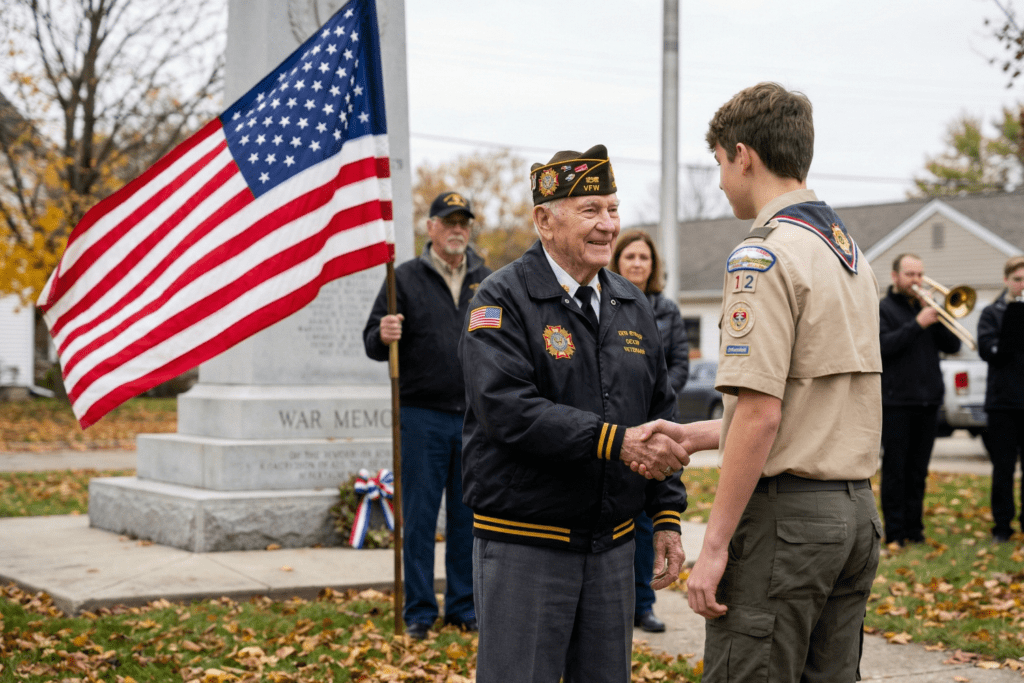
A month later, we attended a local Veterans Day ceremony. Smaller than the school event. No reporters. No stage lights. Just folding chairs, a flag, and a handful of older men and women standing a little straighter when the anthem played.
My son stood beside me, hands at his sides, serious. When it was over, he walked up to one of the veterans and shook his hand. He didn’t say much. Just “Thank you for your service.” But he said it like he meant it.
The veteran smiled and squeezed his shoulder.
I thought about how easily moments like this can be missed. How often we rush past them, distracted by our schedules and screens. And how much quieter our world becomes when we slow down long enough to listen.
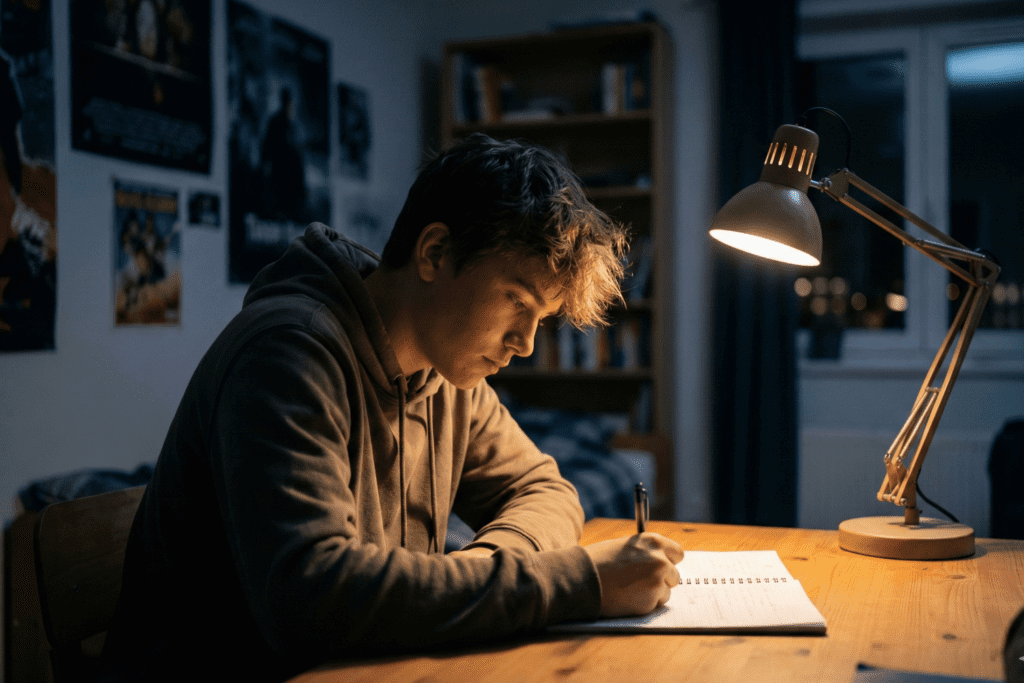
That night, my son left his bedroom door open. I passed by and saw him sitting at his desk, writing something by hand. Not typing. Writing. When I asked what he was doing, he said he was trying to put into words what that night at the school had meant to him.
“I don’t know if I’ll ever finish it,” he said. “But I want to try.”
I smiled and left him to it.
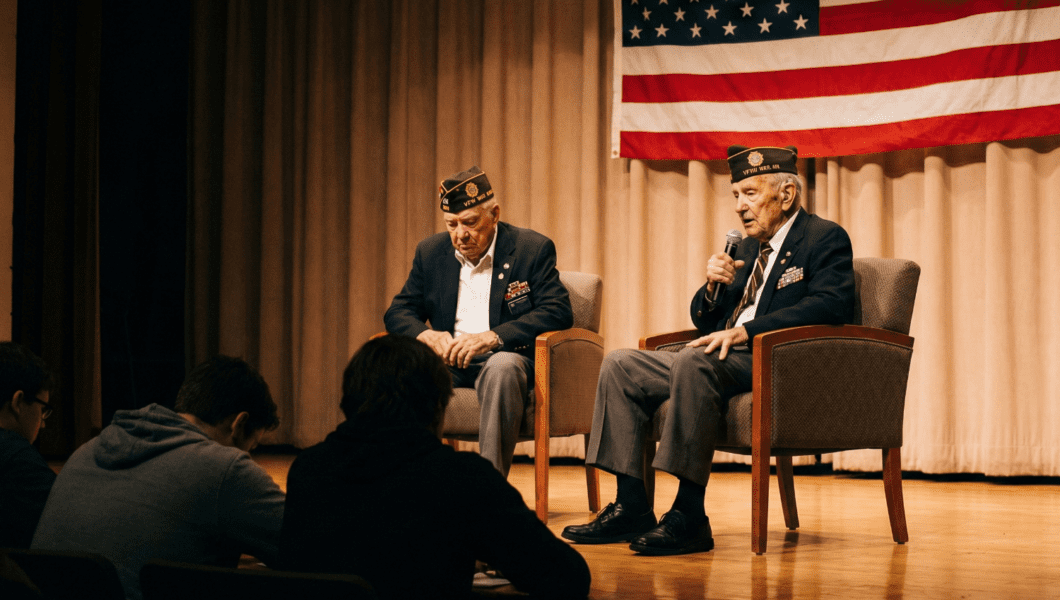
Years from now, the names Thomas Berg and Thomas “Tom” Hart MacElwee may not be familiar to everyone. The auditorium may be renovated. The chairs replaced. The recording archived somewhere few will look.
But that night will live on in quieter ways.
In the way my son sits a little straighter.
In the way he listens more carefully.
In the way he understands that freedom is not abstract, but earned.
And one day, when someone asks him what shaped the way he sees the world, I hope he remembers two old men at a podium, an elderly woman who finally got to say thank you, and a room full of people who understood, if only for an evening, what it truly means to owe something to those who came before us.
Because someday, there will be no more living voices left to tell these stories firsthand.
And when that day comes, it will be up to us to remember.
(Images for illustrative purposes only )


No Comments