


Part 02
I thought the moment would end when Frank drove away.
That is usually how these things go. Someone steps into your day, something heavy happens, you do what you can, and then life moves on. The door closes. The scene changes. You carry the memory quietly and assume that is where it belongs.
But that afternoon did not stay contained inside that restaurant.
It followed me.
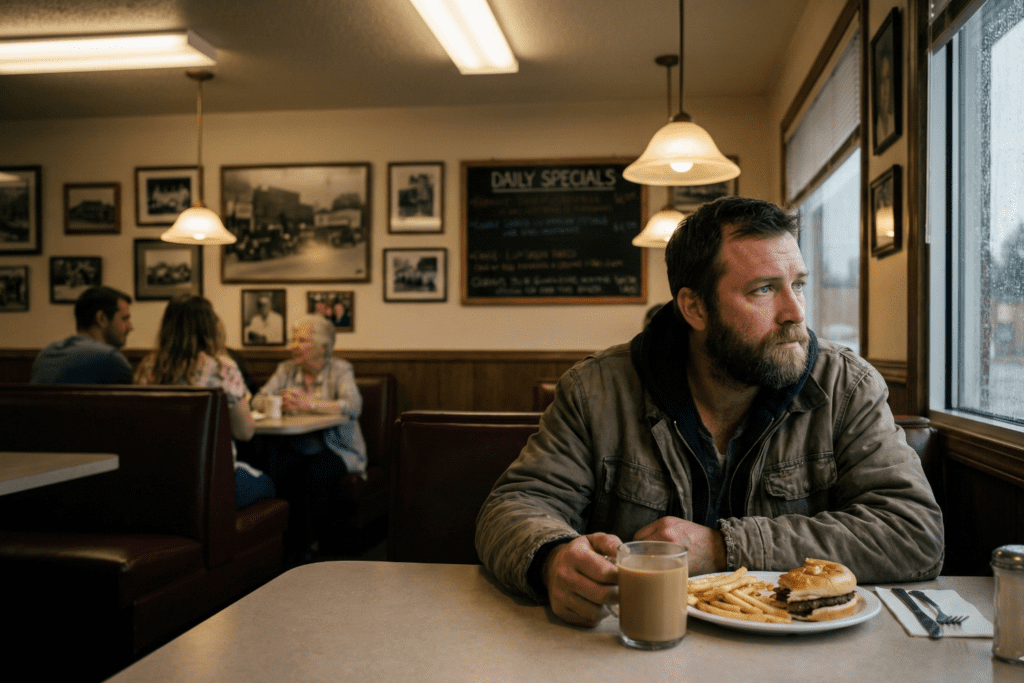
I sat back down at my table after Frank left, staring at the sandwich I had been so excited about ten minutes earlier. The bun had gone soggy. The chicken was cold. My appetite had vanished completely, replaced by something heavier and harder to name.
The restaurant slowly returned to its normal volume. Conversations picked back up. Glasses clinked. Someone laughed too loudly at a joke that had nothing to do with anything that had just happened. It felt strange how quickly the world resets itself, even after something important passes through it.
The young man who had laughed earlier stayed quiet. I noticed him out of the corner of my eye. He did not touch his phone. He did not joke with his friends. He just sat there, shoulders slumped, staring at the table as if he were seeing something new in its surface.
I wondered what would stay with him after today.
Would it fade as embarrassment often does, softened by time and distraction? Or would it lodge somewhere deeper, like a splinter you cannot ignore because it hurts just enough to remind you it is there?
I hoped for the second.
I paid my bill and walked outside into the afternoon sunlight. The air felt different. Lighter, but also sharper, like it was asking something of me.
As I drove home, my thoughts kept returning to the bathroom. To the sound of Frank’s voice cracking when he said he was stuck. To the way shame had settled into his posture before I even saw his face. That kind of shame does not come from one bad moment. It builds slowly, over years of realizing your body no longer keeps the promises it once did.
We do not prepare people for that.
We celebrate strength. Speed. Youth. Independence. We do not talk nearly enough about what happens when those things begin to loosen their grip. We do not teach respect for the quiet battles that come with aging.
And so people laugh.
That realization bothered me more than the young man’s cruelty. Because cruelty is often loud and obvious. Indifference is quieter. More dangerous.
When I got home, I could not shake the feeling that the story was not finished.
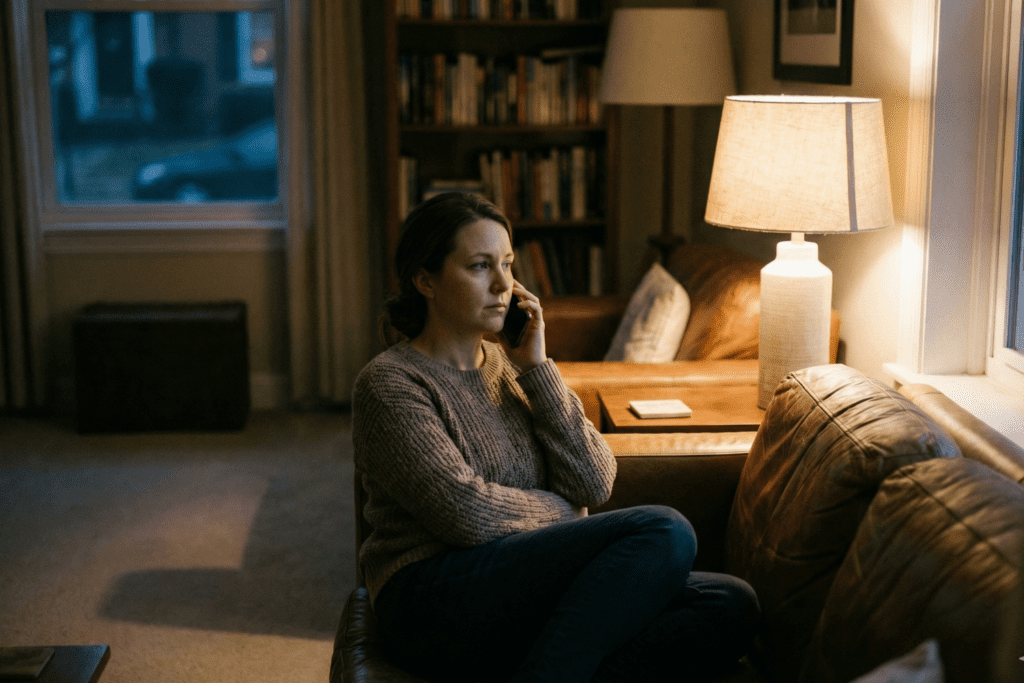
That evening, I called my father.
He answered on the third ring, his voice steady but slower than it used to be. We talked about small things at first. The weather. His garden. A neighbor who had finally fixed their fence. Then I told him what had happened at Benny’s Grill.
I told him everything.
There was a pause on the other end of the line when I finished.
“That could have been me,” he said quietly.
The words landed hard.
“I have had days like that,” he continued. “Days where my legs did not cooperate. Days where I worried someone would see me struggle and decide it was funny instead of human.”
I sat on my couch, phone pressed to my ear, suddenly very aware of how close time always is.
“You did the right thing,” he said after a moment. “Not because you helped him stand. But because you stood up for him.”
That distinction stayed with me.
Helping is important. But so is protecting dignity.
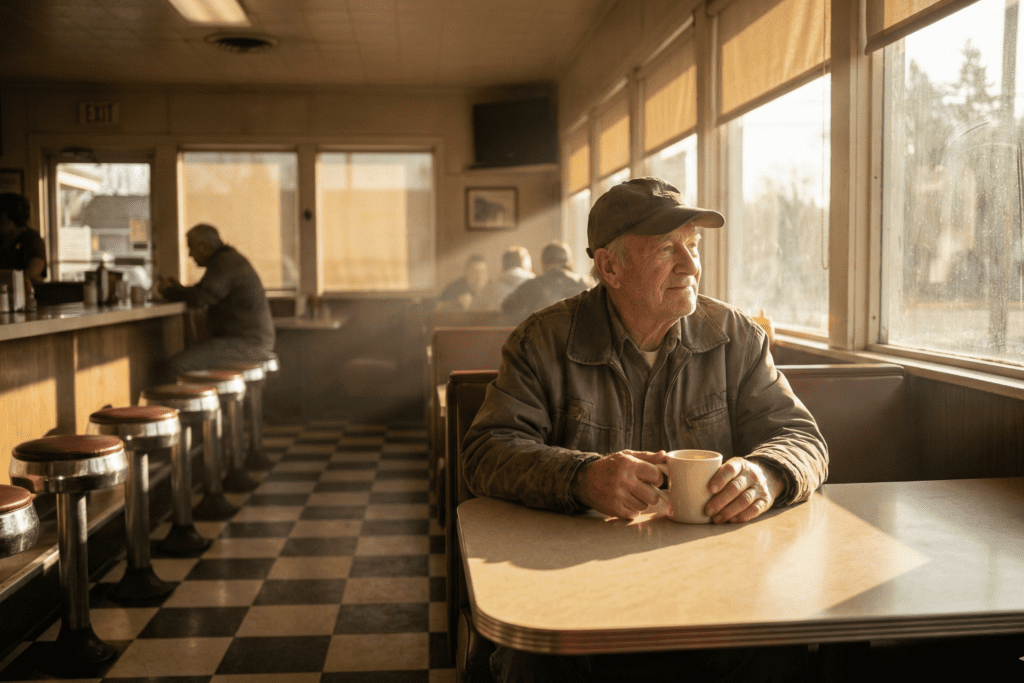
The next morning, I returned to Benny’s Grill.
I did not plan to. It was not intentional. I just found myself driving that way, curiosity pulling me back like an unanswered question.
The same server was working the counter. She recognized me and smiled.
“You were the one with the veteran yesterday,” she said.
“Yes,” I replied. “Is he okay?”
She nodded. “He came back this morning. Had breakfast. Sat by the window.”
Something loosened in my chest.
“He said to tell you thank you,” she added. “He said he slept better last night than he had in a long time.”
I swallowed hard.
She leaned on the counter and lowered her voice. “You should know… the young man came back too. Alone. He apologized to the staff for what happened. Asked about Frank. Said he felt awful.”
That mattered.
It did not erase what had happened. But it mattered.
Growth often begins with discomfort.
Over the following weeks, I found myself noticing things I had ignored before.
The man at the grocery store leaning heavily on his cart.
The woman at the pharmacy counter fumbling with her change.
The elderly couple walking slowly across a parking lot while cars rushed past without pause.
I started stopping more.
Holding doors longer.
Offering help without making it awkward.
Meeting people at eye level instead of looking through them.
I realized how many opportunities for kindness we pass by simply because we are moving too fast to notice.
Frank’s words echoed often.
“You are young, but youth is not an excuse for cruelty.”
Youth is also not an excuse for indifference.
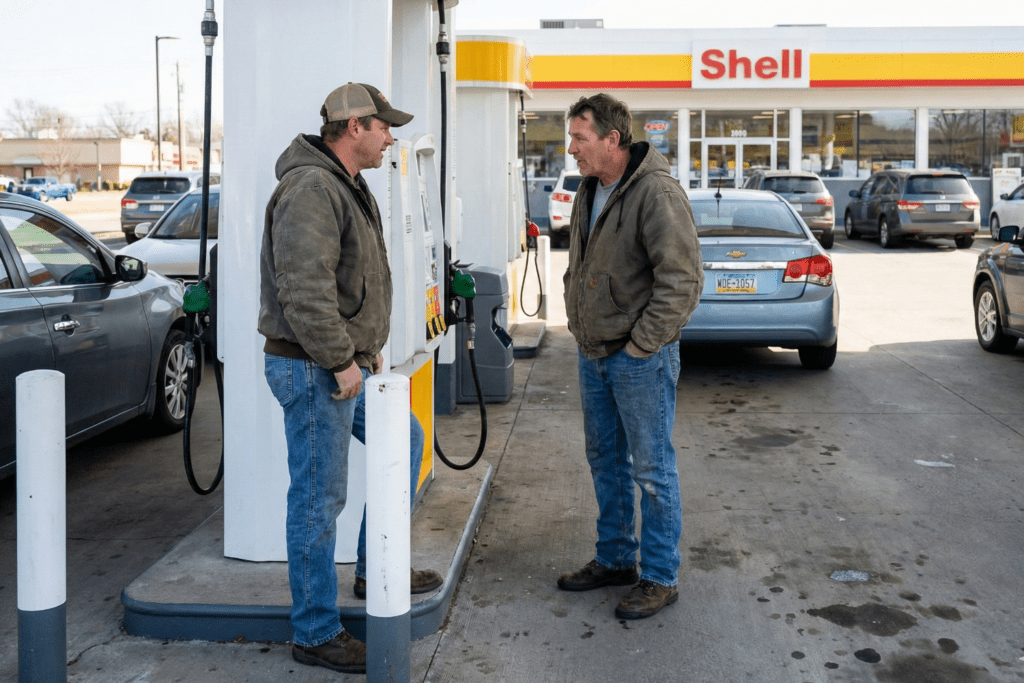
One afternoon, I ran into the young man again.
Not at the restaurant. At a gas station.
He recognized me immediately and looked nervous, like he was unsure whether he should approach. After a moment, he did.
“I wanted to tell you something,” he said. “I signed up to volunteer at the VA center. Just a few hours a week.”
I looked at him, surprised.
“I kept thinking about what you said,” he continued. “About getting old. About respect. I did not like who I was that day.”
I nodded.
“That is how change starts,” I said. “By not liking who you were and deciding to be better.”
He thanked me again and walked away, shoulders a little straighter than before.
I never saw Frank again.
But I think about him often.
I think about the way he gripped my arm, trusting me with his weight. About the way he carried both pride and vulnerability at the same time. About how easily dignity can be lost and how carefully it must be handled once it slips.
We talk a lot about kindness as a feeling. As something warm and abstract.
But kindness is an action.
It is stepping into a hallway when something tells you not to ignore what you hear.
It is choosing respect over laughter.
It is correcting cruelty even when it is uncomfortable.
Most of all, it is remembering that every person we meet is walking toward a future where they will need help too.
If we are lucky, we will all grow old.
If we are wise, we will make that journey gentler for one another.
And if we are brave, we will speak up when someone is being treated as less than human.
That day at Benny’s Grill changed me.
Not because I felt heroic.
But because it reminded me that compassion is not optional. It is necessary.
And it is always worth the cost of standing up.
Part 3: The Kind of Quiet That Changes You
Months passed after that afternoon at Benny’s Grill, but the moment never really left me. It did not fade the way most memories do, softened by time and replaced by newer ones. Instead, it settled in quietly, becoming part of how I moved through the world.
I did not wake up each morning thinking about Frank. Life is not that poetic. There were bills to pay, traffic to sit through, emails to answer, ordinary frustrations that filled the hours like they always had. But something subtle had shifted. A lens I did not know I was missing had snapped into place.
I noticed people more.
Not in a dramatic way. Just enough to see them.
I noticed the hesitation before someone asked for help. The way pride stiffens a spine even when the body is tired. The small, careful movements people make when they do not want to draw attention to their weakness. I noticed how often dignity hangs by a thread, held together by silence.
Once you see it, you cannot unsee it.
One evening, I found myself at the pharmacy after work. The line was long, the fluorescent lights buzzing overhead, impatience thick in the air. Ahead of me stood an older woman gripping the counter with one hand while digging through her purse with the other. Her fingers shook slightly as she searched for her card.
The man behind her sighed loudly.
She flinched.
That was all it took.
I stepped forward and said gently, “Take your time. We’re not in a rush.”
She looked up at me, eyes wide with surprise, then relief. She smiled, a small one, but real.
“Thank you,” she said quietly.
The man behind me said nothing.
It was such a small moment. Forgettable, really. But I saw the way her shoulders relaxed. I saw how permission to exist without hurry can feel like a gift.
Frank’s voice echoed in my mind.
“You are not less of a man because your legs are tired.”
No one is less because they need time.
Not long after that, I visited my father again.
We sat on his porch, the late afternoon sun warming the wooden boards beneath our feet. He moved slower these days. Every step was deliberate, measured. He hated that. I could see it in the way he clenched his jaw when standing up, in the way he waved off help even when it was obvious he could use it.
At one point, he stood and lost his balance slightly. He caught himself on the railing, but his face flushed.
“I’m fine,” he said quickly, before I could speak.
I did not rush in. I did not correct him. I simply stood close.
“I know,” I said. “And I’m here anyway.”
He nodded, grateful without saying it.
Later, as the sky dimmed and cicadas began their chorus, he surprised me.
“Thank you,” he said.
“For what?”
“For seeing me,” he replied. “For not pretending everything is the same as it used to be, and not treating me like I’ve already disappeared.”
I swallowed.
Aging does that. It makes people feel invisible long before they are gone.
I wondered how many Franks were out there.
How many people sat in bathrooms too embarrassed to call out for help. How many laughed along with jokes made at their expense because pushing back felt like too much effort. How many endured small humiliations quietly because drawing attention felt worse.
We are taught to admire independence. To value self-sufficiency above all else. We rarely talk about the courage it takes to accept help.
Frank had been brave in ways the world rarely acknowledges. Brave enough to admit he was stuck. Brave enough to let a stranger see him at his most vulnerable. Brave enough to forgive a young man who had mocked him.
That kind of bravery does not come from strength alone.
It comes from humility.
A year later, I received a letter.
It arrived in a plain envelope, my name written carefully across the front. Inside was a short note and a photograph.
The note read:
Alex,
I don’t know if you remember me, but I remember you. You helped me in a place where I felt very small. I wanted you to know I’m doing alright. Still walking slow, still stubborn, still grateful. Thank you for reminding me I matter.
—Frank
The photo showed him sitting on a bench in a park, cane resting across his knees, sunlight filtering through trees behind him. He looked peaceful. Older, yes. But not diminished.
I sat there holding that letter for a long time.
Some people pass through your life like weather. Others leave marks you carry quietly forever.
Not every story ends with a thank-you note. Most do not. That is not why we show up. Kindness does not require witnesses to be real.
But I have learned something important since that day.
Moments like that are not rare because people are cruel. They are rare because people are distracted. Busy. Afraid of being uncomfortable. Afraid of getting it wrong.
We think kindness has to be big to matter.
It does not.
It is opening a door and waiting.
It is stepping into a hallway when something sounds wrong.
It is correcting laughter with silence and truth.
It is remembering that aging is not a punchline.
The measure of a society is not how it treats the strong.
It is how it treats those who need help standing.
I do not know how old I will be when my legs finally give out.
I do not know if I will be in a restaurant bathroom or a grocery store aisle or my own living room when it happens. I do not know who will be nearby.
But I hope the world I move through that day is one where someone remembers this.
That strength fades.
That dignity should not.
That kindness is not complicated.
And that sometimes, the most important thing you can do is listen for someone crying behind a closed door and decide not to walk away.
Because one day, that door might be yours.
And you will hope someone knocks gently.
No Comments