

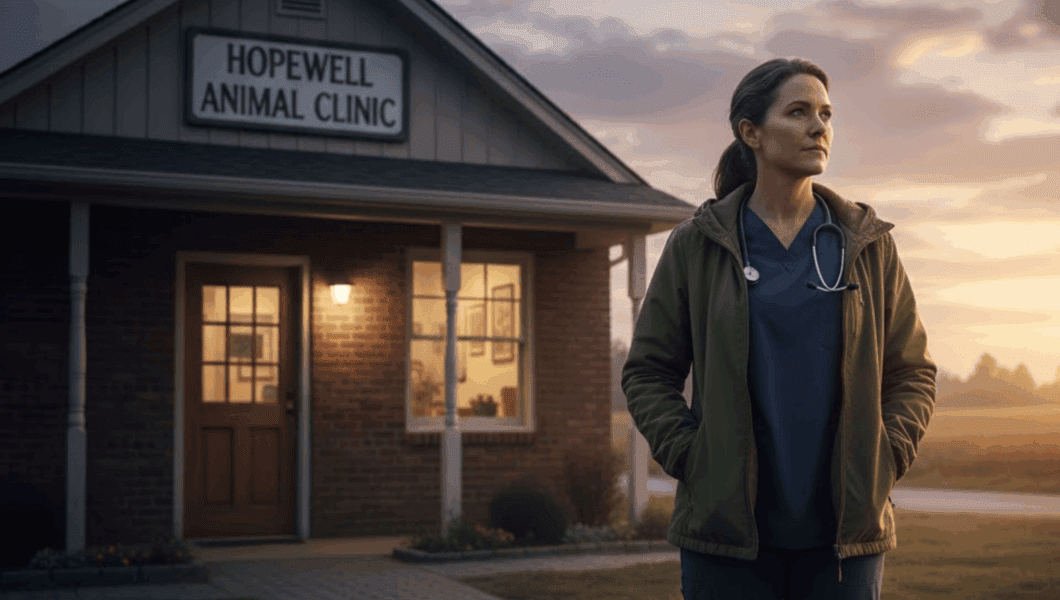
I thought that night would end when Charlie closed the door behind him and the rain swallowed his shape.
It didn’t.
Some moments do not finish when the room empties. They linger. They rearrange things quietly. They sit with you in the dark long after the last light is turned off.
I locked the clinic just after midnight. The sign on the door clicked softly into place, the same sound it had made thousands of times before, but that night it felt heavier in my hand. The air outside smelled clean, scrubbed by rain. The parking lot was empty except for my truck, its hood shining under the streetlight.
I stood there longer than necessary, keys dangling from my fingers, listening to the silence settle back into the building. Clinics have a sound when they sleep. A low hum. A held breath.
On the drive home, the road stretched out black and slick, the yellow lines wavering like they were tired too. I kept seeing Gus’s tail in my mind. That faint thump. That last effort to say yes, I’m still here. I have learned to accept endings in my work, but that sound followed me all the way home.
When I walked through my front door, my dog lifted his head from his bed and wagged so hard his whole body followed. No hesitation. No question. Just joy that I had returned. I knelt on the floor and held him longer than usual, my face buried in his fur, breathing him in like oxygen.
“I know,” I whispered. “I know.”
That night, sleep came in fragments. I drifted off only to wake with the image of Charlie folded over the table, his grief loud in a room that had no place to put it. I lay staring at the ceiling, listening to my dog’s breathing, counting each rise and fall like a promise.
The next morning, the clinic opened as it always does. Phones rang. Dogs barked. Cats hissed from carriers. The world did not pause because one good dog was gone.
But I felt the absence anyway.
There was a space on the schedule where Gus’s name would never appear again. There was a towel in the laundry that still smelled faintly like him. I folded it carefully, slower than I needed to.
Late that afternoon, a woman brought in a golden retriever puppy for his first shots. He bounced across the floor on clumsy legs, ears too big for his head, trusting everyone he met. His owner laughed, apologizing for his energy.
I smiled. I always do. But something inside me tightened.
Love begins so easily. It arrives without warning and sets up residence before you understand the cost.
Between appointments, I found myself thinking about Charlie. About how empty his house must have felt when he walked in without Gus’s nails clicking on the floor behind him. About how quiet mornings can become when no one is waiting for breakfast.
Three days later, the phone rang just before closing.
It was Charlie.
He cleared his throat before speaking. “Doc,” he said. “I didn’t know who else to call.”
I leaned against the counter and listened.
He told me the house was too quiet. He told me he still poured two bowls of food out of habit. He told me he slept on the couch because the bed felt too big now. He told me he kept thinking he heard Gus at the door.
“I know he ain’t suffering anymore,” he said. “I know that part. I just… I don’t know what to do with all this love that’s got nowhere to go.”
I didn’t rush to fill the silence. Some things need room.
“You don’t have to do anything with it yet,” I said finally. “You can just carry it for a while.”
He exhaled, slow and shaky. “That sounds about right.”
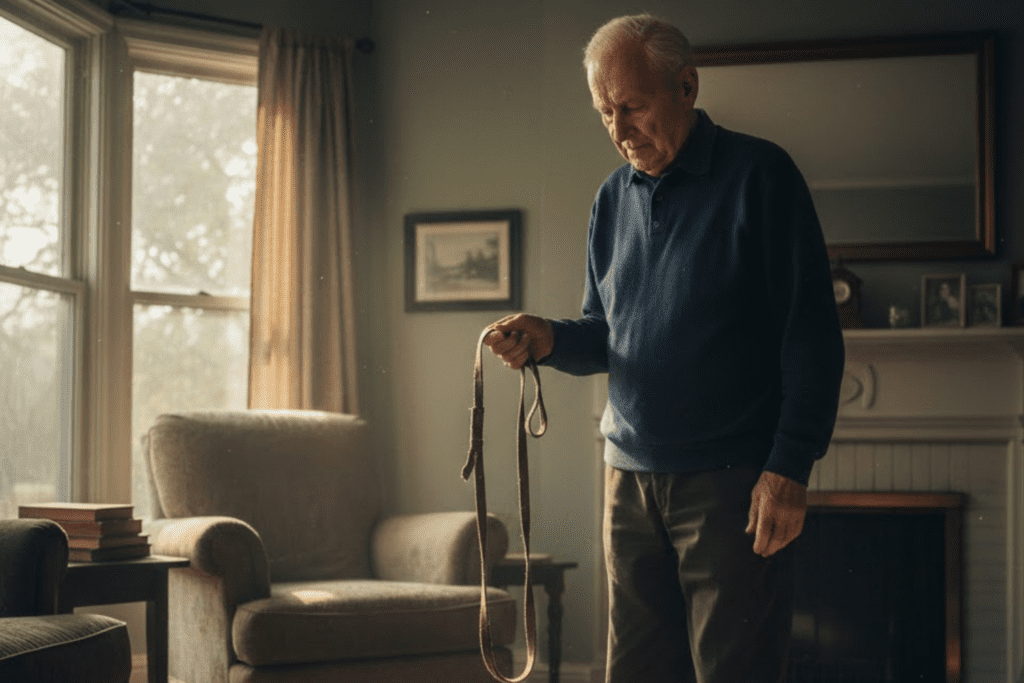
After we hung up, I sat there thinking about how often people imagine grief as something dramatic. Loud. Temporary. But most of the time, it’s quiet. It’s the absence of weight at the end of a leash. It’s the sound you expect and don’t hear.
A week passed. Then another.
Charlie stopped by the clinic one afternoon, unannounced. He stood awkwardly in the doorway, hat in his hands, unsure where to put himself.
“I brought something,” he said.
He handed me a small envelope. Inside was a photograph. Gus, younger, sitting proudly on the porch with Linda beside him, her hand resting on his head. They both looked content in the way that only comes from being exactly where you belong.
“I figured you might want it,” Charlie said. “Since you were there at the end.”
I thanked him. He nodded, then hesitated.
“Doc,” he said, “you think it ever stops hurting?”
I chose my words carefully. “It changes,” I said. “It makes room. But it doesn’t disappear.”
He nodded again. Understanding, not agreement.
After he left, I placed the photo in my desk drawer. I didn’t know why yet. I just knew it belonged close.
That night, I wrote Gus’s name in my journal. I don’t always do that. I don’t always let cases follow me home in ink. But some lives ask to be remembered more deliberately.
In the weeks that followed, I noticed how often people apologized for crying in my exam room. How often they whispered, embarrassed, like grief was something they should have outgrown.
I started telling them the truth.
That loving an animal teaches you how to show up fully, even when it ends badly. That grief is not a failure of strength. That choosing peace for someone you love is an act of courage most people never have to face.
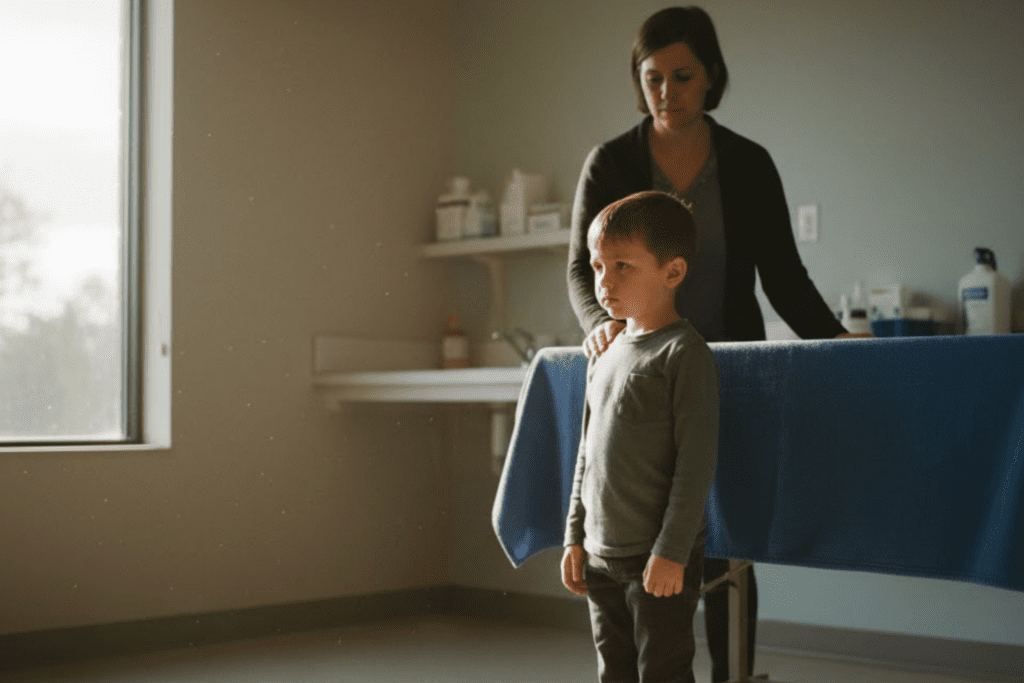
One afternoon, a little boy watched quietly as his family said goodbye to their cat. He didn’t cry. He just stood there, eyes wide, absorbing the moment.
As they left, he turned back to me. “She knew we loved her, right?” he asked.
“Yes,” I said. “She knew.”
He nodded, satisfied, and walked out holding his mother’s hand.
Months later, Charlie adopted another dog.
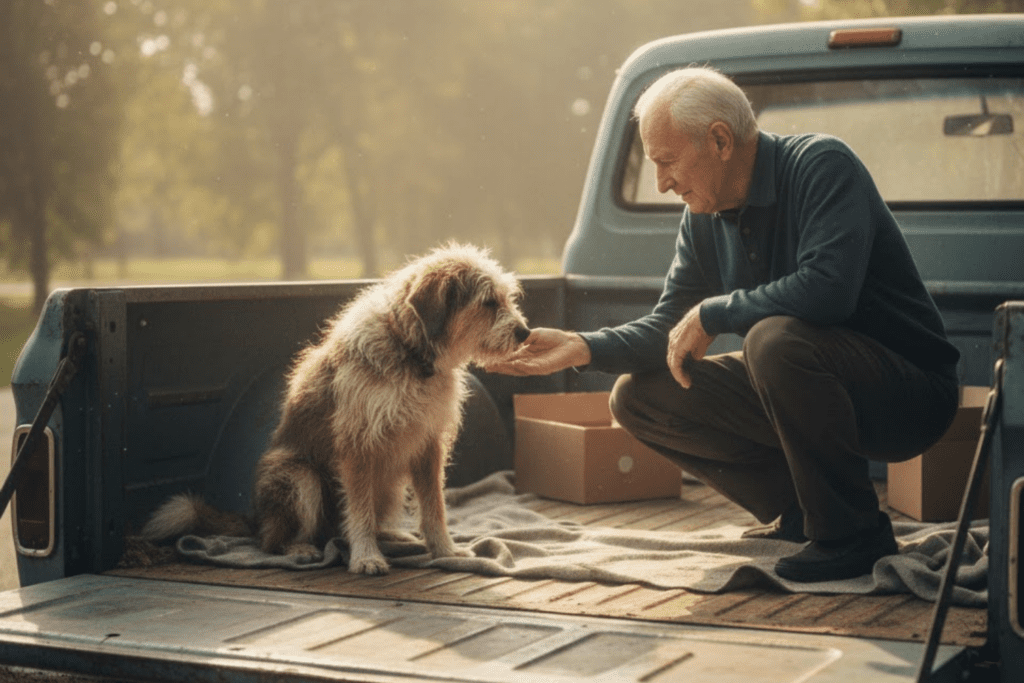
He didn’t tell anyone at first. He just showed up one day with a scruffy gray mutt waiting patiently in his truck.
“This one don’t replace Gus,” he said quickly, like he was defending himself. “Just… helps me breathe.”
I smiled. “That’s usually how it works.”
The new dog was cautious, watchful, carrying his own history in the way he flinched at sudden sounds. Charlie was gentle with him. Patient. Like a man who had learned something important the hard way.
As I watched them together, I understood something that took me years to name.
Grief is not the end of love. It is proof that love happened at all.
That night, driving home, I thought again of Gus’s tail. That last thump. The way love finds a way to speak even when the body is tired.
I keep the photo of Gus and Linda on my desk now. Not where clients can see it. Just close enough for me. A reminder of why I stay late. Why I answer the phone. Why I sit on the floor sometimes and let myself feel it all.
There are easier professions. Cleaner ones. But none that have taught me more about devotion.
If you love an animal, you will one day be asked to be braver than you want to be. You will be asked to carry pain so they don’t have to. And it will feel unfair and cruel and unbearable.
And you will do it anyway.
Because that is what love looks like when it is real.
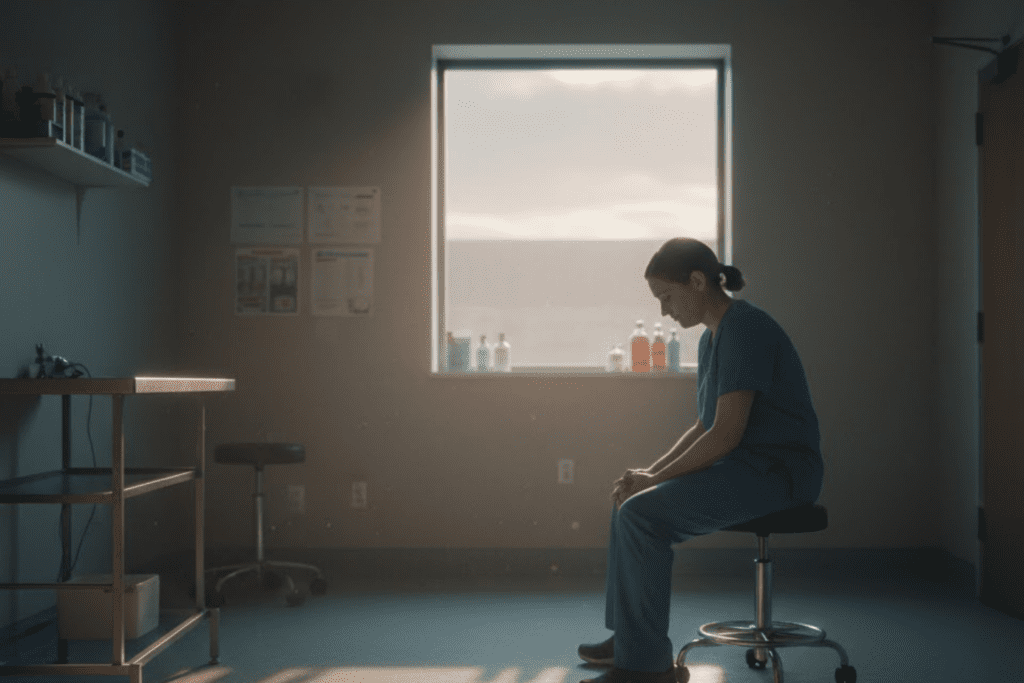
Sometimes, late at night, when the clinic is quiet and the world feels thin, I swear I can still hear that tail. Not the sound itself, but what it meant.
I’m still here.
That message never really leaves you.

No Comments