

Part -2
The morning after that night at the restaurant, I woke up with the kind of heaviness that follows moments you know you will never forget. Not sadness. Not regret. Just the quiet weight of meaning settling into place.
Noah was already awake when I came into the kitchen. He was sitting at the table with his legs tucked under him, coloring carefully inside the lines of a picture he had printed from school. A bowl of cereal sat beside him, untouched, the milk slowly softening the edges.
“Good morning,” I said.
He looked up and smiled. “Good morning.”
That was it. No reference to ice cream. No mention of the woman. No replay of the moment that had felt so enormous to me. Children, I am learning, carry wisdom differently. They do not polish it. They do not revisit it for reassurance. They simply live it, then move on.
I poured coffee and watched him for a while, the way his brow furrowed when he concentrated, the way his tongue peeked out slightly when he chose a new color. I wondered if the moment had already folded itself quietly into him, becoming part of who he was without fanfare.
On the drive to school, the radio hummed softly. Noah stared out the window, watching houses slide past, backpacks and trash cans lining driveways like markers of ordinary life.
“Mom,” he said suddenly, without looking at me.
“Yes?”
“Do you think the lady liked the ice cream?”
I took a breath. “I think it surprised her.”
He nodded. “Surprise can be good.”
I smiled. “It can.”
He thought about that for a moment. “I wasn’t mad at her,” he added. “She just sounded sad.”
I did not trust my voice right then, so I reached over and squeezed his knee instead.
At school drop-off, he ran to his classroom door, then stopped, turned, and ran back. He wrapped his arms around my waist and held on longer than usual.
“Love you,” he said.
“Love you more,” I answered.
He grinned, satisfied, and disappeared into the building.
I sat in the car for a few minutes before driving away.

The days that followed were unremarkable on the surface. Lunches packed. Homework done. Laundry folded and unfolded and folded again. Life did what it always does after a moment of meaning. It kept moving.
But I noticed small shifts.
Noah held doors open longer. He waited more patiently when his siblings spoke over him. Once, at the grocery store, he insisted on returning a stray cart to the rack because, as he put it, “Someone else will need it.”
I tried not to turn these moments into lessons or stories. I did not praise him loudly. I did not point out what he was doing right. I had the sense that drawing attention to it would change it somehow. Like shining a light too bright on something that grows best quietly.
A week later, we went back to the same restaurant.
Not on purpose. Just habit. The kids requested it without remembering why it had lodged so deeply in my own chest.
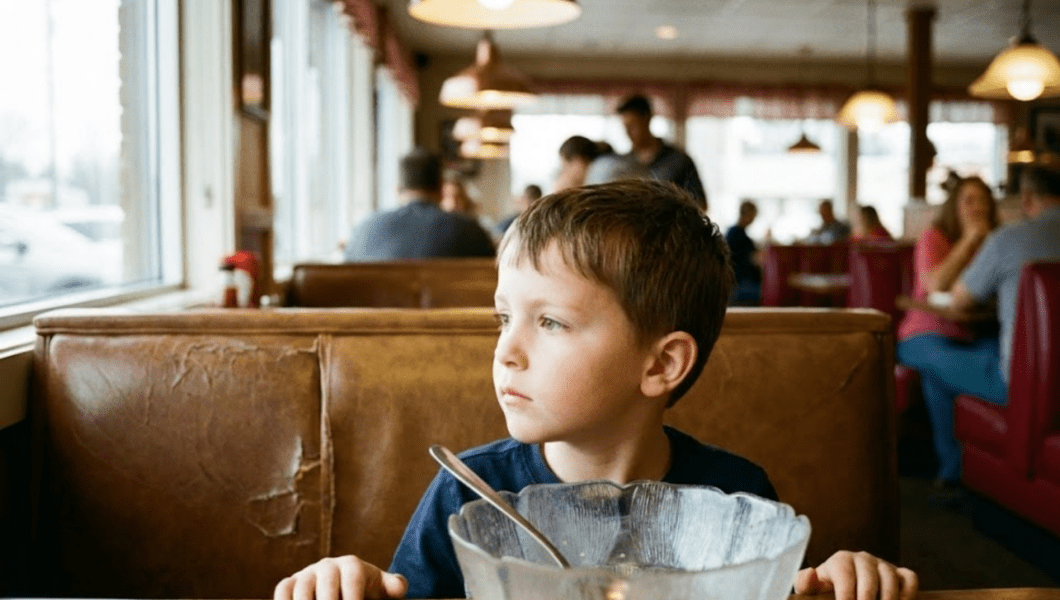
We slid into a booth near the window. The same worn vinyl. The same laminated menus. I noticed myself scanning the room before we even sat down, half-expecting to see the older man, or the woman, or some trace of that moment lingering in the air.
Of course, there was nothing. The world rarely marks the places where we are changed.
The server brought our drinks. Noah traced the condensation on his glass with his finger.
“Mom,” he said, “can I say thank you again?”
I hesitated. “Out loud?”
He nodded.
I smiled. “If you want to.”
He folded his hands, bowed his head, and spoke quietly this time. No ice cream. No add-ons. Just gratitude. Simple and steady. When he finished, he looked up, searching my face.
“That was nice,” I said.
He smiled, relieved.
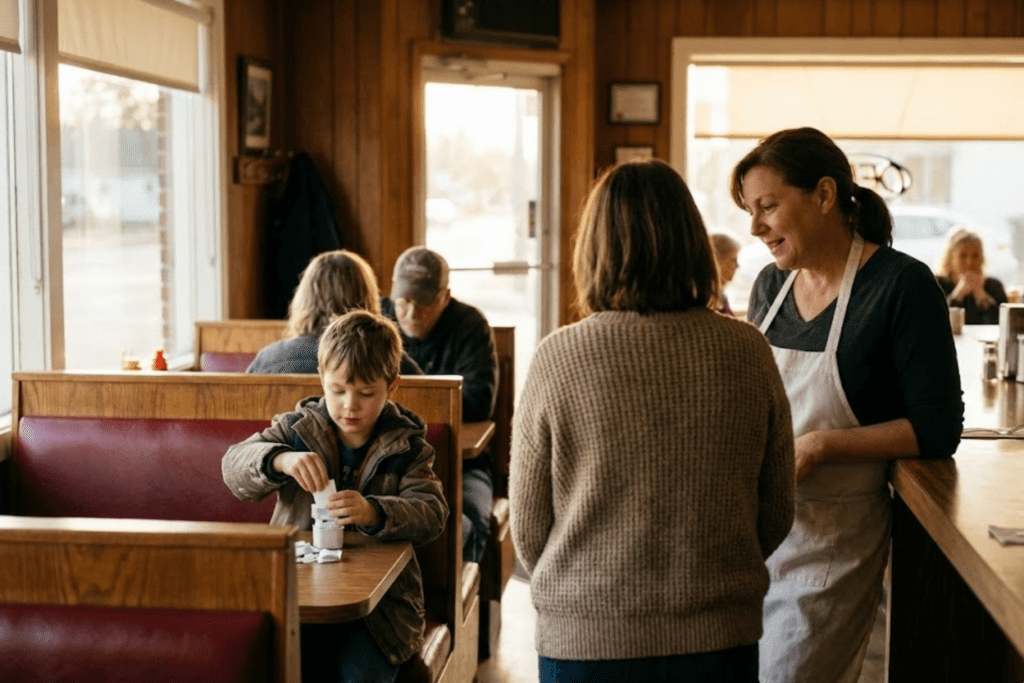
Halfway through the meal, I noticed a woman a few tables away watching us. She looked to be around my age, maybe a little older. She had a tired softness to her, the kind that comes from carrying more than you show.
When our eyes met, she smiled gently.
As we were leaving, she stood and approached.
“I hope you do not mind me saying this,” she said, lowering her voice. “But your son has a very calm presence.”
I glanced at Noah, who was busy straightening the sugar packets on the table.
“Thank you,” I said.
She hesitated, then added, “The world could use more of that.”
Noah looked up. “Of calm?”
She laughed softly. “Yes. Of calm.”
He nodded seriously, as if filing the thought away.
That night, after bedtime stories and tucked-in blankets, Noah asked if he could talk.
“About what?” I asked, sitting on the edge of his bed.
“About when people say things that hurt.”
I waited.
He stared at the ceiling. “Do grown-ups forget things too?”
“Yes,” I said carefully. “They forget a lot of things.”
“Like how to be kind?”
“Sometimes,” I answered.
He turned his head toward me. “Is it because no one reminds them?”
I thought of the woman at the restaurant. Of her tight mouth. Of the way her eyes had softened when Noah set the ice cream in front of her.
“Sometimes,” I said again.
He considered that. “I think reminding feels better than arguing.”
I laughed quietly. “It does.”
He rolled onto his side and pulled the blanket up under his chin. “Goodnight, Mom.”
“Goodnight.”
I stayed until his breathing evened out, then slipped from the room.

A few days later, the school sent home a note asking parents to volunteer for a classroom activity. I signed up without thinking. It was a simple craft project, nothing special.
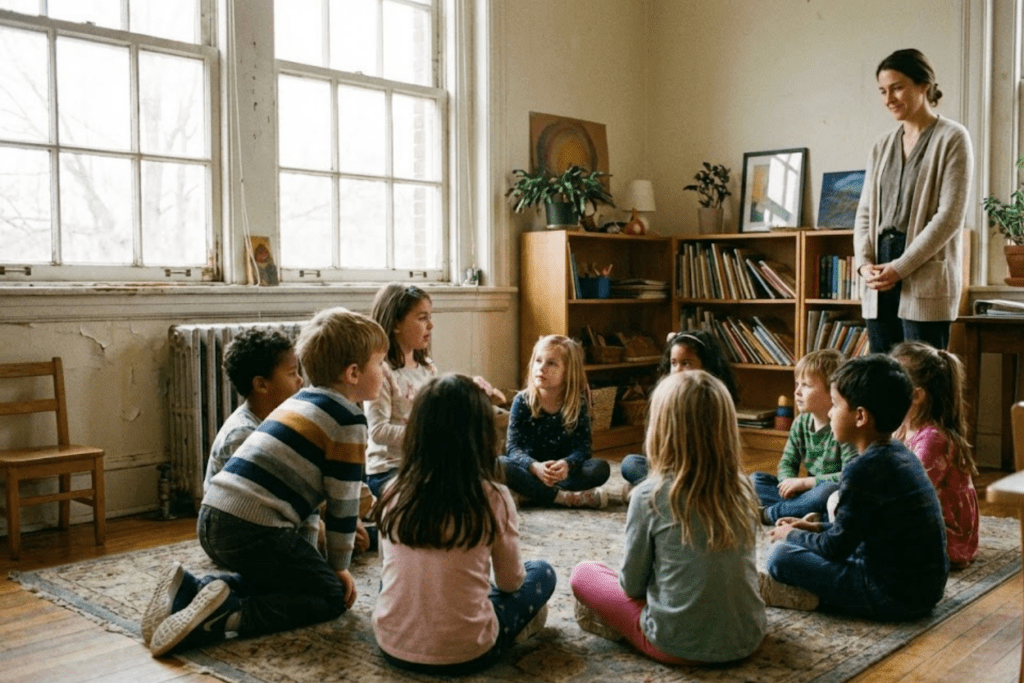
When I arrived, Noah’s teacher smiled warmly. “I’ve been wanting to talk to you,” she said.
My stomach tightened. Old reflex.
“Nothing bad,” she assured me. “Actually, quite the opposite.”
She gestured toward the classroom, where Noah sat with a group of children, listening intently as another boy spoke.
“He has a way of making space,” she continued. “When other kids are upset or embarrassed, he sits with them. He does not try to fix it. He just stays.”
I felt my throat tighten.
“He reminds the others that there is room for everyone,” she said.
I watched him then. The way he leaned in. The way he nodded when someone else spoke. The way he did not interrupt.
He had not learned that from a lesson.
He had learned it from being seen.
From being defended without anger.
From being met with kindness instead of correction.
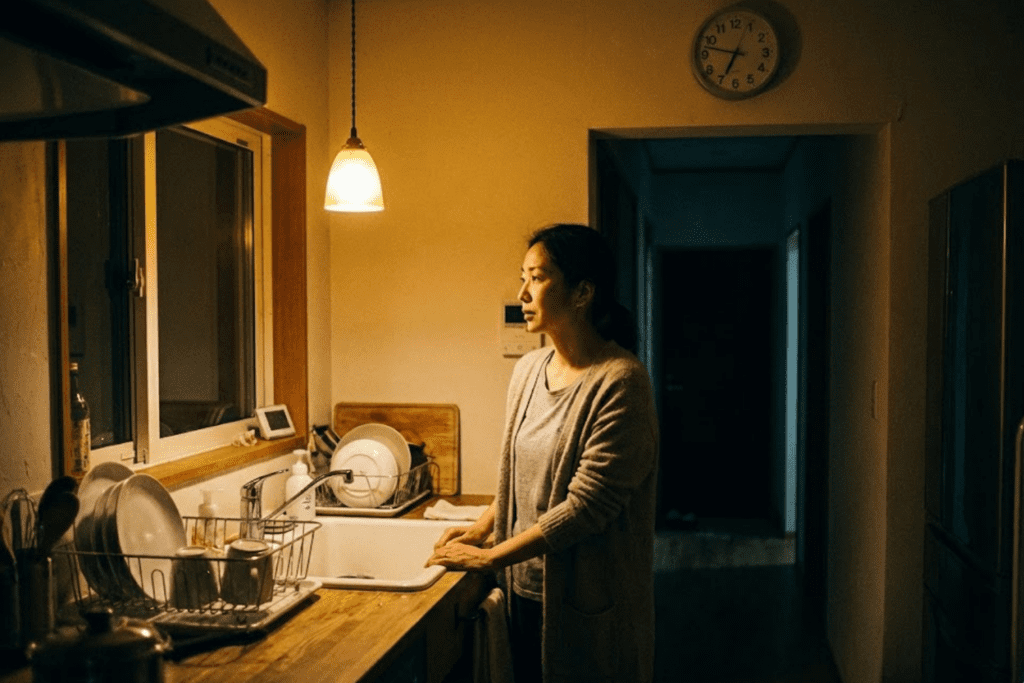
That evening, while washing dishes, I thought about how close that night at the restaurant had come to going differently. How easily I could have reacted with sharpness. How quickly I could have corrected the woman. How tempting it would have been to teach Noah to defend himself with words that wound.
Instead, someone else had stepped in with grace.
And Noah had taken that grace and multiplied it.
We talk a lot about what we teach our children.
We talk less about what we allow them to teach us.
That night, as I tucked him in, he asked if we could get ice cream again sometime.
“Of course,” I said.
“Not because I need it,” he added quickly. “Just because it’s nice.”
“It is,” I agreed.
He smiled, already half-asleep.
I sat there a long time, listening to the quiet hum of the house.
I do not know who the man at the restaurant was. I do not know if the woman remembers that moment the way I do. I do not know if any of it mattered beyond that evening.
But I know this.
A child learned that faith does not need permission to be gentle.
That kindness does not require approval.
That sweetness is not weakness.
And I learned that sometimes the most powerful lessons arrive disguised as dessert.
I will not forget that.
And I hope he never does.
This story does not end with ice cream or a single moment of grace.
It keeps going.
Part 3 is now live.
It is about what happens next. About the quiet ways kindness continues to show up when no one is looking, and how one small act can become a habit of the heart.
Read Part 3 here →



No Comments