

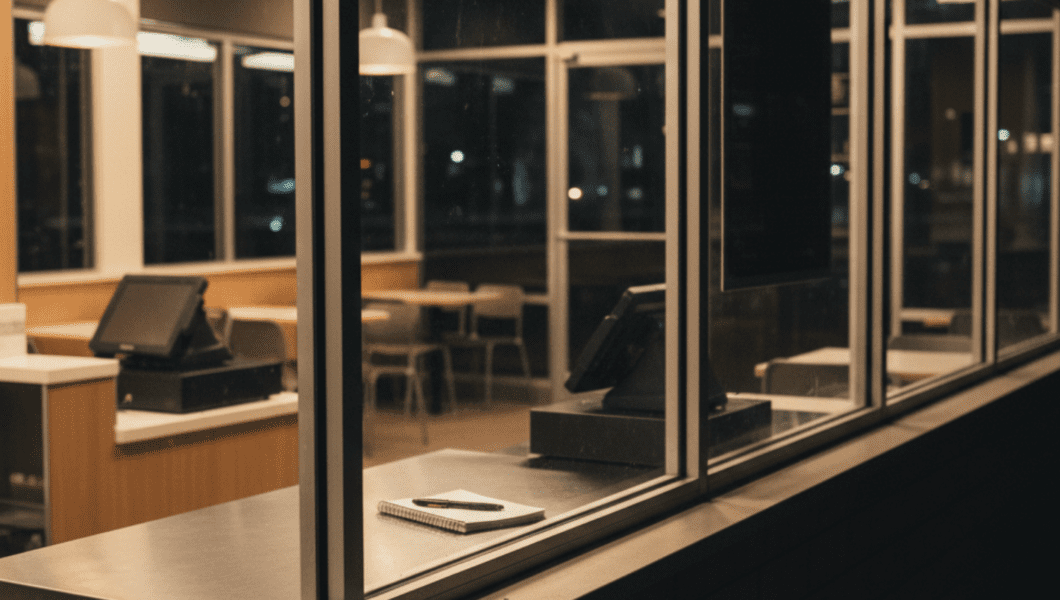
I did not expect that night to follow me home.
After we pulled out of the Rocket Burger parking lot, my boyfriend unwrapped his food with the single-minded joy of someone who has waited too long to eat. Grease soaked through the paper bag, the smell filling the car, and for a moment the world felt simple again. Burgers. Fries. Relief.
But my mind was still inside that restaurant.
I kept replaying Jason’s face in my head. The way his eyes flicked from lips to hands to the screen. The way his shoulders relaxed every time someone reached for the notepad without being asked. The quiet rhythm of accommodation that had formed in that line without anyone announcing it or congratulating themselves for it.
It stayed with me longer than the taste of food.
At home, after we ate, I found myself talking about it again. My boyfriend listened the way he always does, leaning back on the couch, nodding, letting me get it all out.
“You don’t see that very often,” he said finally.
“No,” I agreed. “You really don’t.”
I lay awake longer than usual that night. Not because I was upset, but because something about the experience kept unfolding in my thoughts. It felt like I had stumbled into proof of something I desperately wanted to believe, that decency was still possible without being loud or performative.
The next afternoon, I mentioned it at work.
Not as a big story. Just casually, while making coffee. I told a coworker about a cashier at a fast food place who was hard of hearing and how everyone adjusted without complaint.
She paused mid-sip.
“Really?” she said. “No one freaked out?”
“No,” I said. “Not one person.”
She smiled, but there was something wistful in it. “That’s rare.”
The word stuck with me. Rare.
That night, I opened my phone and searched for Rocket Burger’s page. I stared at the blank review box for a long time before typing anything. I didn’t want it to sound dramatic or exaggerated. I just wanted it to be true.
So I wrote about the notepad. About the patience. About Jason.
I hit post and put my phone down, not expecting much.
By morning, the notifications were already stacking.
People commented that they knew exactly which cashier I meant. Someone said they always waited in Jason’s line on purpose. Another said their brother was hard of hearing and had never been given a chance like that at a customer-facing job.
A former employee chimed in to say Jason trained new hires on how to communicate better, not just with him, but with everyone.
That surprised me.
I realized then that what I saw that night was not a one-time fluke. It was a culture that had been quietly built, shift by shift, interaction by interaction.
Two days later, we went back.
Not because we were hungry this time, but because I wanted to see if it felt the same when I wasn’t exhausted and emotional at one in the morning.
The parking lot was calmer. The line shorter. The restaurant washed in afternoon light instead of fluorescent midnight glare.
Jason was there again.
Same pressed uniform. Same focused posture. Same warm smile.
When he recognized me, his face lit up with a flicker of surprise.
“You came back,” he said.
“I did,” I replied. “I wanted to say thank you.”
His brows pulled together slightly. “For what?”
“For doing your job the way you do it,” I said. “And for letting people meet you halfway.”
He looked embarrassed then, the way people do when they are not used to being noticed for the right reasons.
“I just want to get the orders right,” he said.
That sentence said everything about him.

We ordered our food and stepped aside, and I watched the counter again.
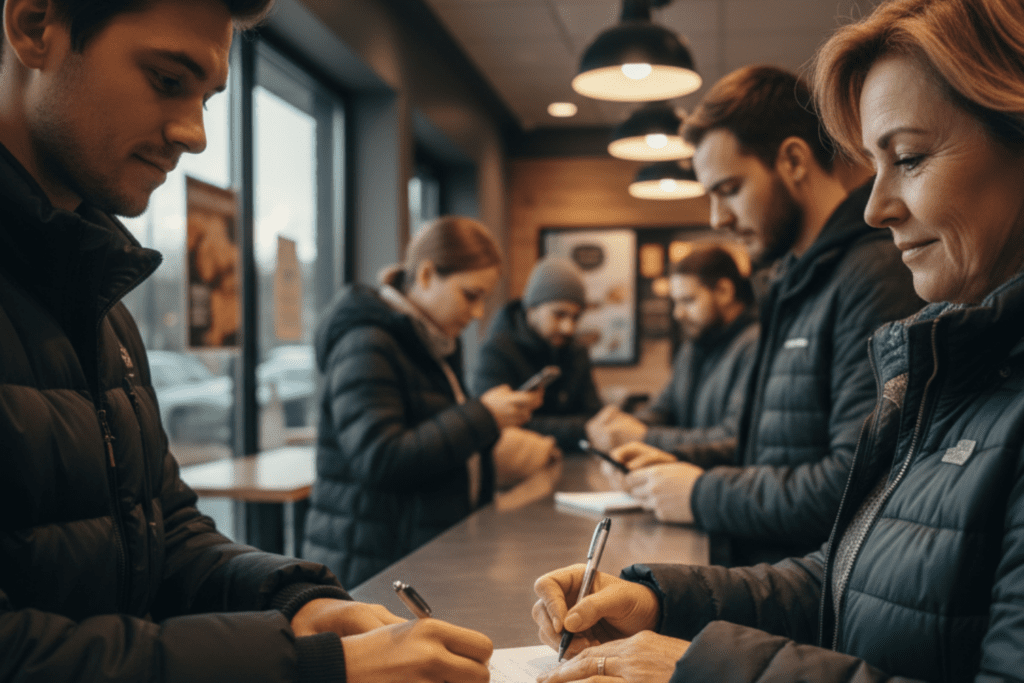
A man in construction gear stepped up and immediately reached for the notepad without being prompted. A woman with earbuds took one out and pointed to her ears apologetically, then smiled when Jason nodded in understanding. The exchange was smooth, almost invisible.
No heroics. No applause.
Just function and respect.
I noticed something else this time.
Jason was not alone in making this work. His coworkers supported the flow without hovering or rushing him. Someone in the back leaned forward to double-check an order without making a show of it. Another cashier jumped in to handle mobile pickups so Jason could focus.
This wasn’t about one exceptional person being brave in isolation.
It was about a system that allowed him to succeed.
When our food was ready, Jason slid the tray across with care.
“Have a good night,” he said.
“You too,” I replied.
But the words felt insufficient.
Later that week, I found myself thinking about how many moments like that I had missed in my life. How many times impatience had rushed me past something human and quietly meaningful. How often I had assumed accommodation was an inconvenience instead of an invitation.
It made me look differently at small delays. At people who needed an extra beat. At the quiet courage it takes to show up every day knowing communication will cost you more energy than it costs everyone else.
Jason didn’t ask for understanding.
He made space for it.
And people stepped into that space willingly.
That is not nothing.
One evening, almost a month later, I received a message from someone I did not know.
She wrote that Jason was her cousin. That he had grown up being told he should choose jobs where he wouldn’t have to interact with strangers. That he had insisted on trying anyway.
“He practices lip-reading in the mirror,” she wrote. “He practices smiling so people don’t think he’s annoyed when he’s concentrating.”
I sat with that information longer than I expected.
I thought about how often we misread effort as disinterest. How easily we confuse silence with lack of engagement.
I thought about how much work goes unseen.
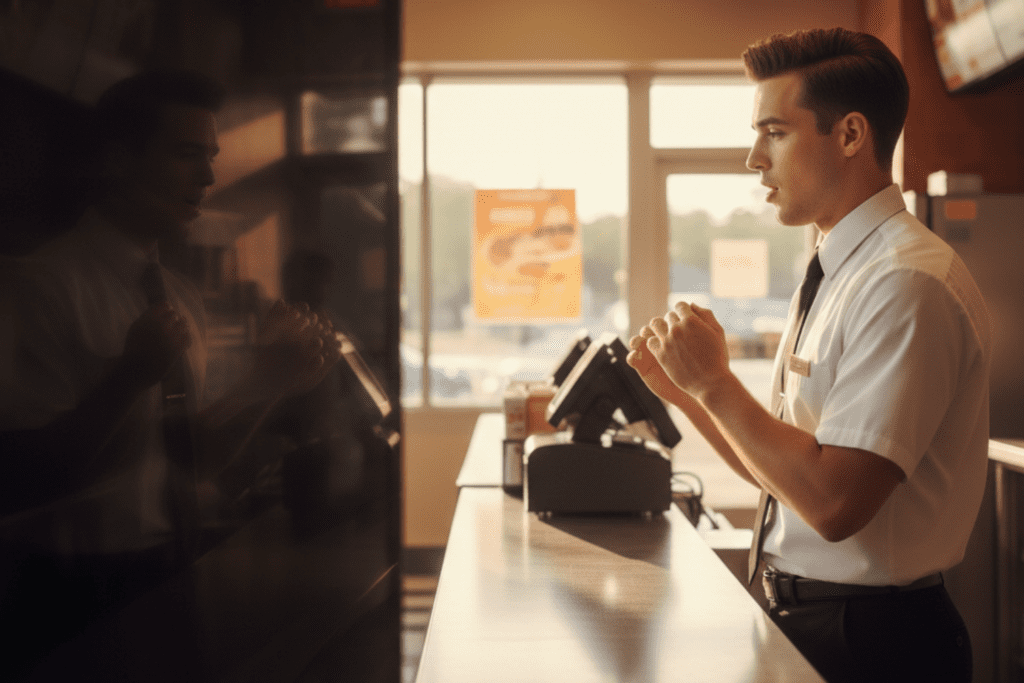
The world did not change overnight because of a notepad and a pen.
But something small shifted for me.
I started slowing down conversations without being asked. I started paying attention to who might need information written instead of spoken. I started noticing how many barriers exist simply because we assume everyone experiences the world the same way.
None of that feels heroic.
It feels basic.
Which is perhaps the point.
A few weeks after that first night, Rocket Burger posted a small announcement. No big campaign. Just a quiet note thanking customers for their patience and kindness and highlighting their commitment to inclusive hiring.
Jason was mentioned by name.
The comments were mostly positive. Some people shared their own stories. Some said they would go out of their way to support the place.
A few complained about wait times.
That didn’t surprise me.
Kindness doesn’t erase impatience. It just offers an alternative.
When I drive past Rocket Burger now, I always glance at the windows. Sometimes I see Jason. Sometimes I don’t.
But every time, I think about that line of tired, hungry people at one in the morning who chose dignity over speed.
It feels important to remember that.
Not because it restores faith in humanity in some grand way.
But because it proves that goodness can be ordinary.
I never told Jason how many people read that first post.
I didn’t want him to feel like he had to perform gratitude or humility.
Some things are better left as quiet knowledge.
What I did tell him, the next time we went in, was this.
“You changed the way I move through the world a little,” I said.
He smiled, that same steady smile, and shrugged.
“Then that’s good,” he said.
And it was.
I still think about that night sometimes.
Not because it was dramatic.
But because it was gentle.
And gentleness is easy to miss if you are not looking for it.


No Comments