

I did not plan to remember that afternoon the way I do now. It was supposed to be an ordinary stop, one of those in-between errands that barely registers in your day. A few groceries, a quick checkout, then home. Nothing important. Nothing worth writing about.
But some moments choose you.
I was standing in line at a Walmart grocery store, the kind of line that seems to stretch forever without actually moving. The checkout lights were bright in a way that made everything feel slightly too sharp. Carts were packed tight against one another, metal bumping metal as people shifted their weight. The air carried that familiar mixture of impatience and noise that settles in when everyone is tired and ready to be done.
I was not in a hurry. I picked up a magazine from the rack near the register and flipped through the pages, not really reading, just giving my hands something to do. I was halfway through an article when I heard it.
The woman a few people ahead of me was complaining.
Not quietly. Not in the way people mutter to themselves when they think no one is listening. Loud enough that the entire line could hear. She sighed with theatrical frustration, checked her phone, tapped her foot against the floor, and muttered about how ridiculous it was that the line was taking so long. Her voice was sharp, irritated, and she seemed determined to make sure her annoyance was noticed.
I looked up to see what was happening.
The woman at the register was standing very still, her shoulders drawn in as if she were trying to take up less space. The cashier swiped her card again.
Declined.
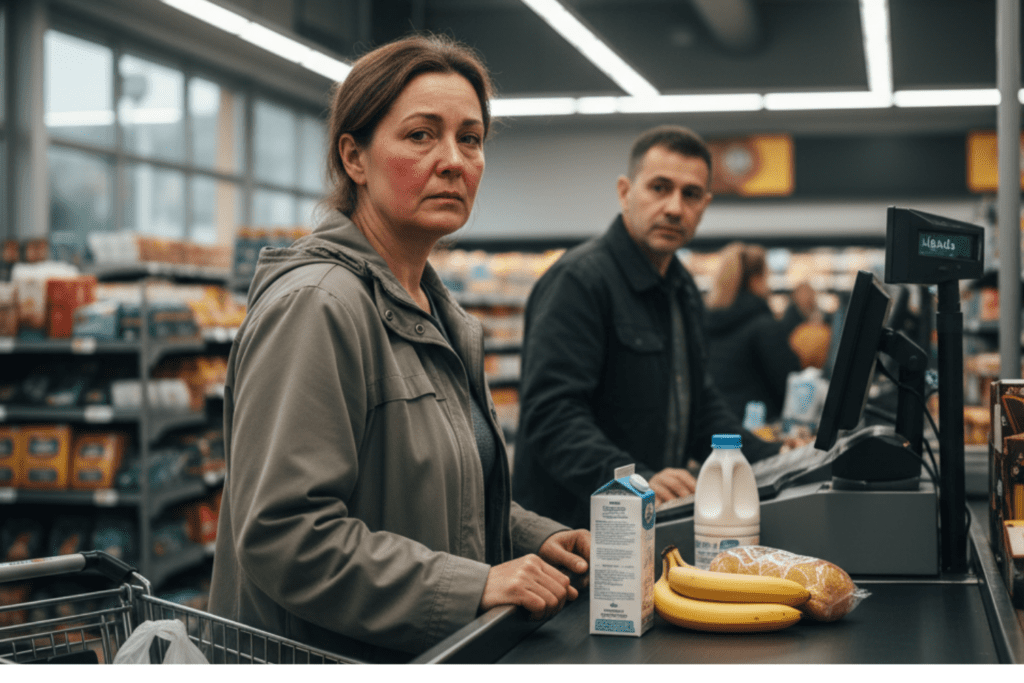
The woman glanced down at the small collection of items on the counter. It was not much. A bag of potatoes. Two bags of dried beans. A small pack of ham. A case of bottled water. No extras. No snacks. No treats. Nothing that could be called a luxury.
Just the kind of food that keeps people going.
She quietly began sliding items aside, pushing them toward the edge of the counter so the cashier could put them back. Then she swiped her card again.
Declined.
She looked back at the line behind her. Her face was flushed, eyes bright with tears she was trying to keep in place. “I’m so sorry,” she said softly. “I just need to call my husband really quick.”
The woman behind her let out a long, exaggerated sigh. She glanced back at me and rolled her eyes, as if inviting me to join her in the judgment of this stranger.
Her own cart told a different story. Bags of candy. Slim Jims. Soda. Boxes of junk food stacked high. Easily thirty dollars or more in snacks alone.
The woman at the register finished her phone call and closed her phone with both hands, slowly, like she was bracing herself. You could see the moment when hope slipped away.
“My husband bought gas,” she said quietly. “It’s not going to go through. I’ll just put everything back. I’m really sorry.”
That was when the woman behind her leaned toward me and whispered, loud enough for the cashier to hear, “Oh my God, can you believe some people?”
I met her eyes.
“Yes,” I said, keeping my voice calm. “I can. Sometimes it absolutely blows my mind how heartless people can be.”
Her mouth fell open.
I stepped past her, set my items on the counter, and told the cashier I would pay for the woman’s groceries.
The total was small. The moment was not.
The woman at the register froze, looking at me as if she were not sure what she had heard. “What?” she whispered.
“I’ve got it,” I said. “Please don’t put anything back.”
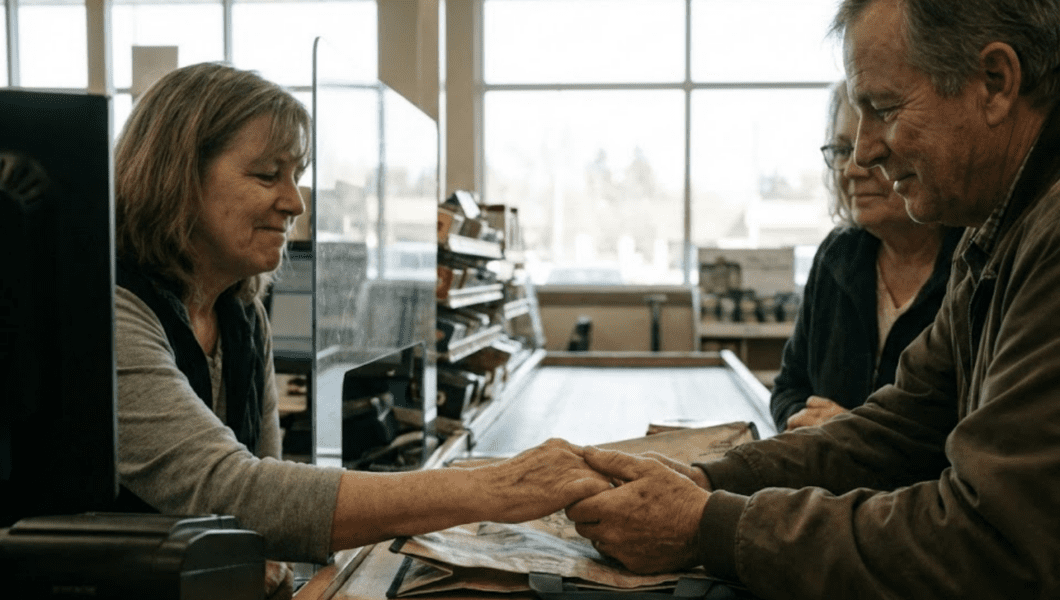
Her hands started to shake. She covered her mouth, and the tears came before she could stop them. She reached for my hand and held it with both of hers.
“You have no idea how much we needed you to be behind us today,” she said, her voice breaking.
Before I could respond, she leaned forward and kissed my cheek.
I had to swallow hard. It took everything in me not to cry right there in the checkout lane.
Because the truth is, it was not that long ago that I was her.
I remember standing at a register, staring at a total, trying to decide what had to go back. Food. Gas. Diapers. Sometimes you can only afford two, and sometimes only one. I remember the shame, the quiet panic, the way you pray the card will go through even though you already know it will not. I remember people behind me sighing, judging, assuming.
So when she gathered her bags and turned to leave, I stopped her.
“Thank you,” I said.
She looked confused. “For what?”
I smiled gently. “For reminding me of myself a few years ago. For showing me how far I’ve come and how grateful I am now. You will get there too. Please don’t give up.”
She nodded, tears still falling, and walked out of the store holding her groceries as if they were something sacred.
Then I walked back past the rude woman and met her eyes again.
“I hope you are never in that position,” I said quietly. “But if you ever are, I think you’ll remember today.”
She did not say a word.
And that was fine.
Because sometimes the lesson is not for the person being helped.
Sometimes it is for the people watching.
I thought that would be the end of it. A moment of kindness, a quiet drive home, and then back to the normal rhythm of life.
But that night, the moment would not let me go.
I kept seeing her hands shaking as she held mine. I kept hearing the way her voice cracked when she said thank you. There was nothing dramatic about it. No speeches. No applause. Just two strangers in a grocery store, one in need, one in a position to help. And yet, it felt heavier than so many things that had happened to me before.
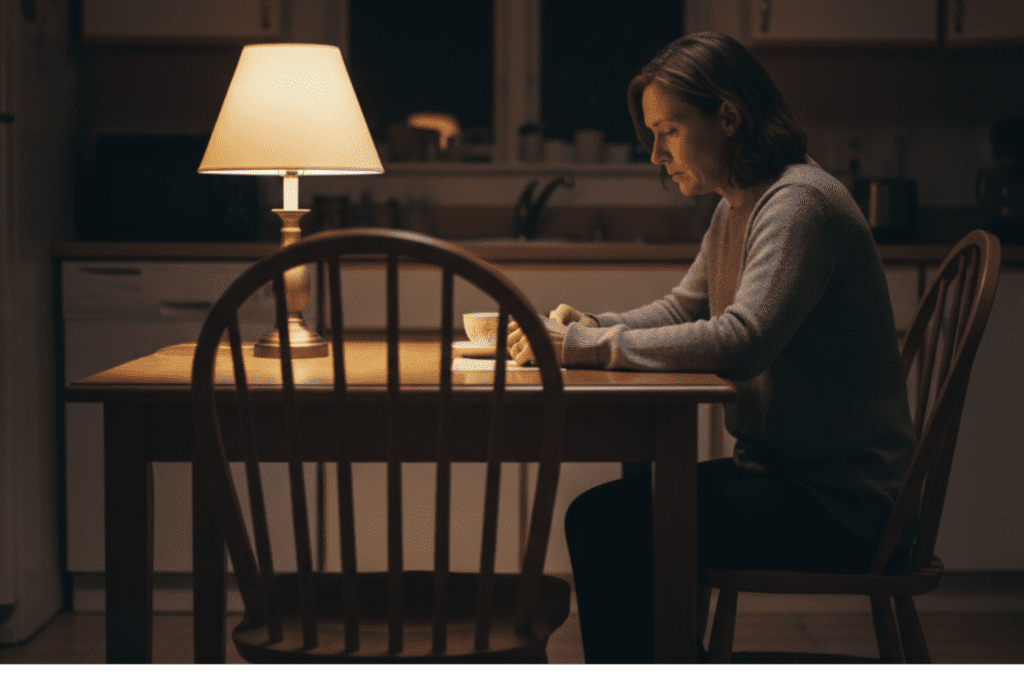
I sat at my kitchen table long after dinner was done, the house quiet, the hum of the refrigerator the only sound in the room. I ran my fingers along the edge of the table, remembering other edges. Other counters. Other days when I had been the one staring at a total I could not afford.
It is a strange thing, how quickly we forget what it felt like to be afraid of numbers on a screen.
There was a time when my world was measured in small decisions that felt impossibly large. Do we buy groceries or fill the tank? Do we pay the light bill or buy school supplies? I learned to scan shelves not for what I wanted, but for what would last. Rice. Beans. Whatever was cheapest and could stretch the farthest.
I learned how to smile in public and cry in private.
Standing in that line brought all of it back in a way I did not expect. Not as pain, but as memory. As perspective.
I realized something else too.
I almost did not hear her.
If I had stayed buried in that magazine, if I had tuned out the noise the way we all learn to do in public places, I might have missed the entire moment. I might have walked out with my groceries and never known that, for a few minutes, I had been standing behind someone who needed help more than I did.
That thought unsettled me.
How many moments like that pass by every day?
How many people are quietly choosing what to give up while the rest of us are busy being annoyed about lines and delays and inconveniences that mean nothing in the larger shape of a life?
The next morning, I found myself back in the same store. Not because I needed anything, but because something in me needed to return to the place where it had happened, as if standing in that space again might help me understand why it had stayed with me.
The line was shorter. Different faces. Different carts. The same bright lights.
I watched people this time.
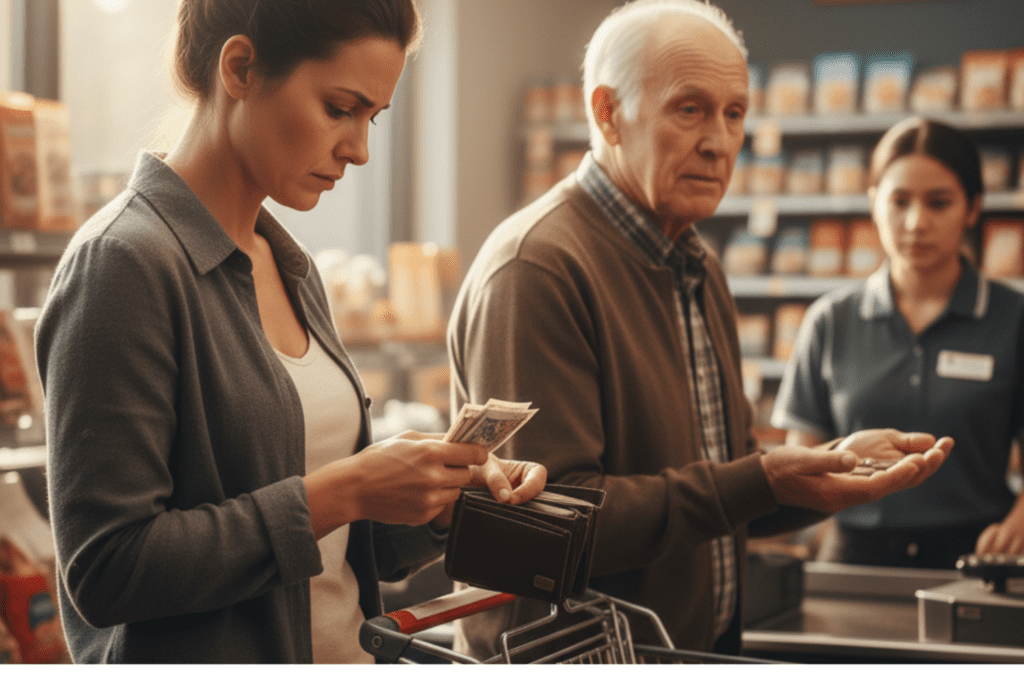
Not in a judgmental way. In a curious one. A mother counting bills in her hand before reaching the register. An elderly man fumbling with change. A teenager carefully putting back a box of cereal when he realized he did not have enough.
None of them asked for help. None of them made a scene. They were quiet, contained, doing what so many people do every day. Making do.
I paid for my things and left, but something in me had shifted. Not in a loud, dramatic way. More like a small adjustment in how I looked at the world, as if a lens had been cleaned.
That afternoon, I wrote her a letter in my head.
Not because I had any way of finding her, but because there were things I wanted to say that I had not said in the moment.
I would tell her that I know how hard it is to stand in that place. That I know the way your chest tightens when the card does not go through. That I know how small you can feel when people behind you sigh, when eyes roll, when patience disappears. I would tell her that she did nothing wrong. That needing help is not a failure. That one day, she might be the person behind someone else in line, quietly stepping forward the way I did.
I would tell her that the kiss on my cheek was not something I will ever forget.
Instead, I carried the letter with me in small ways.
When I noticed someone hesitating at a counter, I waited without complaint. When a cashier looked overwhelmed, I met their eyes and smiled. When I saw impatience rising in myself, I remembered her face, the way her hands shook, the way relief looked like tears.
Weeks later, I was in another store. Different place. Same kind of line.
This time, there was no scene. No declined cards. No raised voices. Just a man ahead of me who kept glancing at his phone, then at the register, then back at his cart. He paid, gathered his things, and walked out.
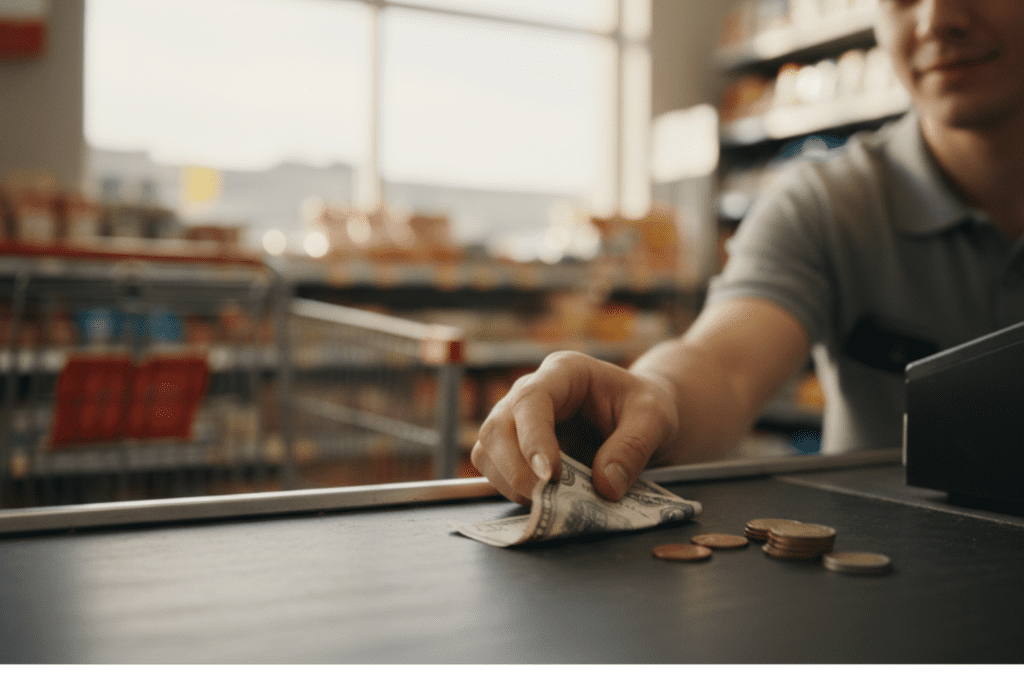
As I stepped forward, the cashier leaned in slightly and said, “He left his change. He said to use it for the next person who needs it.”
It was only a few dollars. Barely enough to notice.
But I did.
I thought about how kindness rarely announces itself. How it often moves quietly, from one person to another, unseen by most.
I began to wonder how many small mercies have passed through my life without my ever knowing their source.
There is a part of this story that is uncomfortable to admit.
When I first heard the rude woman’s sighs, there was a split second when I almost stayed silent. When I almost did what so many of us do. Look away. Mind my own business. Avoid the awkwardness.
It is not that I did not care. It is that stepping into someone else’s moment can feel risky. You do not know how it will be received. You do not know if you will make things worse. You do not know if you will be judged.
What stopped me was not bravery. It was recognition.
I saw myself in that woman at the register. I remembered how it felt to be on the other side of that counter, wishing someone would understand.
That is what moved me forward.
Not the desire to be kind, but the inability to ignore something I knew too well.
I think often about the rude woman too.
Not with anger. Not with bitterness. But with a kind of sad curiosity.
I wonder what her life looks like when no one is watching. What worries she carries. What losses she has known. What fear might be hiding behind the impatience. I wonder if she went home that night and thought about what happened. If something in her shifted, even slightly.
I hope it did.
Not because I need her to agree with me, but because I want to believe that moments like that can reach beyond the people directly involved.
That they can ripple outward.
There is a temptation, when telling stories like this, to wrap them in tidy lessons. To end with a phrase that feels neat and complete. Life is not neat. Kindness is not a slogan. It is a choice that often comes with no audience and no reward beyond the quiet knowledge that you did not look away.
What I learned in that line was not that I am a good person.
It was that I am capable of remembering who I used to be.
And that memory is a powerful thing.
It keeps me from assuming. From judging. From deciding that someone else’s struggle is their own fault. It reminds me that circumstances change, sometimes slowly, sometimes overnight. That the distance between having enough and not having enough can be frighteningly small.
The woman at the register never knew my name. I never knew hers. We were strangers who shared a moment that neither of us will ever fully forget.
I carry it with me now, like a quiet promise to myself.
To look up from the magazine.
To listen for the small sounds that mean something.
To step forward when I can.
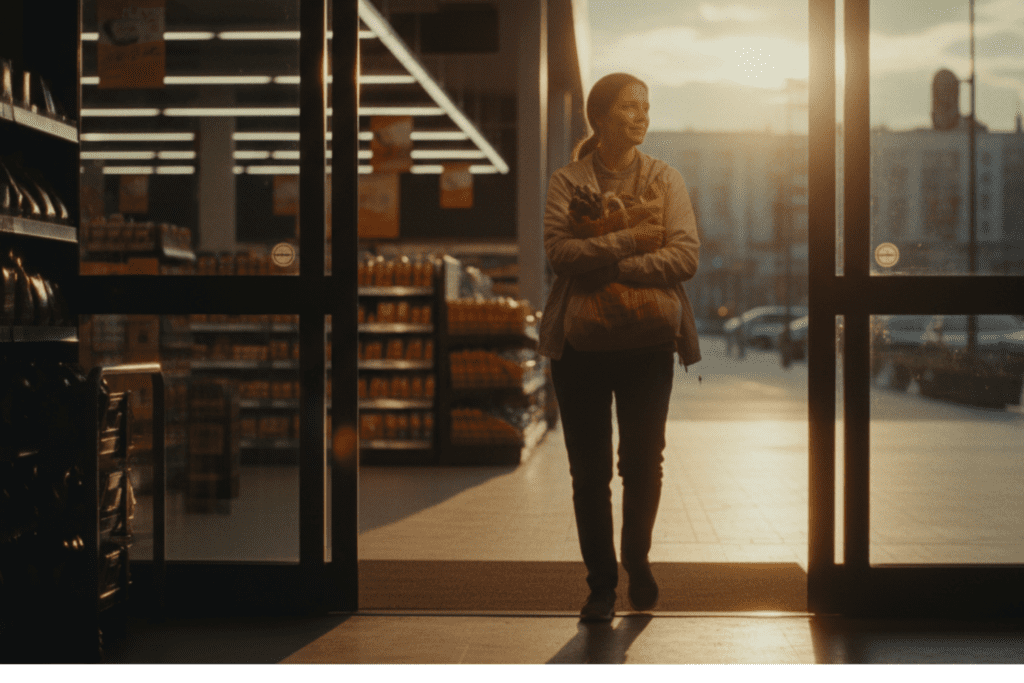
If you are ever standing in a line and something feels off, pause. Look again. Listen. Not every moment will ask something of you. But some will. And when they do, you may find that what you give is small, but what it becomes is not.
That afternoon taught me to look twice.
It taught me that compassion does not require a perfect moment. Only a willing one.
And it reminded me that, sometimes, the most important thing we can offer another person is the simple assurance that they are not alone in a hard moment.
I did not plan to remember that day.
But I will.
Every time I stand in line.
Every time I hear someone sigh.
Every time I see a hand shake over a counter.
I will remember the woman who needed help, and the woman I used to be.
And I will choose not to look away.

No Comments