

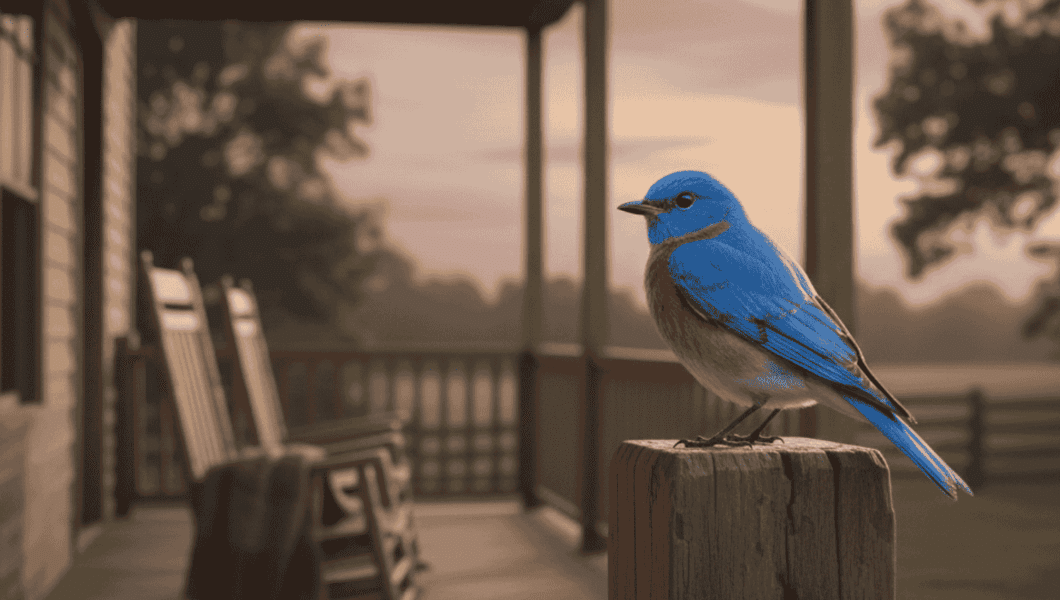
I did not sleep much that night.
After the porch went quiet and the bluebird finally flew off into the trees, I stayed awake in my childhood bedroom, staring at the same ceiling I had stared at as a boy. The house sounded different now. Older. The walls clicked as they cooled. The floor sighed when someone shifted their weight. Even the silence felt fragile.
The notebook sat on the nightstand beside me.
I picked it up again long after midnight and turned the pages slowly, afraid of what else I might find. There were years in that book I had never seen. Small entries written in the margins of busy days. Notes about scraped knees, lost teeth, spelling tests, and questions. So many questions.
I had not remembered asking most of them.
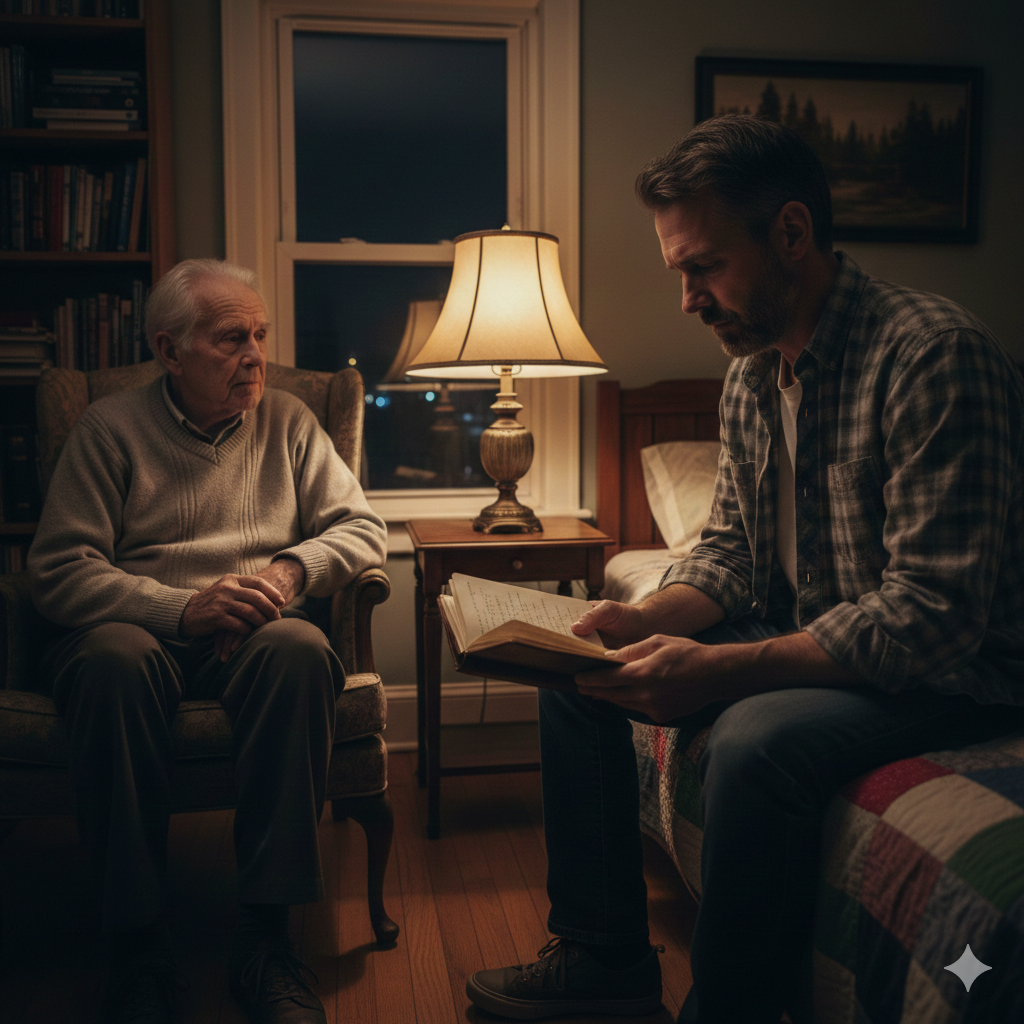
At some point, I heard movement down the hall. Soft. Careful. My father’s steps.
I set the notebook down and waited.
He paused in the doorway, one hand resting against the frame. He did not turn on the light.
“Couldn’t sleep either?” he asked.
“No,” I said. “You?”
He shook his head slightly and stepped inside. He lowered himself into the chair near the window, easing into it the way you do when your body negotiates every movement.
For a while, neither of us spoke.
Then he looked at me and asked, gently, “Did you read more?”
“Yes,” I said. “All of it.”
He nodded once. There was no pride in his face. No expectation. Just a quiet acceptance that the words had finally landed.
“I forgot I wrote some of those,” he said. “Funny what stays.”
I thought about that for a moment.
“Do you remember that day?” I asked. “With the bluebird?”
He smiled faintly. “Of course I do. You were wearing that red shirt with the torn sleeve. You kept asking because you liked the sound of the word.”
I swallowed.
“I was impatient tonight,” I said. “I shouldn’t have been.”
He waved a hand dismissively. “You’re tired. You’ve got your own life pulling at you. It happens.”
But that wasn’t enough for me anymore.
“No,” I said. “It mattered.”
He studied me then, really looked at me, the way parents do when they sense something shifting.
I realized in that moment that he had been watching me closely all evening. Not judging. Just noticing.
The next morning, I woke early to the smell of coffee.
That alone was unusual. My father used to wake before everyone. Lately, mornings took longer.
I found him at the kitchen table, hands wrapped around a mug, staring out at the backyard.
“Morning,” he said.
“Morning.”
We sat together without talking for a while. The quiet felt different now. Less tense. More open.
After a few minutes, he asked, “What day is it?”
I answered him.
He nodded.
A pause.
Then, “And what time are you heading back today?”
I told him.
He nodded again.
Then he smiled, almost sheepish. “Good.”
I waited.
“What’s that bird called again?” he asked.
My chest tightened, but this time I felt no frustration. No snap of irritation. Just a deep, steady breath.
“That’s a bluebird,” I said.
He smiled wider. “Right. I like that one.”
We watched it together for a while.

Over the next few days, I began to notice how often he repeated himself.
Not just questions.
Stories.
Observations.
Concerns.
Sometimes it was the same sentence, told slightly differently, like he was circling it, trying to land somewhere solid.
At first, I caught myself bracing for it.
Then I stopped.
I started answering like I had when I was a child. Fully. Patiently. As if the repetition itself mattered.
Because it did.
One afternoon, while we were fixing a loose hinge on the back door, he paused and looked at the screwdriver in his hand.
“What’s this one for again?” he asked.
I explained.
He nodded, satisfied.
A few minutes later, he asked again.
I explained again.
And again.
Each time, I kept my voice steady. Each time, his shoulders relaxed a little more.
I realized something important then.
He was not testing me.
He was anchoring himself.
Every answer was a reassurance that the world was still understandable. That he was not alone in it.

One evening, we returned to the porch.
Same chairs. Same creak. Same summer air.
The bluebird came back.
He pointed.
“That one,” he said. “That’s the bluebird.”
“Yes,” I said, smiling. “That’s the bluebird.”
He looked pleased with himself.
Then he asked, “Did I ever tell you about the first time I saw one?”
I shook my head.
And he told me a story I had never heard before. About being a boy himself. About sitting on his own father’s porch. About asking questions and being answered.
The circle was wider than I had realized.
Later, after the sun dipped low and the light softened, he reached out and patted my arm.
“You’re doing alright,” he said.
It was the kind of approval that does not come often, but stays forever.
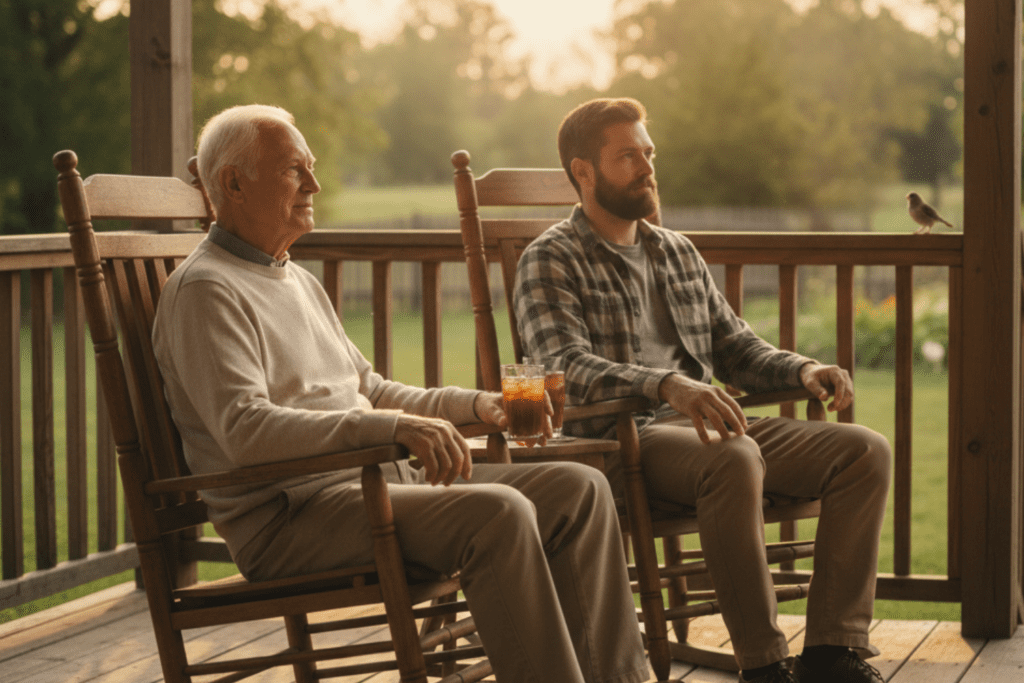
I left the next morning.
We hugged longer than usual.
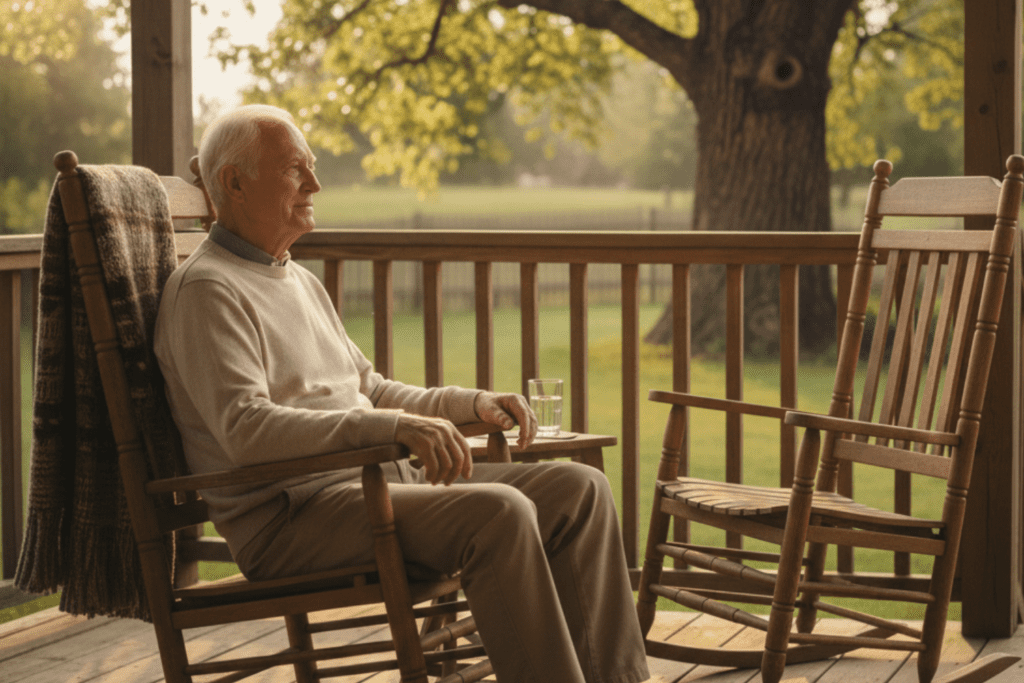
As I drove away, I looked back once and saw him still on the porch, notebook resting on his lap.
Weeks later, he would call me and ask the same questions again.
And I would answer.
Every time.
Because I finally understood something that night.
Memory may fade.
But love does not require remembering.
It only requires showing up.


No Comments