

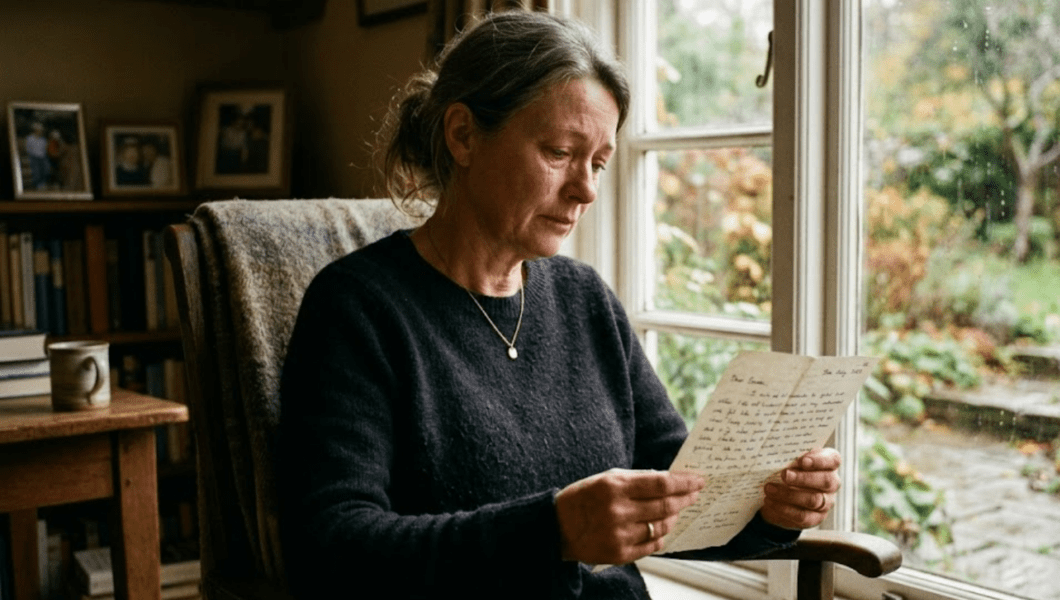
The morning after I finished reading Ethan’s letter, the house felt impossibly quiet.
Not the peaceful kind of quiet that settles over a home early in the morning. This quiet felt different. It pressed against the walls. It sat heavy in every room, like the air itself had changed.
I carried the letter with me everywhere that day.
Folded carefully. Unfolded again. My fingers tracing the creases as if the paper itself might still hold warmth from his hands.
I read it over and over.
Each time I discovered something I hadn’t noticed before. A word that trembled with regret. A sentence that felt like a cry for help he had been carrying for years.
I sat at the kitchen table where he had eaten countless meals as a child. The same table where he once spilled milk, where he spread homework across the surface, where he laughed so hard one night that he choked on his own water.
Now the chair across from me was empty.
And the letter was all I had.
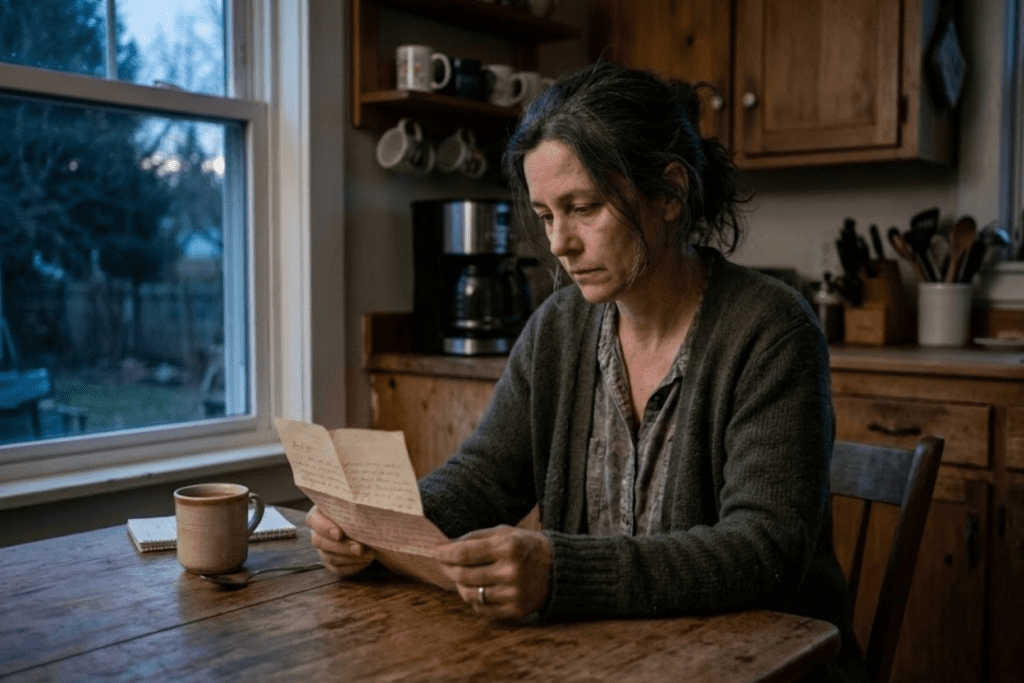
Grief has a strange rhythm.
At first, it crashes over you like a storm. Everything hurts at once. Every memory arrives at the same time. You feel as if you might break under the weight of it.
Then something unexpected happens.
Small moments begin to surface.
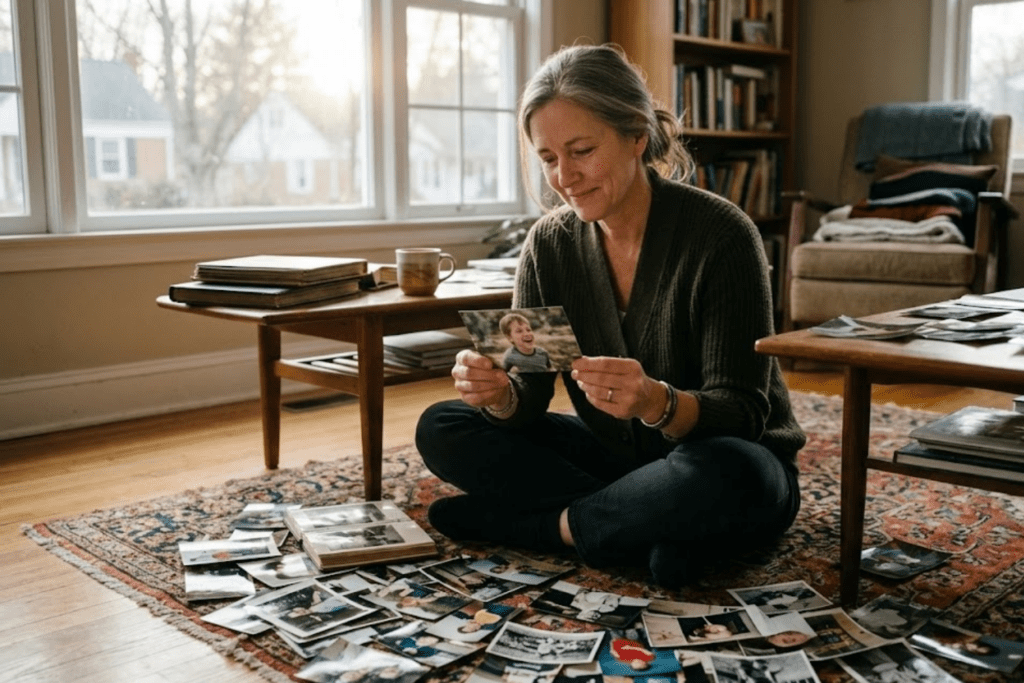
The way Ethan used to leave cabinet doors open in the kitchen. The way he would tap his fingers against the steering wheel when we drove somewhere together. The way he laughed when he thought something was truly funny, not polite laughter but the kind that filled a room.
Those memories started appearing like scattered lights in the darkness.
I began to understand something slowly.
Ethan’s life was not only his addiction.
That battle was real. It was painful and destructive and relentless. But it was not the entire story of who my son was.
He was also the boy who used to rescue stray animals and insist we keep them.
The teenager who once stayed up all night helping a friend through a breakup.
The young man who hugged me longer than necessary when he knew I had a hard day.
Addiction tried to erase those parts of him.
But it didn’t succeed.
Later that afternoon, I walked into Ethan’s room.
I hadn’t stepped inside since the night everything changed.
His bed was unmade. A hoodie hung over the back of a chair. His phone charger still dangled from the outlet beside his bed.
Ordinary things.
But they felt sacred now.
I sat down on the edge of the mattress and looked around slowly.
There were small reminders of who he had been long before addiction entered our lives.
A framed photo from a fishing trip we took years ago. A Bible with folded pages marking favorite passages. A small wooden cross someone had given him during a youth retreat.
For a long time I just sat there.
Then I whispered something I didn’t realize I needed to say.
“I forgive you.”
Not because forgiveness erases pain.
But because love is bigger than the worst chapters of someone’s life.

In the weeks that followed, people began sharing their own stories with me.
Some wrote messages online. Others pulled me aside quietly after church. Parents. Siblings. Friends.
Stories about sons and daughters still fighting addiction.
Stories about recovery.
Stories about loss.
What surprised me most was how many people said the same thing.
“We’ve never talked about it before.”
Shame had kept them silent.
Fear had kept them isolated.
But Ethan’s letter, the honesty inside it, seemed to open something.
People began speaking about addiction not as a moral failure, but as a battle that needed compassion and support.
And slowly I realized something I had not expected.
My son’s words were still helping people.
Even after he was gone.

One evening not long ago, I walked outside just before sunset.
The sky was painted with soft gold and pale blue, the kind of evening Ethan always loved. He used to take photos of sunsets and send them to me with the message, “Look what God painted tonight.”
I thought about that as the light slowly faded.
And for the first time since losing him, I felt something other than grief.
I felt gratitude.
Gratitude that he trusted me enough to write that letter.
Gratitude that his heart was still fighting for truth.
Gratitude that even in the middle of his battle, love had not left him.
I will always miss my son.
That ache will never completely disappear.
But his story did not end with addiction.
His story ended with honesty.
With love.
With a mother who will carry his voice forward so that others might find hope where he struggled to hold it.
And maybe, somewhere beyond what we can see, Ethan is finally free from the fight that exhausted him for so long.


No Comments