


The first time I returned to my father’s house alone, I almost turned around in the driveway.
Nothing had changed. The porch light still flickered on automatically as dusk settled. The wind chimes my mother had hung years ago clinked softly, unevenly, like they always had. Even the dent in the mailbox from the neighbor who “parked too close” was still there, stubborn and familiar.
But the house felt different.
Not empty exactly. More like paused. As if someone had stepped out for a moment and forgotten to come back.
Daniel had offered to come with me, but I said no. I wasn’t sure why at the time. Now I understood. Some goodbyes need privacy. Some spaces need to be entered quietly, without witnesses, so you can hear what memory sounds like when it echoes.
Inside, the air held that faint, clean scent of laundry detergent and old wood. My father had always kept things tidy, even after my mother died. Order was his way of coping. If the house stayed in place, maybe his life would too.
I walked from room to room slowly, touching things as I went. The back of his favorite chair. The kitchen counter worn smooth where he leaned while talking on the phone. The photo of my parents at a county fair, both laughing at something outside the frame.
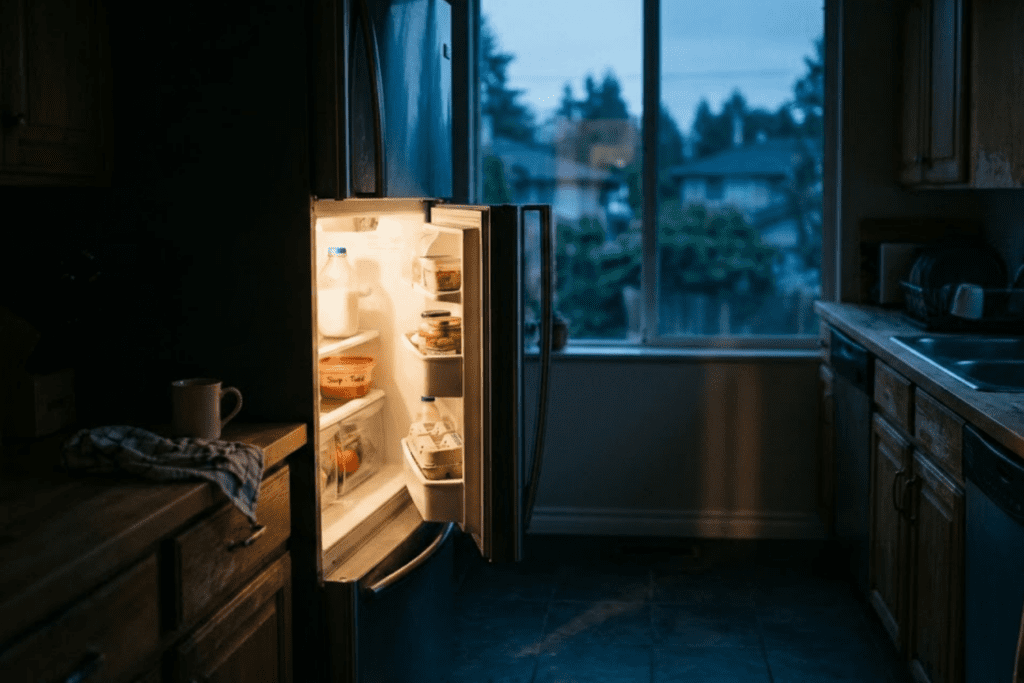
In the kitchen, I opened the refrigerator out of habit.
Milk. Eggs. Mustard. A container of leftovers labeled in his careful handwriting.
He had been planning to eat dinner.
Grief has a way of ambushing you in the smallest moments. Not at funerals or memorials, where sadness is expected and shared. It strikes when you realize someone bought groceries they will never use, or left a light on they will never turn off again.
I closed the door gently, as if not to wake the silence.
The garden was the hardest part.
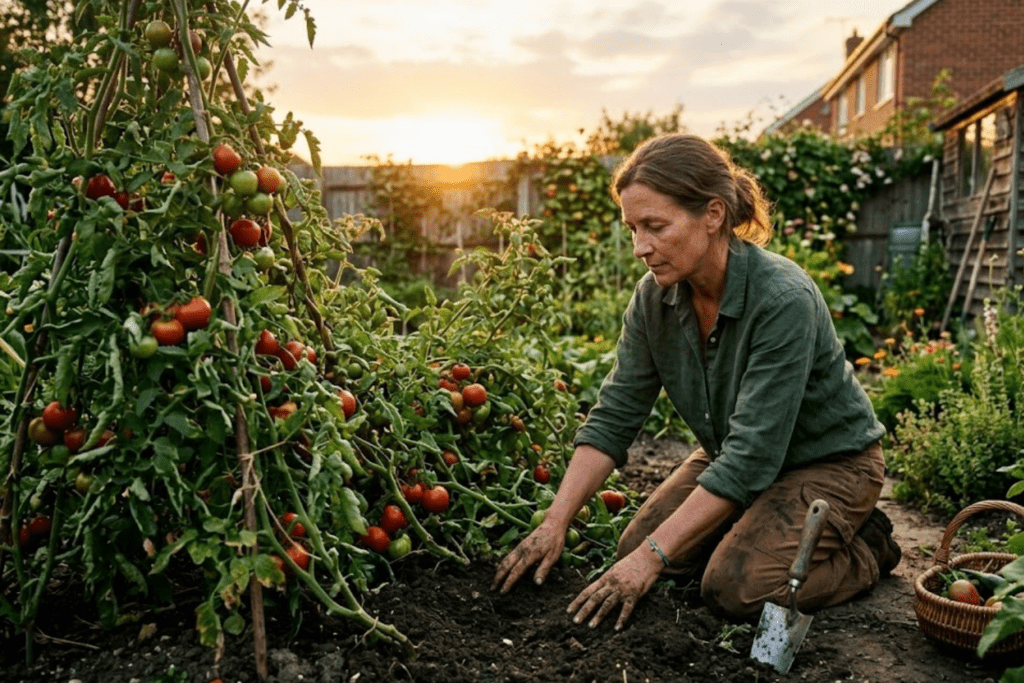
I could see it through the back window, rows of late-season vegetables standing in uneven lines. My father had loved that garden, especially after he retired. It gave him somewhere to put the hours that used to belong to work and partnership.
Outside, the soil smelled damp and alive. The tomato plants sagged under their own weight, a few fruits overripe and splitting at the seams. A trowel lay where he had dropped it, half buried in dirt.
I tried to picture the moment.
Did he feel dizzy first? Did he reach for something? Did he think of us?
The questions had no answers, and eventually I stopped asking them.
Instead, I knelt and pressed my hands into the earth he had turned so many times. It was still warm from the sun, still holding the shape of his care.
“I’m here,” I whispered, not sure who I was speaking to.
Maybe him. Maybe myself.
Maybe the quiet.
In the weeks that followed, the house became a place of sorting.
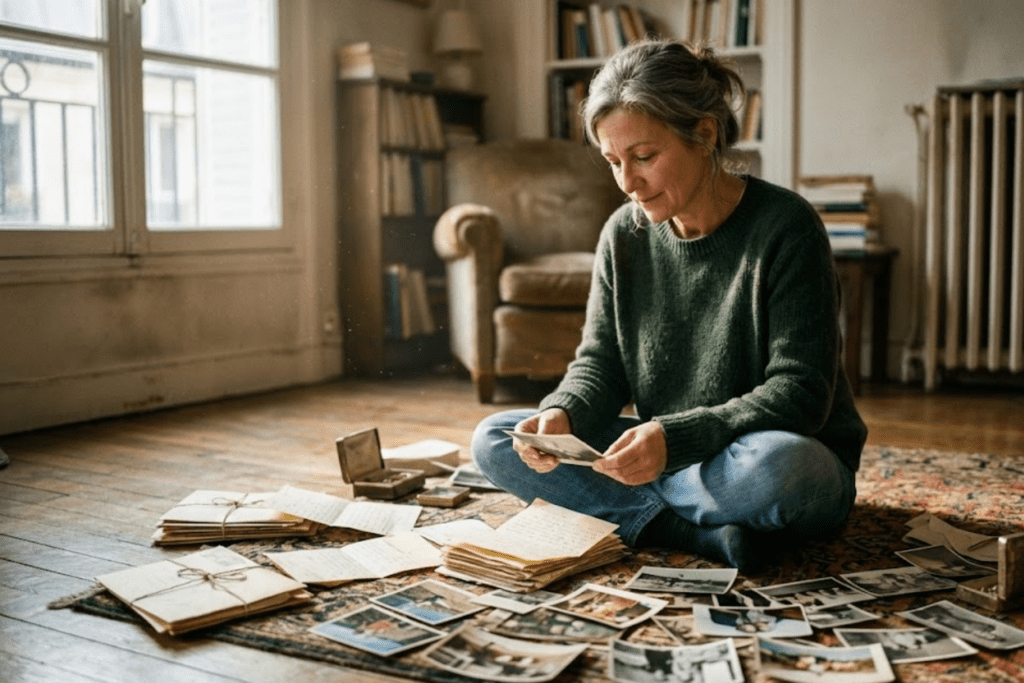
Papers. Tools. Old letters. The slow dismantling of a life into boxes labeled KEEP, DONATE, ARCHIVE. Each item carried a small story, and together they formed a map of a man who had lived carefully, lovingly, without needing recognition.
One afternoon, tucked inside a cookbook my mother used to love, I found something unexpected.
A stack of envelopes addressed to me.
Not mailed. Not sealed. Just dated in the corner, spanning several years.
The first one read:
You didn’t call this week, but I know you’re busy. I just wanted to tell you the roses finally bloomed. Your mom would have liked them.
Another:
Saw a father and daughter at the hardware store today arguing over paint colors. Made me smile. We used to do that too.
And another:
I worry sometimes that I talk too much when you visit. It’s just nice having someone in the house again.
I sat on the floor surrounded by open drawers and let the realization settle.
He had been talking to me all along.
Not out of resentment. Not to guilt me. Just to keep the connection alive, even when life pulled us in different directions.
The last envelope was dated two days after our dinner.
My hands shook as I opened it.
Still smiling about Friday night. I forgot how much I missed hearing you laugh without looking at the clock. I hope we do it again soon.
Below that, in smaller writing:
If not, that one will hold me for a long time.
I didn’t cry right away.
Instead, I felt something warmer, almost like relief braided together with sorrow. He had not been as alone as I feared. He had carried memories like companions, talking to them when the house got too quiet.
And in the end, we had given him a new one strong enough to last.
Daniel came with me the next time.
We worked side by side in the garden, pulling weeds, tying sagging stems back to their stakes, harvesting what we could before the season turned. It felt strange at first, like touching something sacred without permission.
Then it felt right.
“He’d like this,” Daniel said, wiping his hands on his jeans.
I nodded. “He always said gardens shouldn’t go to waste.”
We brought home two boxes of tomatoes, cucumbers, and herbs. That night, I cooked a simple meal using everything we had gathered, the kitchen filling with smells that felt like childhood summers.
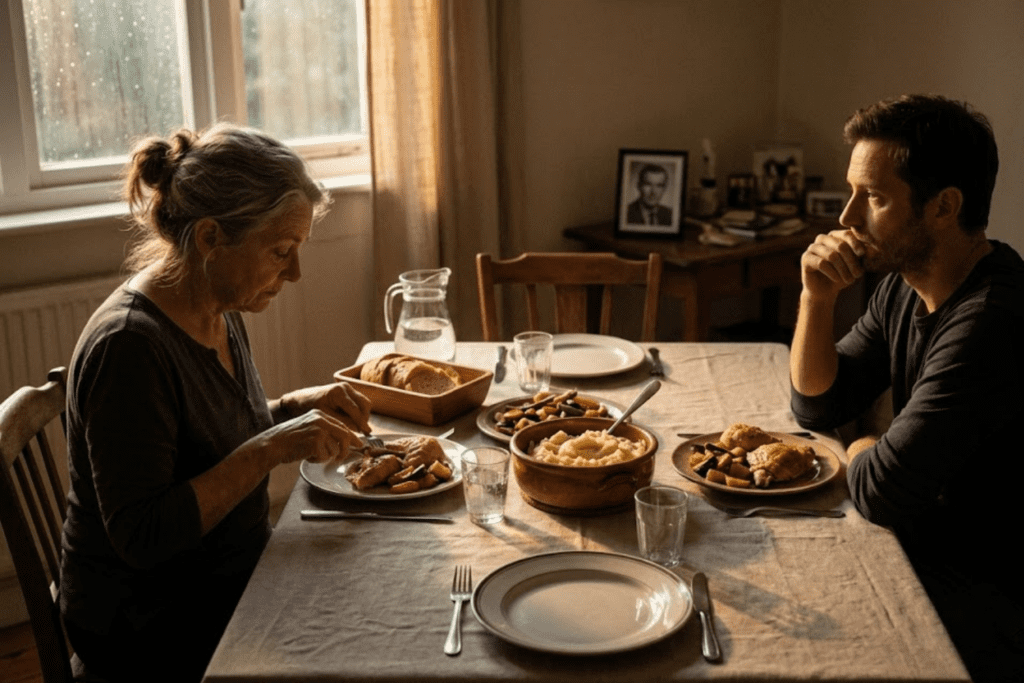
Before we ate, I placed an extra plate on the table.
Daniel noticed but didn’t comment. He simply set a glass of water beside it.
We didn’t pretend he was there.
We just made room for him.
Over time, the sharp edge of grief softened into something steadier.
Not smaller. Just easier to carry.
I started calling people more often. Dropping by without waiting for a perfect moment. Saying yes to small invitations that once would have felt inconvenient. The world did not collapse because laundry sat unfolded or emails went unanswered for an hour.
Life expanded to fill the space that fear of inconvenience used to occupy.
On what would have been my father’s birthday, I returned to the garden alone.
The winter had been kind that year. New shoots were already pushing through the soil, stubborn and hopeful. I planted a small patch of tomatoes, the same variety he used to grow, pressing each seedling into the earth with careful hands.
“You taught me this,” I said quietly.
A breeze moved through the trees, rustling the leaves in a way that sounded almost like approval.
Or maybe just continuity.
As I stood to leave, I realized something I hadn’t understood before.
Our dinner had not been a goodbye.
It had been a bridge.
Between the life we shared when I was young and the life I would carry forward without him. Between his years of loving quietly and my chance to finally see it clearly.
We don’t get to choose how or when the people we love leave us.
But sometimes, if we are lucky, we get one evening that gathers everything important into a few ordinary hours.
A meal. A walk. A laugh. A hand held across a table.
Enough to last.
I still keep the receipt he saved in my wallet, tucked behind my driver’s license. The ink has faded slightly, but the numbers are still visible, proof of a night that cost very little and meant everything.
Whenever life starts to feel crowded with obligations and noise, I take it out and look at it.
Not to remember that he’s gone.
To remember that he was here.
And that love, when given attention, leaves roots deep enough to keep growing long after the person is gone.


No Comments