
I thought that would be the end of it.
A single moment. A stranger’s story intersecting with mine for a few minutes under fluorescent lights, then dissolving back into the ordinary blur of errands and responsibilities. That’s how most public encounters work. We witness something, feel it deeply for a day or two, and then life pulls us forward whether we’re ready or not.
But the image wouldn’t leave me.
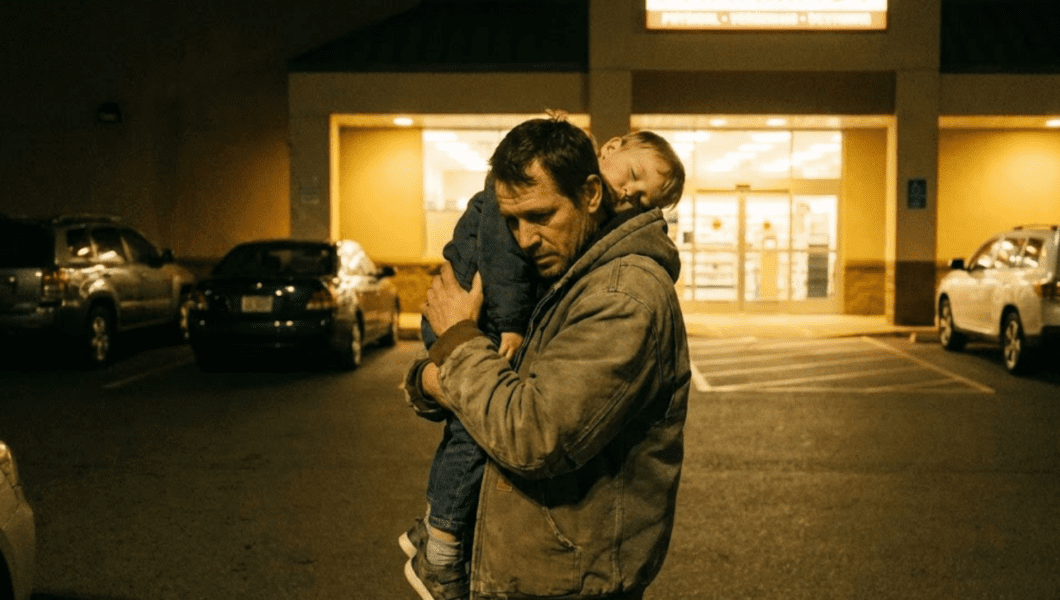
The man’s hands shaking as he held the pharmacy bag. The way he kept nodding, as if afraid the gift might disappear if he stopped acknowledging it. The pharmacist’s face afterward, carefully neutral, like someone closing a door on a storm still raging behind it.
I kept wondering about the girl.
Did she take the medicine right away, like the pharmacist told him? Did she cry because it tasted bitter? Did her father stay up all night checking her temperature, counting breaths, praying without words?
Three nights later, I was back at the same pharmacy.
Not because I needed anything urgent. I told myself I had forgotten to refill vitamins, but the truth was simpler and less comfortable. I wanted to see if she was okay. Not physically. Something deeper than that.
The waiting area looked calmer this time. Fewer people. The printer silent. Flu season apparently loosening its grip for the moment.
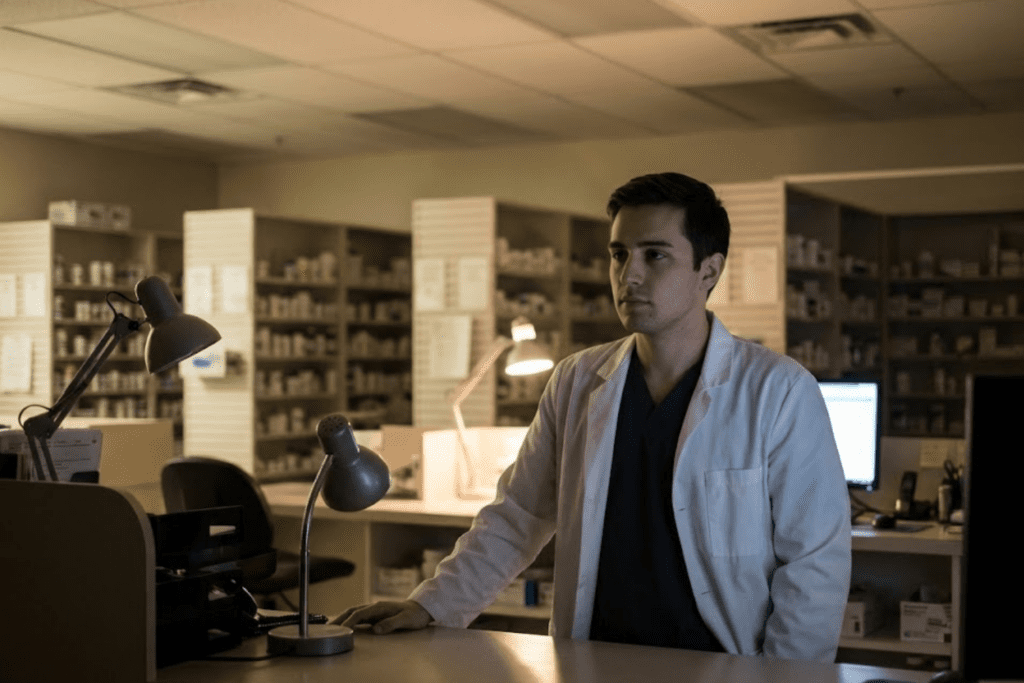
She was there, behind the counter, typing steadily.
Her hair was still in a bun, though neater tonight. The dark circles hadn’t disappeared, but they looked less like exhaustion and more like something chronic, something she had learned to live with.
For a moment, I considered turning around and leaving. She had asked me not to make it bigger than it was. Showing up again felt dangerously close to doing exactly that.
But then she glanced up and recognized me.
Her posture stiffened for half a second, a flicker of concern crossing her face. Not fear exactly. More like someone bracing for a conversation they don’t want but know might be coming.
When my turn arrived, I stepped forward quietly.
“I just need to pick up an over-the-counter item,” I said, holding up a bottle I had grabbed from a nearby shelf. “No prescription tonight.”
She nodded, scanning it.
For a moment, neither of us spoke.
Then I said, very softly, “I kept your secret.”
Her shoulders lowered a fraction, tension draining from them in a way that made me realize how tightly she had been carrying it.
“Thank you,” she said.
Her voice sounded tired, but not the frantic kind of tired from that night. More like the exhaustion that comes after adrenaline fades and leaves you alone with your thoughts.
I hesitated, then added, “I was thinking about the little girl.”
She paused mid-transaction.
“Me too,” she admitted.
“He came back yesterday,” she continued after a moment.
My breath caught. “He did?”
She nodded.
“Just to say thank you. He brought a crumpled piece of paper with her temperature chart on it. It had dropped overnight. By morning she was eating popsicles and asking for cartoons.”
Relief spread through my chest, warm and unexpected.
“She’s okay?” I asked.
“She’s going to be,” the pharmacist said. “He said the doctor thinks they caught it just in time.”
Just in time.
Those words carried a weight that settled between us, heavy with the knowledge of what might have happened otherwise.
“He tried to pay me back,” she added quietly. “Not money exactly. He asked if there was a fund or something. I told him no. I didn’t want him feeling like he owed anything.”
“Doesn’t he?” I asked gently.
She shook her head.
“He already paid,” she said. “By coming back to tell me she was okay.”
For the first time since I had met her, her expression softened into something like peace.
The register beeped, snapping the moment back into place. She handed me the receipt, our fingers brushing briefly as I took it.
“Take care of yourself,” I said.
“You too,” she replied.
I walked out into the cool night air feeling lighter, though I hadn’t realized how heavy the uncertainty had been until it lifted.
But the story still wasn’t finished.
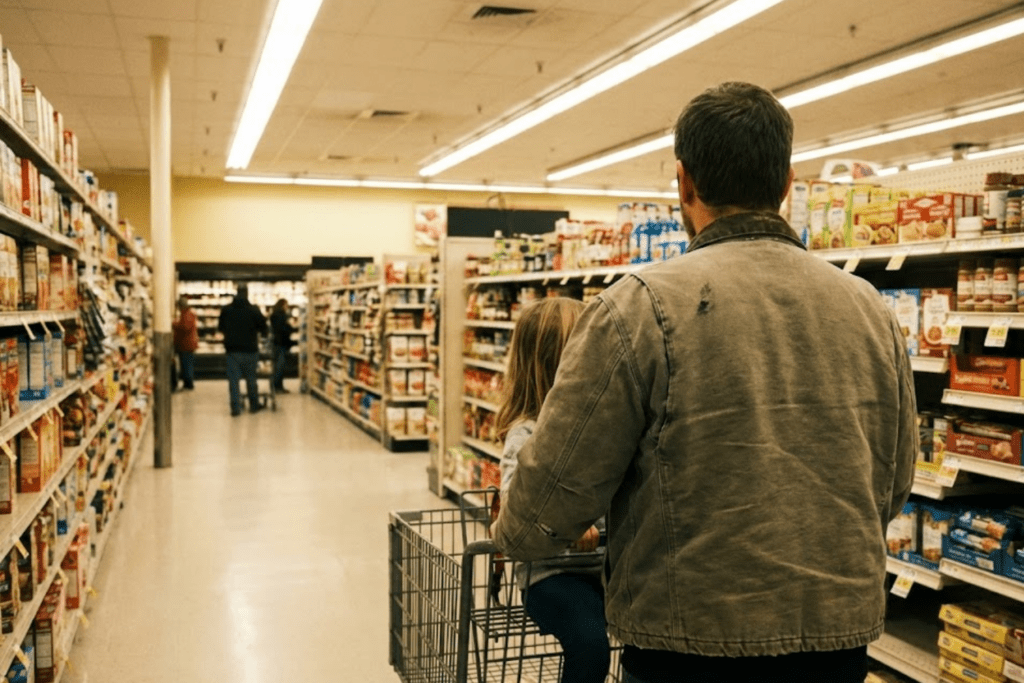
A week later, I stopped by a grocery store across town after work. Not my usual one. Just the closest place to grab milk and bread before heading home.
Near the pharmacy section, I noticed a man pacing slowly beside a shopping cart. He looked familiar in the way strangers sometimes do, like a face glimpsed in passing that your brain hasn’t fully sorted yet.
Then he turned, and recognition clicked into place.
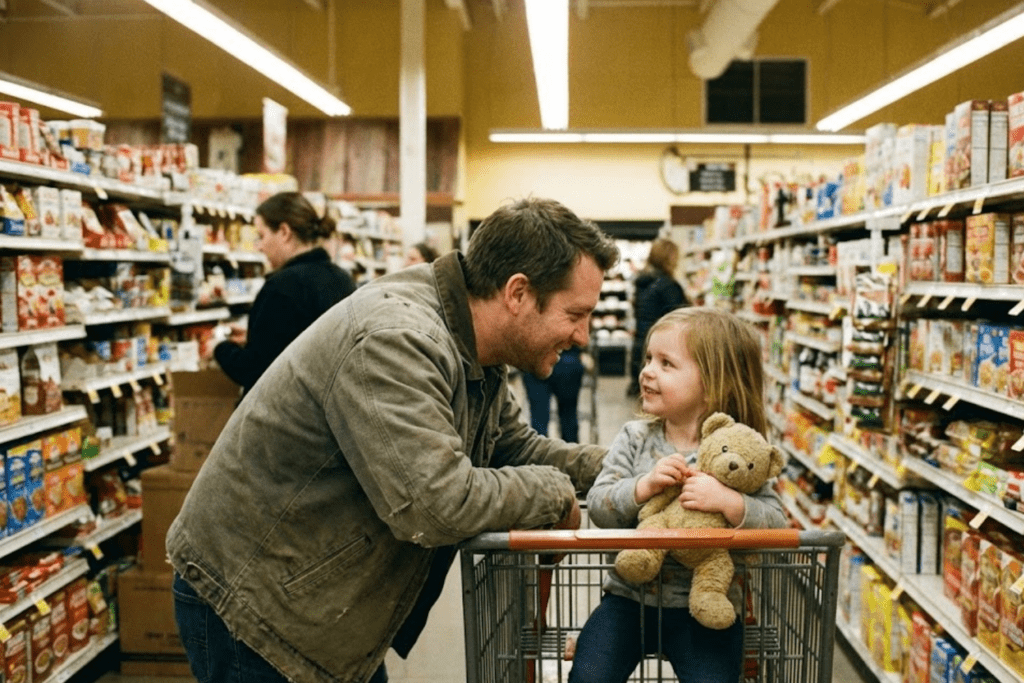
Same grease-stained jeans. Same phone clipped to his belt. Same tired eyes, though tonight they were clearer, less shadowed.
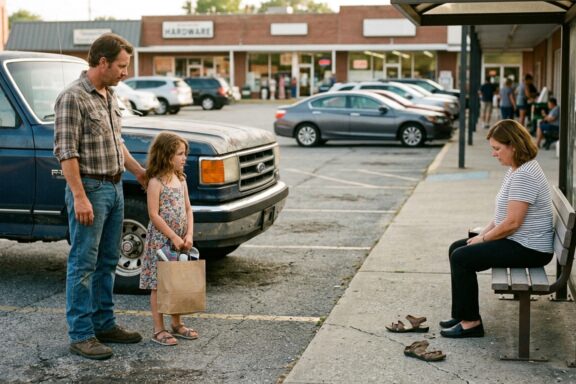
In the cart sat a small girl bundled in a pink jacket despite the mild weather. Her cheeks were flushed, but not feverish. She was holding a stuffed dinosaur upside down, humming softly to herself.
I froze, unsure whether to approach or leave them alone.
Before I could decide, the girl noticed me staring and waved enthusiastically, the dinosaur flopping with the motion.
“Hi!” she chirped.
Her voice was bright, scratchy in that way kids’ voices get after being sick.
The man followed her gaze and saw me.
Recognition flickered across his face too. Surprise first, then something gentler.
“Oh,” he said, walking over. “You were at the pharmacy.”
I nodded, suddenly awkward. “I was. How is she?”
He looked down at his daughter, who was now trying to make the dinosaur “eat” the corner of the cart.
“Back to terrorizing the house,” he said with a small smile. “Doctor says she’ll be fine.”
Relief flooded through me all over again, stronger this time because it was right there in front of me. Not an abstract update. A living, breathing child who had clearly bounced back with the resilience only kids seem to possess.
“I tried to find a way to thank that pharmacist,” he said. “Not to get her in trouble. Just… something. But she wouldn’t even take my name.”
“That sounds like her,” I said quietly.
He nodded, eyes glistening slightly before he blinked it away.
“I keep thinking about what would’ve happened if she hadn’t done that,” he admitted. “I was out of options. I had already called everyone I knew.”
His hand rested on his daughter’s shoulder, thumb moving absently as if reassuring himself she was still there.
“I don’t know how you repay something like that.”
“You don’t,” I said. “You just… keep going.”
He considered that, then gave a small, decisive nod.
“I signed up for extra shifts,” he said. “Not just for the money. For insurance. I never want to be in that position again.”
His daughter tugged his sleeve.
“Daddy, can we get cereal with marshmallows?”
He laughed, the sound cracking open whatever tension remained.
“Doctor said real food,” he replied. “But we’ll negotiate.”
They moved on down the aisle, the girl chattering about dinosaurs and cartoons as if the entire crisis had been nothing more than a brief interruption.
I stood there for a long moment, watching them disappear around the corner.
Something about seeing them together, whole and ordinary, made the pharmacist’s risk feel even more profound. Not dramatic. Not heroic in the cinematic sense. Just quietly life-altering.
That night, I couldn’t stop thinking about the chain of events.
A sick child. A parent without money. A pharmacist carrying an old wound. A system too rigid to bend on its own. And then one human decision, made in seconds, rippling outward through multiple lives.
We talk about change as if it has to be massive to matter.
New laws. New programs. Sweeping reforms.
But sometimes change looks like a single keystroke on a pharmacy computer, entered by someone who refuses to watch history repeat itself.
A few days later, I returned to the pharmacy one last time.
Not to talk. Not to pry. Just to pick up a routine refill and exist in the same space as that moment again, like visiting the site of something sacred.
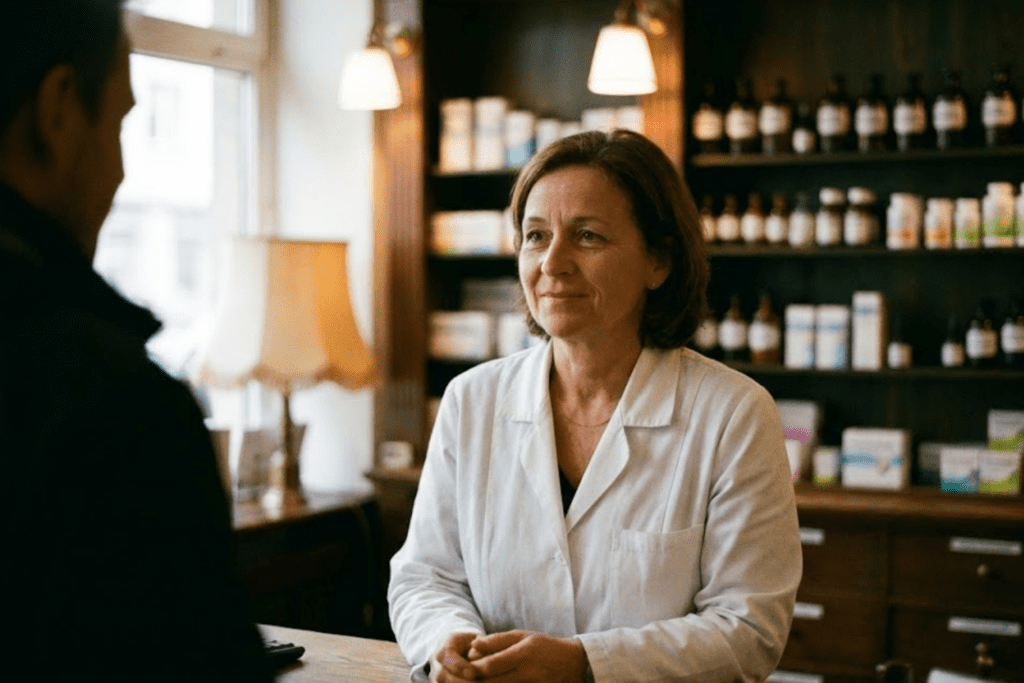
She was busy, consulting with an elderly woman about medication interactions, her voice patient and precise. Watching her work, I realized something important.
She didn’t look like someone who thought of herself as brave.
She looked like someone doing her job carefully, conscientiously, with the quiet determination of a person who has seen what happens when care falls short.
When she finished and called my name, I stepped forward.
We exchanged the usual pleasantries. No reference to that night. No coded language. Just two people completing a transaction.
As I turned to leave, she said, “Have a good evening.”
Something in her tone made me glance back.
For a split second, her expression softened into a small, private smile. Not triumphant. Not relieved. Just peaceful in a way I hadn’t seen before.
Like someone who had finally balanced an invisible scale.
Outside, the night air felt sharp and clean.
I realized then that the story didn’t belong to me to carry forever. It wasn’t mine to resolve or broadcast or turn into something tidy.
It belonged to that pharmacist. To her sister. To the father and the child. To all the people caught in systems that don’t always account for human urgency.
But witnessing it had changed something in me.
I noticed people differently now. The cashier who looked one bad day away from tears. The parent counting coins before approaching a register. The medical worker moving carefully through exhaustion because someone’s life depended on it.
We pass each other every day without knowing the histories we’re carrying or the choices we’re quietly making to keep others safe.
Some of those choices will never be recognized.
Some should never be.
And yet they shape the world just as surely as any headline.
Somewhere tonight, that little girl is probably sleeping peacefully, fever gone, dinosaur tucked under her arm. Her father might still wake periodically to check her breathing, habit lingering after the danger has passed.
And behind a pharmacy counter, a young woman is filling prescriptions, answering phones, double-checking dosages, doing her best inside a system that isn’t built for mercy.
Most customers will never know what she did.
Most shouldn’t.
But I saw it.
I saw the moment when procedure stepped aside and humanity stepped forward.
And I will never again assume that the person behind the counter is just processing transactions.
Sometimes they’re carrying ghosts.
Sometimes they’re preventing new ones.
The world didn’t change that night.
Healthcare didn’t suddenly become affordable. Policies didn’t rewrite themselves. The next parent in line might face the same impossible choice.
But one child got medicine on time.
One trauma didn’t repeat itself.
One exhausted stranger decided that this time, the story would end differently.
And sometimes, that is the only kind of victory available.

No Comments