

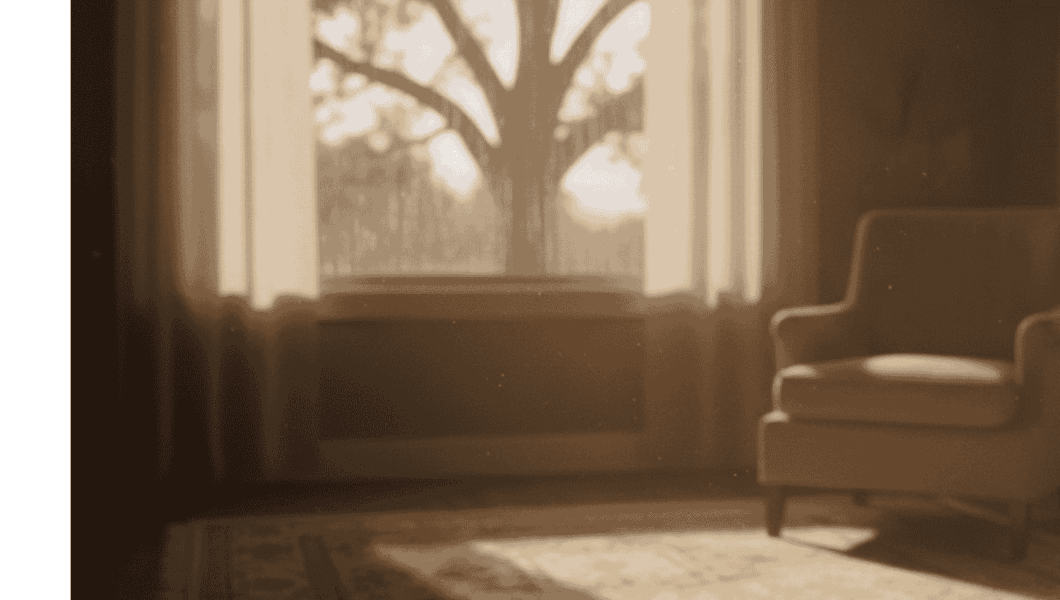
Ben did not heal all at once. He healed in fragments, the way broken glass reflects light in many directions at the same time.
For the first week after Milo died, the house felt wider than it had ever been. Rooms echoed in a way they never had when a small, determined beagle occupied every corner. Ben moved through them like a guest who did not belong, careful with each step, as though the floor might open beneath him if he placed his weight wrong.
He kept Milo’s collar on the nightstand. The tiny silver tag chimed whenever he brushed against it in his sleep, and sometimes that sound made him sit straight up, heart racing, half convinced he had heard paws clicking down the hallway. Other nights, he avoided the bedroom altogether and slept on the couch, staring at the dark ceiling while the refrigerator hummed and the house breathed around him.
Grief, he discovered, was not loud the way movies make it seem. It was quiet and persistent, like a slow leak in the foundation of his life.
At work, he functioned the way people do when they are running on memory instead of feeling. He answered emails. He sat in meetings. He nodded at the right times. His coworkers thought he was tired. They did not know that every time he opened his lunchbox, he instinctively looked down for a pair of hopeful brown eyes.
In the evenings, he walked around the block with Milo’s empty leash looped around his wrist. He told himself it was just habit, but he knew it was more than that. He was trying to keep moving so the sadness would not settle too deeply inside him.
One afternoon, three weeks after Milo’s passing, Ben found himself back in his car without remembering deciding to drive. His hands gripped the steering wheel while traffic flowed around him, and before he could talk himself out of it, he was turning into the shelter parking lot.
He sat there for a long time.
Wind rattled the loose sign out front. Somewhere inside, dogs barked. He felt the familiar tightening in his chest, the instinct to protect himself from more pain by simply leaving.
He did not leave.
Inside, the smell hit him first: disinfectant mixed with fur, kibble, and a kind of anxious hope that lived in every shelter. Fluorescent lights buzzed overhead. The place was alive with motion—volunteers carrying bowls, dogs pacing behind chain-link doors, tails wagging in frantic rhythm.
A young volunteer with a ponytail and gentle eyes approached him. “Can I help you?”
Ben swallowed. “I… I don’t know.”
She nodded, as if that were the most normal answer in the world. “That’s okay. You can just look.”
He walked slowly down the row of kennels. Puppies tumbled over one another in their excitement, paws slapping against metal, little bodies wriggling as if joy itself had taken shape. Older dogs lay quietly, watching him with patient eyes.
And then he saw him.
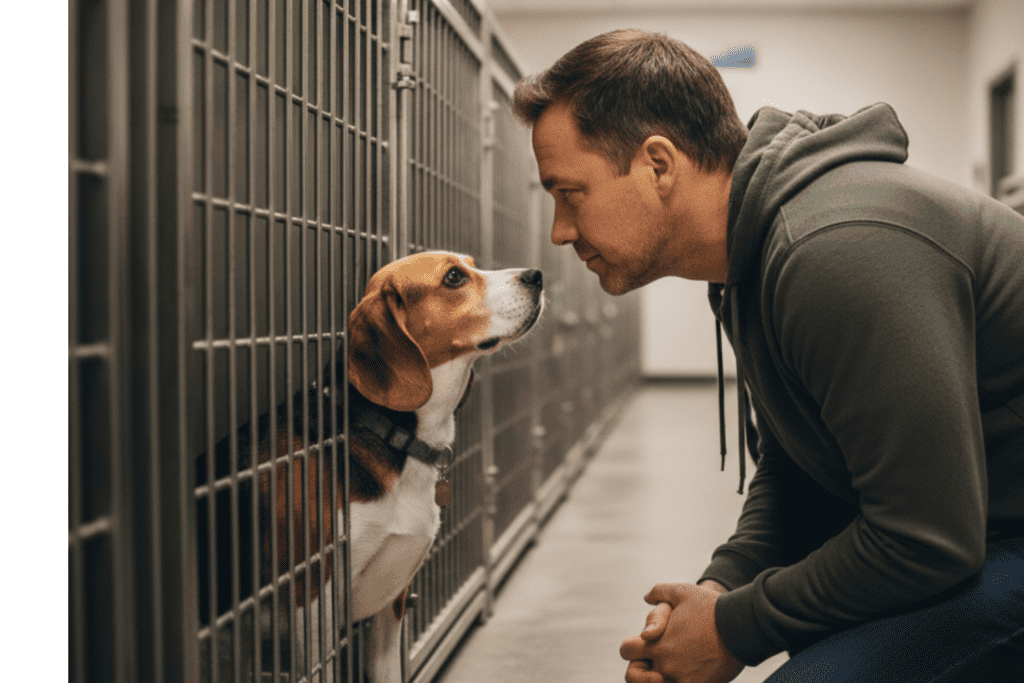
In the last kennel on the left sat a beagle mix, slightly taller than Milo had been, with ears that seemed too large for his head. His coat was patchy in places, and one back leg rested awkwardly when he sat. A paper sign taped to the door read: Buddy. Estimated age: 5–6 years. Found stray. Gentle temperament.
Buddy lifted his head when Ben stopped. His tail thumped once, hesitant, then again, more certain.
Ben crouched down.
For a moment, the world narrowed to just the two of them—man and dog, separated by metal bars and a lifetime of different paths that had somehow crossed in this small, fluorescent-lit room.
Buddy stood and walked forward, pressing his nose through the chain-link. His breath was warm against Ben’s fingers.
Ben closed his eyes.
He did not see a replacement. He saw a need that mirrored his own.
“Hey there,” he whispered.
Buddy tilted his head, listening, as if every word mattered.
The volunteer returned with paperwork and gentle questions. Ben answered some of them and let others hang in the air. He did not make a decision that day. He told himself he was just gathering information, just testing the waters of a life he did not yet know how to live.
But when he left, he carried Buddy’s image with him like a small ember in his chest.
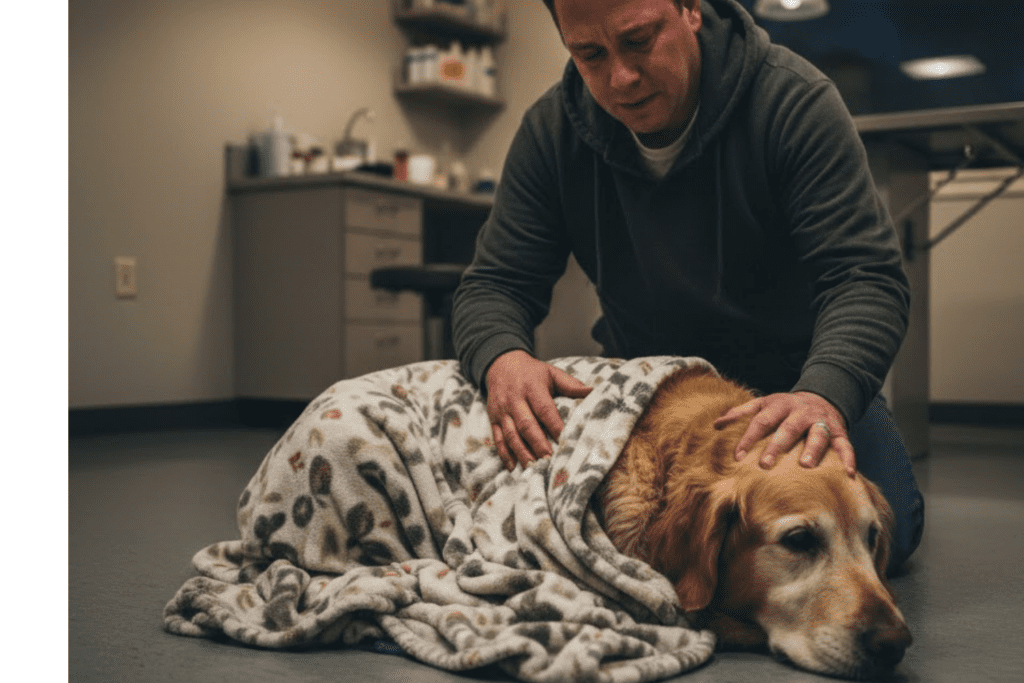
At home that night, Ben set Milo’s collar in the center of the table and sat across from it as if it were a person.
“I don’t want to forget you,” he said out loud, voice trembling. “And I don’t want to pretend you didn’t exist.”
Silence answered him.
He picked up the collar, feeling the familiar smoothness of the leather, the slight dent where Milo had always scratched his neck. He closed his eyes and let himself remember—sunlit afternoons in the yard, the sound of nails on tile, the weight of Milo’s head on his knee during thunderstorms.
He realized, slowly, that loving again would not erase those memories. They would simply stand beside whatever came next.
Two days later, he returned to the shelter.
Buddy recognized him immediately.
This time, Ben signed the papers.
They brought Buddy out to a small, fenced yard behind the building. The dog stepped onto the grass cautiously, sniffing the air, tail moving in careful arcs. Ben stood still, giving him space, watching the way his ears flicked at every sound.
When Buddy finally walked toward him and leaned lightly against his leg, Ben felt something inside him unclench.
He knelt down and let his hands sink into warm fur.
“Okay,” he whispered. “Let’s try.”
The drive home was different than Ben expected.
Buddy did not whine. He did not bark. He lay calmly in the back seat, head resting on Ben’s jacket as if he had done this a hundred times before. At red lights, Ben glanced in the mirror and found the dog watching him, eyes steady and kind.
When they reached the house, Buddy hesitated at the doorway. He placed one paw inside, then pulled it back, as if waiting for permission.
Ben stepped aside.
Buddy crossed the threshold.
The house felt changed in that moment, not smaller, not larger, but more alive.
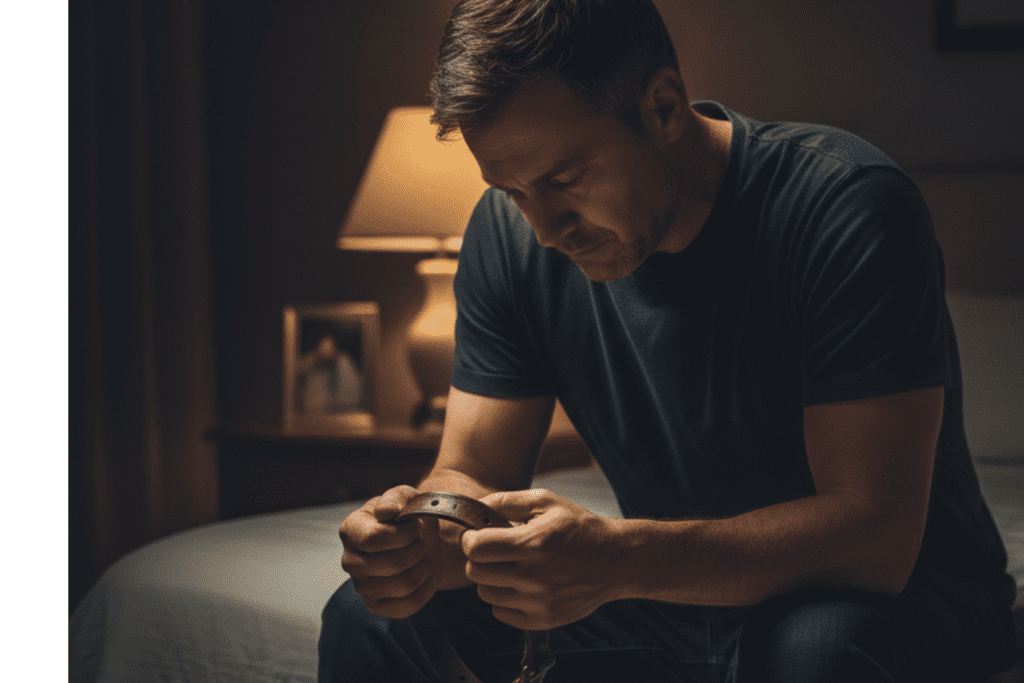
Buddy explored slowly. He sniffed every corner, every piece of furniture, every familiar scent that still lingered faintly in the air. He paused by Milo’s old bed, nose twitching, then lay down beside it rather than on it, as if he understood that space belonged to someone else.
That night, Ben slept deeper than he had in weeks. Not because the pain was gone, but because he was no longer carrying it alone.
Days turned into weeks.
Buddy had his own rhythms. He liked morning walks along the river path, ears flapping in the breeze. He preferred sleeping with his back pressed against Ben’s legs, as though proximity itself were comfort. He was cautious around sudden movements, especially raised voices, but gentle hands earned his trust quickly.
Ben found himself laughing again, quietly at first, then more easily. Buddy had a habit of stealing socks from the laundry basket and carrying them proudly through the house like trophies. He also had a deep, melodious howl that erupted whenever a siren passed nearby.
Some evenings, Ben would sit on the floor with Milo’s collar in one hand and Buddy’s head resting in his lap. He did not compare them. He did not need to.
They were two different chapters in the same story of love.
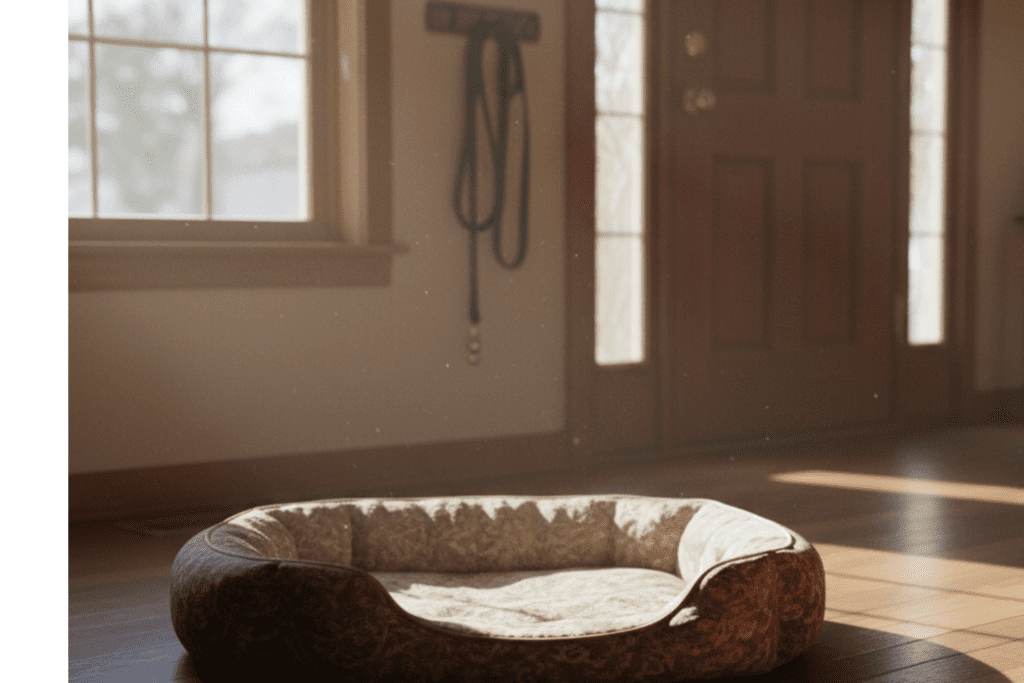
Still, grief returned in waves.
One rainy afternoon, Ben found himself frozen in the doorway, watching Buddy sit patiently by the back door, tail thumping against the wall. For a moment, Milo’s absence pressed so hard against his chest that he could not breathe.
He sank to the floor and let the tears come.
Buddy did not bark. He simply walked over and placed his head gently against Ben’s shoulder, his body a steady presence in the storm of emotion.
Ben cried until his chest ached, and when the tears finally slowed, he realized something important.
He was not replacing Milo.
He was expanding his heart.
Months passed.
Buddy learned Ben’s routines the way Milo once had. He knew when it was time for walks, when it was time for bed, when Ben needed space and when he needed comfort.
Ben, in turn, learned Buddy’s language. He recognized the difference between his excited bark and his anxious whine, between his playful pounce and his quiet request to be near.
One crisp autumn morning, Ben decided to return to the park where he and Milo had spent so many afternoons.
He walked slowly along the familiar path, Buddy trotting beside him, nose to the ground, tail held high. Leaves crunched underfoot. Sunlight filtered through bare branches.
At the old bench, Ben paused.
He sat down and looked out over the grass, remembering a hundred different moments that had shaped his life with Milo.
Buddy climbed onto the bench beside him and rested his head on Ben’s thigh.
Ben placed his hand on Buddy’s back and felt warmth beneath his palm.
“I miss him,” he said quietly.
Buddy did not understand the words. He understood the tone.
Ben felt tears gather again, but this time, they were softer.
“Thank you,” he whispered.
To Milo. To Buddy. To life for continuing, even when it hurt.

That winter, Ben began volunteering at the shelter.
At first, he told himself he was just helping Buddy’s old friends. But soon, he realized it was more than that. He found purpose in cleaning kennels, walking anxious dogs, and sitting quietly with those who had known too much loneliness.
One evening, he met an elderly woman who had come to surrender her dog after moving into a care facility. She clutched the leash like it was part of her own body, tears streaming down her face.
Ben sat beside her on the floor and listened.
He did not give speeches. He did not offer empty reassurance. He simply stayed, hand resting gently on the trembling dog’s back, eyes kind.
In that moment, he understood that grief and love were not opposites. They were intertwined threads that bound people and animals together in ways that lasted beyond loss.
Spring arrived.
Buddy’s coat grew shiny again. His limp lessened. He barked at squirrels with newfound confidence and sprawled on sunny patches of floor like a king surveying his domain.
Ben planted flowers in the yard, bright yellow marigolds along the fence where Milo used to chase shadows. He did not think of them as a memorial. They were simply beauty growing in a place that had once been filled with pain.
One evening, as the sun dipped low and painted the sky pink, Ben clipped Buddy’s leash to his collar and stepped onto the porch.
For a moment, he paused, looking back at the house.
He saw memories in every window. He felt Milo’s presence in every corner. And yet, he also saw a future waiting at his feet, tail wagging, eyes bright.
He stepped forward.
Ben did not stop missing Milo.
But he stopped being afraid of joy.
He learned that love did not run out; it grew.
And in the quiet rhythm of walks, meals, and shared silence, he discovered something he had not expected.
Healing did not mean forgetting.
Healing meant carrying both sorrow and gratitude in the same heart.
One day, months later, Ben found Milo’s old collar tucked in a drawer and placed it gently beside Buddy’s new one on the shelf by the door.
Two names.
Two lives.
One story.
He stood there for a long time, listening to the house breathe around him, feeling the weight of memory settle into something softer.
Buddy padded over and leaned against his leg.
Ben smiled.
And the world felt, once again, like home.
But this was not the end of their journey.
Because the shelter called the next morning with a request Ben never saw coming, one that would bring his past and present together in a way he could not have imagined.

No Comments